

Maddy summaryHB 36 amends Wyoming's Hathaway scholarship program to clarify that "certificate" includes trade programs (like welder or commercial driver training). It requires students receiving the scholarship after July 1, 2025, to either work in Wyoming for one year or attend graduate school at the University of Wyoming for one year for every four academic semesters of scholarship funding. The bill also mandates the Wyoming Department of Education to adopt implementing rules by July 2025. This directly affects new scholarship recipients pursuing certificates or degrees at eligible Wyoming institutions. The changes take effect July 1, 2025, for new awards.
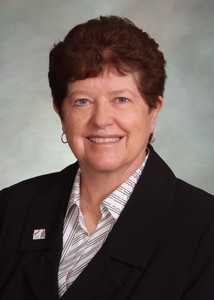
Sen. Wendy Schuler
Sponsored bills
Maddy summarySF 132 prohibits operating drones over critical infrastructure (including power plants, water facilities, hospitals, prisons, and military sites) for intentional photography, loitering, or criminal activity. Exceptions allow federal-authorized drone use, government operations, infrastructure owners, model aircraft in parks, and emergency services like police or disaster response teams. Violations face misdemeanor penalties ($2,500 fine or 6 months jail) for first offenses, escalating to felony charges ($5,000 fine or 2 years jail) for repeat violations. Law enforcement may disable violating drones, and the Wyoming National Guard can assist with enforcement, effective July 1, 2025.
Maddy summaryHB 129 changes the schedule for distributing school funds in Wyoming counties. It removes the requirement for county treasurers to distribute funds on June 20 (or the last business day before) each year, leaving only the regular monthly distributions. This directly affects county treasurers and school districts, as they will no longer process this specific annual transfer. The bill amends existing law to streamline fund transfers, with immediate effective date upon enactment.
Maddy summaryThis bill (SF 147) expands Wyoming's protections for service and assistance animals by explicitly including animals currently in training under the legal definitions of these animals. It increases criminal penalties for injuring or killing such animals, making it a misdemeanor punishable by up to 6 months in jail or a $5,000 fine. The law applies directly to individuals who harm or kill service animals (including those in training) or assistance animals, and affects all Wyoming residents and businesses serving people with disabilities. The bill takes effect on July 1, 2025.
Maddy summarySF 112 creates a licensing system for anesthesiologist assistants in Wyoming. It directly affects these professionals and the supervising anesthesiologists who must be physically present ("on-site") in medical facilities to oversee their work. The bill requires assistants to complete approved education programs, pass national certification exams, and work under a supervising anesthesiologist who co-signs patient notes within 24 hours. Key provisions define their scope of practice - including performing preoperative evaluations, airway management, general anesthesia, and administering medications - while specifying that supervision must occur in facilities like operating rooms or emergency departments. The law also establishes licensing fees, disciplinary procedures, and board oversight for the Wyoming Board of Medicine.
Maddy summaryWyoming's HB 60 requires all public schools, the University of Wyoming, and Wyoming community colleges to designate athletic teams by sex and prohibits male students from competing on teams designated for female students. The bill creates legal remedies allowing schools or students harmed by violations to seek damages, attorney fees, and injunctions through private lawsuits within two years of the violation. It defines "female" and "male" based on biological reproductive systems and prohibits schools from participating in female-designated sports with teams known to include male students. The law takes effect July 1, 2025, for all institutions.
Maddy summaryThis bill (SF 37) proposes creating a new "enhanced concealed carry permit" in Wyoming, allowing qualified individuals to carry concealed weapons in locations where standard permits would not apply. To qualify, applicants must complete a handgun safety course within the past year, provide fingerprints, hold a Wyoming ID, and meet other standard requirements. The bill does not change restrictions for school zones - its title misrepresents the content, as the text focuses solely on permit requirements and administration. The attorney general would issue these permits, maintain an online registry for law enforcement, and require applicants to acknowledge federal firearm laws. The bill died in committee in March 2025 and never became law.
Maddy summaryHB 180 creates a state-administered mental health program for K-12 public schools in Wyoming, requiring all public school districts to implement it for at least two school years starting in 2025-2026. The program mandates schools to screen students for mental health needs, stabilize those identified, and refer them to appropriate services, with districts reporting on student outcomes and funding use. It allocates $5 million (reappropriated from existing funds) plus $805,000 specifically for the program, funding new roles like community project managers and coordinators at each participating district. School districts must notify parents if their child is identified for services under the program and submit annual reports to the state education department, with a final evaluation due by August 1, 2026.
Maddy summaryHB 284 requires hospitals licensed by Wyoming's Department of Health that receive public funding to offer minimum services, including emergency care, radiology, lab services, and nursing. It specifically mandates obstetrics, labor, and delivery services unless a hospital applies for a waiver. Hospitals seeking a waiver must prove financial hardship, insufficient patient volume to maintain staff competency, or lack of necessary personnel/equipment, and provide approval from local county commissioners or hospital boards. This bill directly affects public-funded hospitals providing inpatient acute care in Wyoming, effective July 1, 2025, if passed.
Maddy summaryHB 162 would authorize and regulate online casino-style games (like poker or blackjack) in Wyoming, allowing licensed operators to offer these games via mobile apps or websites. It requires operators to verify players are physically in Wyoming (or a permitted state) using geolocation technology and sets rules for revenue collection, distribution, and security. The bill explicitly excludes tribal gaming on reservations, fantasy sports, and lotteries from its regulations. The Wyoming Gaming Commission would enforce these rules and impose criminal penalties for violations. (Note: This bill died in committee in March 2025 and is not law.)