

Maddy summaryThis bill designates April 26 as "Shared Parenting Day" in Wyoming through a ceremonial resolution. It does not change custody laws or create new obligations; instead, it formally recognizes the state's commitment to raising awareness about shared parenting arrangements. The resolution cites research on child well-being benefits when children maintain relationships with both parents after separation or divorce. This designation applies statewide and aims to promote community reflection on shared parenting, affecting all Wyoming residents through annual observance.

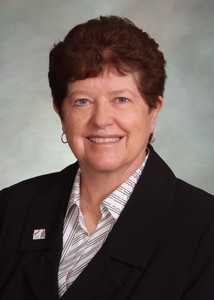
Sen. Wendy Schuler
Sponsored bills
Maddy summaryWyoming's SJ 9 is a joint resolution urging Congress to protect the state's access to federal public lands while ensuring local communities have a say in land management decisions. It opposes broad or indiscriminate sales of public lands and demands federal agencies respect Wyoming's existing land-use plans, county-level input, and multiple-use frameworks that support recreation, agriculture, hunting, fishing, and resource development. The resolution also calls for funding to streamline efficient land exchanges under current laws when they benefit local communities and public access, without advocating for specific policy changes.
Maddy summaryThis bill allows residents of nursing homes and assisted living facilities in Wyoming to renew their state-issued identification cards by mail instead of appearing in person. To qualify, residents must be full-time facility occupants, submit a notarized attestation from facility staff, pay a fee, provide documentation for any ID changes, and surrender their old card. The renewal method cannot be used if a resident has already renewed twice in 16 years or is changing information on their ID. The Wyoming Department of Transportation must create rules to implement this process, which takes effect July 1, 2026.
Maddy summaryWyoming's SF 85 (RAVEN Act) creates a dedicated funding account for the state's Internet Crimes Against Children (ICAC) task force, directly supporting law enforcement efforts to investigate and combat online child exploitation. The bill appropriates $1.6 million from the general fund (2026-2028) to sustain the ICAC program, with funds continuously available for investigations, victim assistance, and public education on internet safety. All money in the account must be used solely by the Division of Criminal Investigation to address internet crimes against children, with no funds allowed to lapse or transfer to other purposes. The account will accept additional grants or donations, ensuring stable, long-term resources for this critical law enforcement work.
Maddy summaryThis bill creates a new monthly death benefit for the surviving spouses of Wyoming law enforcement officers killed in the line of duty after July 1, 2026. The benefit equals 90% of the officer's salary plus 6% of that salary for each child under 18. It applies to death benefits distributed on or after the effective date, specifically amending retirement program provisions for law enforcement members. The policy directly affects surviving spouses and dependent children of qualifying officers who die while performing official duties.
Maddy summaryWyoming's SF 61 would exempt sales or transfers of motor vehicles between immediate family members (parents, children, spouses, or siblings) from state sales and use tax. This applies only when the original seller/donor paid tax on the vehicle when they first purchased it. The bill requires the transfer to occur directly between qualifying family members and designates the vehicle as tax-exempt under state law. It takes effect July 1, 2026.
Maddy summaryThis bill updates Wyoming's rules for involuntary mental health treatment. It expands the list of qualified professionals who can conduct initial examinations for individuals needing hospitalization, while requiring a licensed physician or psychologist to review findings if non-physician examiners are used. For outpatient commitment (where patients don't require hospitalization but need supervision), courts must set a maximum two-year period with mandatory court reviews every six months. These changes apply to all Wyoming courts handling mental health commitment cases.
Maddy summarySF 105 redefines "customer" in Wyoming real estate law as a person who has not established an agency relationship with a broker, such as someone viewing properties without formal representation. It requires real estate licensees to provide written disclosures about agency relationships before discussing transactions, clarifying that customers do not need to sign agency agreements to tour properties and are not entitled to confidentiality. The bill specifies that these disclosures must include key details about the customer relationship and include a signature line for acknowledgment, though the acknowledgment alone does not create a binding contract. The changes take effect July 1, 2026, and apply to all new transactions after that date.
Maddy summaryThis bill requires all Wyoming school districts to create and adopt written policies governing student use of cell phones and smart watches during school hours. It defines "smart watch" as a wearable device that functions like a phone (excluding basic timepieces or health trackers) and mandates that districts submit their policies to the state superintendent by July 1, 2026. The law applies directly to every public school district in Wyoming, setting a clear deadline for policy implementation. It does not specify exact restrictions but establishes a framework for districts to develop their own rules.
Maddy summaryThis bill allows hunters who have shot a black bear to use one leashed blood-trailing dog to track and recover the animal within 72 hours of the shot. It directly affects hunters who harvest black bears in Wyoming, permitting this specific tracking method under defined conditions. The key provision requires the dog to remain leashed and limits tracking to wounded or killed bears within the 72-hour window. The law takes effect on July 1, 2026.