

Maddy summaryHB 64 increases Medicaid reimbursement rates for eligible healthcare providers offering maternal services in rural and frontier areas of Wyoming. It directly affects Medicaid-enrolled providers (like obstetricians, family doctors with OB privileges, midwives, and surgeons providing cesarean backup) and Medicaid clients receiving prenatal, labor, delivery, and postpartum care in these regions. The bill allocates $2 million ($1 million state, $1 million federal) for 2026-2028 to fund these enhanced rates, with the Department of Health required to report on costs and potential adjustments by October 2027. Its key goal is to improve access to maternal care, reduce related health risks, and maintain provider availability in underserved areas.
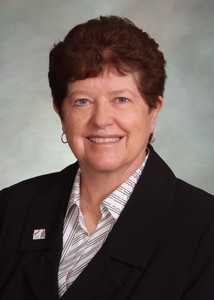
Sen. Wendy Schuler
Sponsored bills
Maddy summarySF 73 would establish a formal process for Wyoming to implement tolls on state highways. It grants the Department of Transportation authority to create a tolling program, requiring federal and state commission approval before tolls can be placed on any highway. The bill mandates reporting to a legislative committee after approvals and allows the Department to create rules for the program. This bill, which failed introduction in the legislature on February 10, 2026 (18-12), would directly affect Wyoming's highway system and transportation planning but has not become law.
Maddy summaryThis bill requires Wyoming public school districts to provide age-appropriate, evidence-based suicide prevention education to all students. It mandates that schools use programs consistent with existing state materials and training standards outlined in related statutes. The requirement applies to all K-12 public schools and takes effect on July 1, 2026. The legislation directly affects students and school districts by establishing a new mandatory educational component focused on suicide prevention.
Maddy summaryHB 62 amends Wyoming's prostitution and solicitation laws to explicitly include "sexual contact" as a prohibited act. The bill defines "sexual contact" as touching intimate areas (or clothing covering them) with sexual intent, expanding the scope of what constitutes prostitution. This change directly affects individuals engaging in or soliciting sexual contact for money, now covered under existing misdemeanor penalties of up to six months in jail or a $750 fine. The law becomes effective July 1, 2025, updating statutes W.S. 6-4-101 and 6-4-102.
Maddy summarySF 44 requires the University of Wyoming and Wyoming community colleges to have students compete in intercollegiate athletics based on their biological sex as recorded on their official birth certificate. The bill prohibits male students from competing in women's sports teams and female students from competing in men's sports teams, except when no equivalent team exists for their sex. It defines "biological sex" using the sex listed on a student's birth certificate (or a government record correcting a clerical error), and includes protections against retaliation for reporting violations. The law takes effect July 1, 2025, and allows students to sue institutions for violations.
Maddy summaryThis Wyoming bill (SF 22) amends state law to allow a child's parental rights to be terminated if the child has been under a relative's guardianship for over 24 months *and* the parent is found unfit. It specifically adds this scenario as a legal ground for termination, requiring clear evidence of both the extended relative guardianship and parental unfitness. The change directly affects parents whose children are in long-term relative care and have been deemed unfit by a court. The law takes effect July 1, 2025.
Maddy summaryHB 136 allows volunteer firefighters, emergency medical technicians, and search/rescue personnel in Wyoming to join the state employees' group health insurance plan without being disqualified due to participation in government health programs - except for the Affordable Care Act marketplace. It permits first responder departments to contribute toward volunteers' insurance premiums and requires volunteers to submit annual proof of their active status to their department. The bill takes effect July 1, 2025, and modifies existing rules to streamline enrollment and ongoing eligibility for these volunteers.
Maddy summarySF 152 creates a Wildfire Management Task Force to study wildfire impacts on state lands, local fire agencies, and communities. The task force, including legislative members, state officials, and industry representatives, must report by October 2025 with recommendations for future legislation. The bill also updates the state forester’s duties to include managing fire control programs on state lands, pre-positioning resources during high-risk periods, and setting standards for privately contracted fire services. It appropriates $50,000 total ($25,000 each for legislative and non-legislative members) to fund the task force, which will operate until December 31, 2026.
Maddy summarySF 100 allows children under 16 who are victims of incest, sexual assault, human trafficking, or certain violent crimes to testify remotely in court to reduce emotional distress. The court must hold a hearing and find that in-person testimony would cause more than minimal distress before permitting remote testimony, which uses closed-circuit technology to let the child testify separately from the defendant and jury. The bill also requires courts to provide accommodations like breaks, a supportive adult present (not a witness), or a therapeutic dog to help the child feel comfortable during testimony. It ensures defendants maintain real-time communication with their attorney during the child’s testimony and may exclude the jury from the child’s testimony room if needed. The law takes effect July 1, 2025.
Maddy summaryHB 192 requires Wyoming electric utilities (excluding city or town-owned systems) to create and submit detailed wildfire mitigation plans to the Public Service Commission. These plans must cover risk areas, infrastructure inspections, vegetation management, facility upgrades, de-energization procedures, community outreach, and cost estimates for regulated utilities. The Commission must review and approve plans within 120 days, and utilities must update plans every five years with annual compliance reports. The bill also allows regulated utilities to seek cost recovery for approved mitigation measures, though plan approval does not automatically grant this right.