

Maddy summarySF 144 creates the Wyoming-Ireland Trade Commission to promote economic collaboration between Wyoming and Ireland. The commission, composed of nine appointed members (including representatives from Wyoming businesses, higher education, and the Irish-American community), will focus on expanding trade, investment, and business/academic exchanges. It requires quarterly meetings, annual reports to the governor and legislature, and reimburses non-legislative members for travel and per diem expenses. This bill directly establishes a formal structure to advance Wyoming-Ireland economic partnerships, affecting businesses, educational institutions, and the Irish-American community through their representation on the commission.
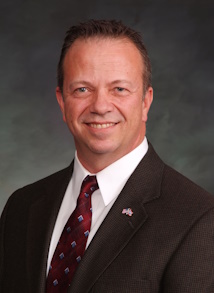
Rep. Rob Geringer
Sponsored bills
Maddy summaryHB 173 modifies requirements for independent candidates running for partisan offices in Wyoming. It requires candidates to swear they are unaffiliated with major parties or not registered with one, increases the signature requirement from 2% to 5% of votes cast for the relevant office in the last general election, and extends the petition filing deadline from 70 to 81 days before the primary election. These changes directly affect independent candidates seeking statewide, county, or district offices. The bill takes effect July 1, 2025.
Maddy summaryThis Wyoming joint resolution (SJ 8) requests Congress to propose a constitutional amendment allowing states and Congress to establish reasonable limits on money spent to influence elections. It specifically seeks authority to distinguish between natural persons (individuals) and artificial entities like corporations, unions, or AI when setting these limits. The resolution argues that current Supreme Court interpretations equating unlimited spending with free speech undermine political equality, election integrity, and local representation. It does not create new laws but formally asks Congress to initiate a constitutional amendment process to address these concerns.
Maddy summarySF 121 creates special "Rodeo - The Official Sport of Wyoming" license plates for non-commercial vehicles. Owners can choose to donate $1 or more per plate, with funds distributed annually to support rodeo programs at the University of Wyoming and Wyoming community colleges. The plates require a $1+ fee beyond standard registration and will stop production if fewer than 500 are issued by December 2031. Production begins January 2026, with plates designed to include the official sport designation.
Maddy summaryHB 242 requires motor vehicle dealers selling new trailers (excluding house trailers and semitrailers) to obtain a "sales authorization" document from the trailer manufacturer or distributor. This authorization confirms the dealer is permitted to sell specific trailer makes, replacing previous requirements for some dealers. The bill also exempts manufacturers and dealers of non-house-trailer, non-semitrailer new trailers from certain existing regulations (like W.S. 31-16-109 through 31-16-111). The changes apply to all new trailer dealers and manufacturers in Wyoming starting July 1, 2025.
Maddy summaryWyoming's SF 106 establishes rules for how new vehicle dealers can set rates for warranty repairs. It allows dealers to set hourly labor rates and parts markup rates based on their actual non-warranty service pricing, requiring mutual agreement with manufacturers or submission of specific repair order data. The bill specifies calculations (dividing total charges by hours for labor, or parts charges by cost for markup) and excludes routine maintenance, collision repairs, and other non-qualifying work from rate calculations. Manufacturers must pay approved warranty claims within 30 days and follow new procedures for audits. This directly affects dealers who perform warranty work and manufacturers who pay for those services.
Maddy summaryThis bill (SF 119) creates faster licensing pathways for military service members and their spouses in Wyoming who want to work in licensed professions. It requires licensing boards to issue expedited licenses within 30 days for applicants with active out-of-state licenses and military IDs, and to provide fee-free temporary permits valid up to 3 years while they complete full licensure requirements. The bill also mandates that boards consider military training and experience when evaluating qualifications and ask applicants about military status on all license forms. It applies to all licensed professions and takes effect July 1, 2025.
Maddy summaryHB 157 requires voters in Wyoming to provide proof of U.S. citizenship when registering to vote. It defines "proof of U.S. citizenship" to include documents like a Wyoming driver's license (without citizenship indicators), tribal ID cards, U.S. passports, birth certificates, or naturalization certificates. This applies to all voter registration processes, both in-person and by mail, and takes effect July 1, 2025. The bill directly affects any Wyoming resident seeking to register to vote for the first time or update their registration.
Maddy summaryWyoming's SF 39 allows vehicle owners to automatically transfer title to a named beneficiary upon death, bypassing probate. Owners complete a beneficiary designation form listing the vehicle details, all current owners, and the beneficiary's name, then sign it. Upon the owner's death, the beneficiary presents the form, proof of death, and a fee to the county clerk to receive a new title - without needing court involvement or the estate's approval. This applies only to vehicles with a properly executed form and does not affect existing liens or ownership interests.
Maddy summaryHB 42 requires all surgical abortion facilities in Wyoming to obtain a separate license as an ambulatory surgical center, with facilities performing three or more first-trimester abortions monthly or one or more second/third-trimester abortions annually subject to this rule. It mandates that physicians performing surgical abortions must be state-licensed, have hospital admitting privileges within 10 miles of the facility, and report each procedure to the health department. Violations carry penalties: misdemeanor fines up to $1,000 per day for unlicensed facilities, and felony charges (1-14 years imprisonment) for unlicensed providers performing abortions. The bill defines "surgical abortion" as procedures using instruments or devices to terminate pregnancy with intent to cause fetal death, excluding exceptions like ectopic pregnancy treatment or miscarriage care.