

Maddy summaryThis bill eliminates the state sales tax on firearms and ammunition purchased in Wyoming. It creates a new tax exemption for these items under existing sales and use tax laws, effective July 1, 2025. The exemption applies to all buyers purchasing firearms or ammunition subject to Wyoming's tax code, directly affecting consumers and retailers selling these products. The change removes a financial cost at the point of sale but does not alter firearm ownership laws or definitions.
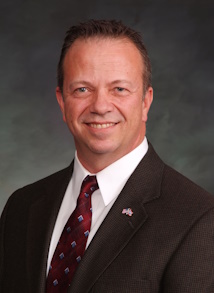
Rep. Rob Geringer
Sponsored bills
Maddy summarySF 90 requires Wyoming public school districts to adopt policies by the 2025-2026 school year allowing "patriotic organizations" (defined as youth groups under 21 with educational purposes promoting patriotism, like 4-H or specific federally listed groups) to participate in schools. The policy must permit organization representatives to speak to students during school hours about their activities, distribute materials, and display information - subject to parental notification and consent for student participation. School districts must allow displays outside school hours without unreasonable restrictions but are not required to provide equal access to non-patriotic groups. The bill takes effect July 1, 2025.
Maddy summaryHB 124 repeals the excise tax on malt beverages (like beer) in Wyoming, removing a tax of $0.005 per liter that previously applied to beer sales. It also adjusts limits for personal importation of malt beverages, allowing individuals to bring in up to five (5) gallons for personal use without paying state taxes. The bill directly affects beer wholesalers, retailers, and consumers who import beer for personal use. Key changes include removing the tax collection requirement for malt beverages and updating importation rules, effective July 1, 2025. The bill does not change taxes on wine or distilled spirits.
Maddy summaryWyoming's HB 202, the "Fast Track Permits Act," sets strict deadlines for local governments (cities, counties) to review property development requests that fit within a property's existing zoning. It requires local entities to: (1) notify applicants within 15 days if a request is incomplete, (2) approve or deny complete requests within 60 days (with limited extensions), and (3) automatically approve requests if deadlines are missed. If a local government fails to meet the 60-day deadline, the request is approved by default, and applicants may receive a 10% fee reduction for missed requirements. The bill applies to standard development permits but excludes rezoning, subdivision, and conditional use requests, taking effect July 1, 2025.
Maddy summaryHB 229 designates the High Plains Research Station and Arboretum in Laramie County as a state historic site managed by Wyoming's Department of State Parks and Cultural Resources. The bill requires the department to create a strategic master plan for preservation and operations within one year, including partnerships with local entities, and authorizes fees to fund site maintenance, development, and staff. These fees must be deposited into the state parks account, with annual financial reports submitted to the legislature. The bill also specifies $3.3 million in existing funds for site operations, effective immediately upon enactment.
Maddy summaryHB 276 requires Wyoming county sheriffs to negotiate written agreements with the U.S. Attorney General to enforce federal immigration laws, including detaining individuals for immigration purposes. County sheriffs must report annually on agreement status to the Wyoming Attorney General, who then reports to a legislative committee, with counties failing to pursue agreements losing eligibility for certain law enforcement funds. This bill directly affects all Wyoming county sheriffs and their counties, mandating specific cooperation with federal immigration enforcement under 8 U.S.C. § 1357(g).
Maddy summaryHB 76 requires Wyoming health insurers to have Wyoming-licensed physicians or healthcare providers make decisions on prior authorization denials and review appeals, instead of relying solely on insurance company staff. It amends state insurance code sections to mandate that all such decisions be made by licensed providers with current Wyoming practice permits. The law applies to all prior authorization decisions made on or after July 1, 2025. This directly affects insurers, healthcare providers, and patients seeking coverage approvals in Wyoming.
Maddy summaryHB 174 lowers Wyoming's minimum age to obtain a concealed carry permit from 21 to 18 years old. It directly affects residents aged 18 and older who wish to carry concealed firearms. The bill amends Wyoming Statute 6-8-104(b)(ii) to reflect this age change, while repealing an outdated section (6-8-104(j)). The law would take effect on July 1, 2025, if passed.
Maddy summaryHB 126 repeals a sales tax on services that repair, alter, or improve tangible personal property (like car repairs or home renovations) in Wyoming. This directly affects businesses providing these services and their customers, who will no longer pay this tax on such work. The bill amends tax code sections to remove the tax requirement for these services, while keeping sales tax on digital products separate. The repeal takes effect July 1, 2025, with the Department of Revenue required to adopt implementing rules by that date.
Maddy summaryThis bill clarifies that multipurpose vehicles (like SUVs or vans used for personal and light commercial purposes) are eligible for existing special license plate programs in Wyoming. It amends multiple statutes to explicitly include "multipurpose vehicle" alongside passenger cars, trucks, and motorcycles in the list of qualifying vehicle types for special plates. This affects owners or lessees of multipurpose vehicles seeking special plates for veterans, firefighters, University of Wyoming affiliation, or other designated groups, ensuring they can apply for these plates without eligibility confusion. The change does not create new plate types but updates current rules to include these vehicles.