

Maddy summaryThis bill requires all pesticide labels sold in Wyoming to match the health and safety warnings registered with the U.S. Environmental Protection Agency (EPA), eliminating state-specific variations. It directly affects pesticide sellers and distributors in Wyoming by mandating uniform labeling aligned with federal standards. Key provisions include overriding previous local labeling requirements and ensuring labels don’t differ in material ways from EPA-registered versions. The law does not change Wyoming’s authority to regulate pesticide use, distribution, or sale under existing statutes, and takes effect July 1, 2026.
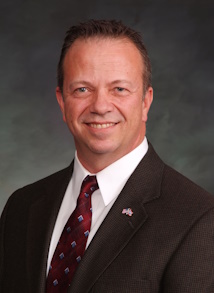
Rep. Rob Geringer
Sponsored bills
Maddy summaryHB 81, the "Less is More Plate Act," would have removed the requirement for Wyoming vehicle owners to display a license plate on the front of their vehicles, while keeping the rear plate requirement. This bill directly affected all drivers who currently display front plates under Wyoming law (W.S. 31-2-205(a)(i)). The key provision repealed front plate mandates in multiple sections of the vehicle code, including those governing registration and display rules. The bill failed to pass in the Wyoming House (38-23) in February 2026 and never became law.
Maddy summaryThis Wyoming bill (SF 38) adds a 3% management fee to unspent funds collected by the Wyoming Beef Council. The fee, collected from the council's existing revenue, funds additional services provided directly to the council. It affects Wyoming beef producers who pay fees to the council, as the new fee applies to unobligated portions of those funds. The bill takes effect July 1, 2026.
Maddy summaryHB 156 requires voters in Wyoming to prove they have been a bona fide resident of the state for at least 30 days before an election. It mandates that voters provide documentation verifying their residency when registering and prohibits registration based on documents showing noncitizen status. The bill defines "proof of residence" and directs the Secretary of State to establish acceptable documents through rulemaking. This affects all individuals registering to vote in Wyoming elections by adding a residency verification step to the registration process.
Maddy summaryHB 133 prohibits cities, towns, counties, and the state of Wyoming from implementing or designating "sanctuary" policies that limit cooperation with federal immigration authorities. It specifically bans local governments from adopting rules that prevent officials from sharing immigration status information with federal law enforcement or declaring their jurisdiction a "sanctuary." Violations could result in withholding state funding from non-compliant localities and criminal penalties of up to 10 years in prison or $20,000 fines for local officials refusing to share such information. The bill also explicitly prohibits the governor from designating Wyoming as a sanctuary state.
Maddy summaryHB 246 designates every Wednesday as "Wyoming Wednesday - Brown and Gold Day," encouraging residents to wear brown and gold to celebrate the state. The bill requires the governor to issue an annual proclamation by August 1 each year, but explicitly states it does not affect commercial transactions, legal agreements, or require closures of schools, businesses, or government offices. This symbolic measure, effective July 1, 2025, has no binding requirements beyond voluntary community participation.
Maddy summaryHB 64 requires healthcare providers to offer an ultrasound to women seeking a chemical abortion (using drugs) at least 48 hours before dispensing the medication. The ultrasound must show the fetus and, if audible, the heartbeat, and providers must document details like the date, physician, and fetal age. Before providing the abortion drugs, the physician or pharmacist must verify the ultrasound occurred. The law excludes exceptions for life-saving care, ectopic pregnancy, or medical treatments where the fetus may be harmed, and penalties for non-compliance apply only to providers (not patients). This directly affects women seeking medication abortions and the healthcare facilities providing them in Wyoming.
Maddy summarySF 132 prohibits operating drones over critical infrastructure (including power plants, water facilities, hospitals, prisons, and military sites) for intentional photography, loitering, or criminal activity. Exceptions allow federal-authorized drone use, government operations, infrastructure owners, model aircraft in parks, and emergency services like police or disaster response teams. Violations face misdemeanor penalties ($2,500 fine or 6 months jail) for first offenses, escalating to felony charges ($5,000 fine or 2 years jail) for repeat violations. Law enforcement may disable violating drones, and the Wyoming National Guard can assist with enforcement, effective July 1, 2025.
Maddy summaryHB 289 removes restrictions on bed expansions for hospitals and nursing care facilities in Wyoming. It repeals existing limits that previously required state approval before adding beds, instead requiring health department reviews only for safety and health compliance. The bill mandates that the Department of Health report to lawmakers by September 2029 on how the changes affect facility construction and operations. The law takes effect July 1, 2026.
Maddy summaryThis bill (SF 147) expands Wyoming's protections for service and assistance animals by explicitly including animals currently in training under the legal definitions of these animals. It increases criminal penalties for injuring or killing such animals, making it a misdemeanor punishable by up to 6 months in jail or a $5,000 fine. The law applies directly to individuals who harm or kill service animals (including those in training) or assistance animals, and affects all Wyoming residents and businesses serving people with disabilities. The bill takes effect on July 1, 2025.