

Maddy summaryHB 72 requires public facilities in Wyoming, including schools, correctional facilities, and government buildings, to designate multi-occupancy changing rooms, restrooms, and sleeping quarters exclusively for males or females. It prohibits access to opposite-sex designated areas and allows individuals to sue public entities if they encounter someone of the opposite sex in a designated space, unless exceptions apply (like single-occupancy unisex rooms, medical emergencies, or cleaning staff). The bill defines "female" and "male" biologically and specifies that civil lawsuits must be filed within two years of a violation, with successful plaintiffs able to recover attorney fees. This directly affects public facility operators and users in shared spaces, aiming to enforce single-sex facility use through legal accountability.
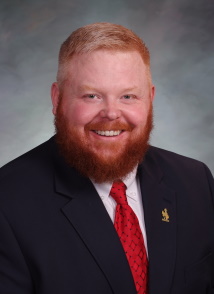
Rep. Cody Wylie
Sponsored bills
Maddy summaryHB 300 imposes a 3.5% tax on electricity producers in Wyoming, effective January 1, 2026, based on their annual gross energy earnings from electricity generated within the state. It directly affects utility companies and power generators, while exempting electricity produced by the federal or state government and small personal use (under 500 kWh daily). Producers must report annual revenue by February 1 and pay the tax by the same deadline, with penalties of 5% per 30 days for late filing. The tax revenue will be collected by the Wyoming Department of Revenue and distributed per the bill’s provisions.
Maddy summarySF 89 repeals Wyoming's bed expansion limitations for hospitals and nursing care facilities, removing the requirement for state approval before adding beds. It modifies health facility regulations so the Department of Health can only review plans for health and life safety compliance, not bed count increases. The bill requires the Department of Health to report to the legislature by September 2029 on how the change affects facility construction and operations. This law takes effect July 1, 2025. (Bill SF 89, Certificate of Need Repeal-2)
Maddy summaryWyoming's SF 159 regulates dental insurance billing practices to protect dentists and patients. The bill prohibits insurers from forcing dentists to accept predetermined fees for non-covered services, banning "downcoding" (reducing billing codes without justification) and "bundling" (combining procedures to make them non-billable). Insurers must clearly explain billing adjustments in patient explanations of benefits and disclose their downcoding policies. Dentists can still collect fees per their published schedule for downcoded services if patients provide written consent. The law applies to new insurance contracts starting July 1, 2025.
Maddy summaryWyoming's SF 186 establishes rules for storing spent nuclear fuel used in reactors manufactured and deployed within the state. It requires advanced nuclear reactor manufacturers (companies operating in Wyoming) to use temporary dry cask storage (special containers designed for safe storage), submit detailed applications to the state environmental department, and provide binding timeframes for moving fuel to permanent storage or reprocessing. The bill mandates reporting to state and local emergency authorities, exempts these facilities from other siting laws, and allows fees to be charged if fuel remains stored beyond agreed timelines. This directly affects Wyoming-based reactor manufacturers and their fuel storage operations, with no broader public impact specified.
Maddy summarySF 112 creates a licensing system for anesthesiologist assistants in Wyoming. It directly affects these professionals and the supervising anesthesiologists who must be physically present ("on-site") in medical facilities to oversee their work. The bill requires assistants to complete approved education programs, pass national certification exams, and work under a supervising anesthesiologist who co-signs patient notes within 24 hours. Key provisions define their scope of practice - including performing preoperative evaluations, airway management, general anesthesia, and administering medications - while specifying that supervision must occur in facilities like operating rooms or emergency departments. The law also establishes licensing fees, disciplinary procedures, and board oversight for the Wyoming Board of Medicine.
Maddy summaryThis bill eliminates the state sales tax on firearms and ammunition purchased in Wyoming. It creates a new tax exemption for these items under existing sales and use tax laws, effective July 1, 2025. The exemption applies to all buyers purchasing firearms or ammunition subject to Wyoming's tax code, directly affecting consumers and retailers selling these products. The change removes a financial cost at the point of sale but does not alter firearm ownership laws or definitions.
Maddy summarySF 90 requires Wyoming public school districts to adopt policies by the 2025-2026 school year allowing "patriotic organizations" (defined as youth groups under 21 with educational purposes promoting patriotism, like 4-H or specific federally listed groups) to participate in schools. The policy must permit organization representatives to speak to students during school hours about their activities, distribute materials, and display information - subject to parental notification and consent for student participation. School districts must allow displays outside school hours without unreasonable restrictions but are not required to provide equal access to non-patriotic groups. The bill takes effect July 1, 2025.
Maddy summaryWyoming's HB 202, the "Fast Track Permits Act," sets strict deadlines for local governments (cities, counties) to review property development requests that fit within a property's existing zoning. It requires local entities to: (1) notify applicants within 15 days if a request is incomplete, (2) approve or deny complete requests within 60 days (with limited extensions), and (3) automatically approve requests if deadlines are missed. If a local government fails to meet the 60-day deadline, the request is approved by default, and applicants may receive a 10% fee reduction for missed requirements. The bill applies to standard development permits but excludes rezoning, subdivision, and conditional use requests, taking effect July 1, 2025.
Maddy summaryHB 229 designates the High Plains Research Station and Arboretum in Laramie County as a state historic site managed by Wyoming's Department of State Parks and Cultural Resources. The bill requires the department to create a strategic master plan for preservation and operations within one year, including partnerships with local entities, and authorizes fees to fund site maintenance, development, and staff. These fees must be deposited into the state parks account, with annual financial reports submitted to the legislature. The bill also specifies $3.3 million in existing funds for site operations, effective immediately upon enactment.