

Maddy summaryWyoming's SJ 9 is a joint resolution urging Congress to protect the state's access to federal public lands while ensuring local communities have a say in land management decisions. It opposes broad or indiscriminate sales of public lands and demands federal agencies respect Wyoming's existing land-use plans, county-level input, and multiple-use frameworks that support recreation, agriculture, hunting, fishing, and resource development. The resolution also calls for funding to streamline efficient land exchanges under current laws when they benefit local communities and public access, without advocating for specific policy changes.

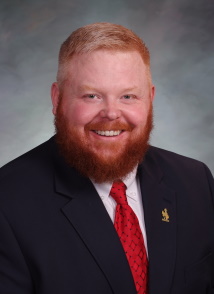
Rep. Cody Wylie
Sponsored bills
Maddy summaryWyoming's SF 113 requires county clerks to conduct hand counts of election ballots for the 2026 primary and general elections. Specifically, counties must physically examine approximately 5% of ballots for one federal race, one statewide race (selected by the state secretary of state), and all legislative races on the ballot. The hand count results must be compared to electronic tabulation results within nine days of the county canvass, with any discrepancies reported to the secretary of state. This bill directly affects county election officials who will implement the hand count audits. The law takes effect immediately upon becoming law, with reports due by May 1, 2027.
Maddy summaryWyoming's SF 123 creates the Wyoming Energy Dominance Fund, administered by the Wyoming Energy Authority, to support the state's traditional energy industries. The fund receives a portion of severance tax revenues (50% for fiscal years 2027-2028, then 50% for 2029 onward) that would otherwise go to the permanent mineral trust fund or school accounts. It provides grants and loans for projects like coal innovation, natural gas, uranium processing, and pipeline infrastructure - requiring a 1:1 match from non-state funds - but explicitly excludes wind and solar energy projects. The fund aims to bolster Wyoming's energy sector, which supports over 60,000 jobs and generates significant state revenue.
Maddy summaryWyoming's SF 61 would exempt sales or transfers of motor vehicles between immediate family members (parents, children, spouses, or siblings) from state sales and use tax. This applies only when the original seller/donor paid tax on the vehicle when they first purchased it. The bill requires the transfer to occur directly between qualifying family members and designates the vehicle as tax-exempt under state law. It takes effect July 1, 2026.
Maddy summarySF 107 creates a statewide electronic system for processing motor vehicle registrations and license plates in Wyoming. The Department of Transportation must implement this system by July 1, 2028, to handle all registration transactions (like renewals and transfers), plate issuance, and fee processing for registration, specialty plates, and sales taxes. County treasurers are required to use this system for their vehicle registration duties instead of older methods, and the state may charge a $5 transaction fee to cover system costs. The bill also mandates electronic record-sharing between counties and the state, with development part of replacing the existing revenue system.
Maddy summaryWyoming's SF 90 limits fees charged by school districts for non-school activities using district property, such as youth clubs or community groups. It requires these fees to be capped at the actual hourly costs incurred by the district (including staff, equipment, and utilities) and mandates an itemized cost statement within 15 days of a request. The bill applies to all such rentals starting July 1, 2026, and does not affect contracts signed before that date. This policy ensures transparency and cost-based pricing for facility rentals, directly affecting community groups and organizations seeking to use school spaces.
Maddy summarySF 105 redefines "customer" in Wyoming real estate law as a person who has not established an agency relationship with a broker, such as someone viewing properties without formal representation. It requires real estate licensees to provide written disclosures about agency relationships before discussing transactions, clarifying that customers do not need to sign agency agreements to tour properties and are not entitled to confidentiality. The bill specifies that these disclosures must include key details about the customer relationship and include a signature line for acknowledgment, though the acknowledgment alone does not create a binding contract. The changes take effect July 1, 2026, and apply to all new transactions after that date.
Maddy summaryHB 157 creates a civil lawsuit right for parents if Wyoming state agencies or local governments infringe their parental rights under Wyoming law (specifically W.S. 14-2-206). It removes standard government immunity and waives the typical 2-year notice requirement for filing such claims. Parents who win these lawsuits can recover attorney fees and court costs. The law applies to state agencies and political subdivisions (like school districts) and takes effect July 1, 2026.
Maddy summaryThis bill appropriates $15 million from Wyoming's tourism reserve fund to support the development of a rodeo and cowboy museum and hall of fame in Wyoming. The funds will be distributed in three installments of $5 million each on July 1, 2026, 2027, and 2028, contingent on the Wyoming Tourism Board certifying that relocation efforts will boost tourism, jobs, and state revenue. Applicants must provide matching funds (at least $1 for every $1 granted) and relocate to Wyoming by June 30, 2028, or repay the grant. The Wyoming Office of Tourism must report annually on fund usage until 2036.
Maddy summaryThis Wyoming bill (SF 53) requires high school athletes to maintain "amateur status" to compete in school-sanctioned sports, directly affecting student-athletes in Wyoming public high schools. It prohibits athletes from receiving money, prizes exceeding association limits, or monetizing their name/image/likeness for competition, with key exceptions including family support payments, necessary travel expenses, and scholarships paid directly to colleges after graduation. Violating these rules results in loss of eligibility for the sport. The law takes effect July 1, 2026, and aims to align with national amateurism standards for high school athletics.