

Maddy summaryWyoming's HB 228 prohibits state and county election officials (including county clerks) from accepting private money, grants, or services for election administration costs like voter education, registration, or outreach. The bill requires all election-related expenses to be funded solely with public money, with exceptions only for meals provided to poll workers on election day or during training. It also bans private entities from offering such funds and explicitly allows federal election funding. The law takes effect July 1, 2025, and creates misdemeanor penalties for violations.
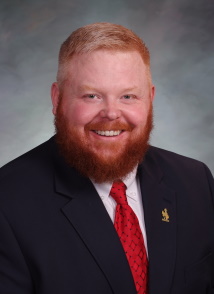
Rep. Cody Wylie
Sponsored bills
Maddy summaryHB 136 allows volunteer firefighters, emergency medical technicians, and search/rescue personnel in Wyoming to join the state employees' group health insurance plan without being disqualified due to participation in government health programs - except for the Affordable Care Act marketplace. It permits first responder departments to contribute toward volunteers' insurance premiums and requires volunteers to submit annual proof of their active status to their department. The bill takes effect July 1, 2025, and modifies existing rules to streamline enrollment and ongoing eligibility for these volunteers.
Maddy summaryHB 192 requires Wyoming electric utilities (excluding city or town-owned systems) to create and submit detailed wildfire mitigation plans to the Public Service Commission. These plans must cover risk areas, infrastructure inspections, vegetation management, facility upgrades, de-energization procedures, community outreach, and cost estimates for regulated utilities. The Commission must review and approve plans within 120 days, and utilities must update plans every five years with annual compliance reports. The bill also allows regulated utilities to seek cost recovery for approved mitigation measures, though plan approval does not automatically grant this right.
Maddy summarySF 132 prohibits operating drones over critical infrastructure (including power plants, water facilities, hospitals, prisons, and military sites) for intentional photography, loitering, or criminal activity. Exceptions allow federal-authorized drone use, government operations, infrastructure owners, model aircraft in parks, and emergency services like police or disaster response teams. Violations face misdemeanor penalties ($2,500 fine or 6 months jail) for first offenses, escalating to felony charges ($5,000 fine or 2 years jail) for repeat violations. Law enforcement may disable violating drones, and the Wyoming National Guard can assist with enforcement, effective July 1, 2025.
Maddy summarySF 158 regulates dental insurance networks in Wyoming by requiring dental carriers (insurance companies offering dental plans) to allow third-party processors access to network contracts under specific conditions. It mandates that dental carriers must provide written notice to providers 30 days before adding new third parties, maintain updated website lists of all third parties, and require third parties to identify discount sources in payment remittances. The bill also defines "virtual credit card payments" as single-use electronic payments for dental services, replacing physical cards. These changes directly affect dental providers, insurance carriers, and third-party payment processors by standardizing access to network pricing and payment methods.
Maddy summaryHB 188 exempts home-based child care providers who care for up to four children from multiple families (with no more than two children under age two) at one parent's home from standard child care facility certification requirements. This directly affects informal caregivers operating in private residences, allowing them to provide care without full licensing while still meeting basic safety standards. The bill requires the Wyoming Department of Family Services to create implementing rules within 180 days. It takes effect immediately upon becoming law, streamlining oversight for small-scale, family-shared home care arrangements. The legislation does not alter certification rules for licensed child care centers or larger facilities.
Maddy summaryThis bill increases the cost threshold requiring competitive bidding for purchases and projects by Wyoming water, sewer, and water/sewer districts. It raises the mandatory bidding requirement from $30,000 to $75,000 for contracts involving labor, materials, or supplies. Districts can now make purchases under $75,000 without competitive bidding, but must still follow bidding rules for $75,000+ projects and accept the lowest responsible bid. The law applies to projects initiated on or after July 1, 2025.
Maddy summaryHB 310 allows owners of commercial trailers (defined as part of a commercial vehicle under Wyoming law) to permanently register their trailers for a one-time $350 fee instead of paying annual registration fees. This applies to trailers qualifying as commercial vehicles under existing statutes, directly affecting commercial trailer owners and operators. The bill creates a permanent registration option with fee exemptions for these trailers, while directing 50% of the $350 fee to county treasurers and 50% to the highway fund. It amends several statutes to establish this process and clarifies that permanent registration does not transfer to new owners upon sale.
Maddy summaryThis bill (SF 145) allows Wyoming local governments - such as cities, counties, and special districts - to invest public funds in stocks (equities) for the first time. It creates a new investment category under existing law, requiring these investments to follow state investment policies set by the State Loan and Investment Board. Local governments may also form advisory boards for investment guidance, but these stock investments are exempt from certain prior restrictions. The change takes effect July 1, 2025, after the state board adopts necessary policies.
Maddy summaryWyoming's HB 313 modifies how counties can lower speed limits on non-interstate highways and local streets. It requires county commissioners to submit proposed speed limit decreases to the Transportation Commission within 60 days, giving the Commission 60 days to override the proposal with a majority vote. The bill applies to state highways and county roads (excluding interstates) and takes effect July 1, 2025. This change streamlines the approval process by centralizing authority with the Transportation Commission for speed limit adjustments.