Issue · Healthcare

Healthcare

Every healthcare bill, vote, and legislator stance in Wisconsin, automatically classified by Maddy, our AI policy reader.

Total bills
399
2025-2026 Regular Session
Top supporter
Shannon Zimmerman
79% support rate
Top opponent
Russell Goodwin
31% support rate
Ranked legislators
10
5 support · 5 oppose
Key legislators

Who's moving healthcare in Wisconsin

Legislators moving healthcare in Wisconsin
Legislator Party Stance Support rate Votes
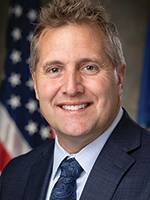
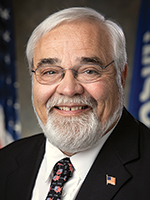
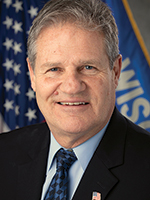
Shannon Zimmerman
Shannon Zimmerman House · District 30
R
Support
79% 35
Will Penterman
Will Penterman House · District 38
R
Support
71% 41
Jeff Mursau
Jeff Mursau House · District 36
R
Support
69% 44
Chanz Green
Chanz Green House · District 74
R
Support
67% 47
Paul Melotik
Paul Melotik House · District 22
R
Support
67% 47
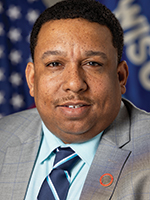
Russell Goodwin
Russell Goodwin House · District 12
D
Oppose
31% 42
Joe Sheehan
Joe Sheehan House · District 26
D
Oppose
33% 43
Vinnie Miresse
Vinnie Miresse House · District 71
D
Oppose
35% 46
Ryan Clancy
Ryan Clancy House · District 19
D
Oppose
38% 44
Christian Phelps
Christian Phelps House · District 93
D
Oppose
39% 47
Showing 51–60 of 399 bills

All healthcare bills

failed · Wisconsin · Assembly Mar 23, 2026

AB 1236: Relating to: expanding eligibility for the Medical Assistance program. (FE)

This bill expands eligibility for Wisconsin's Medical Assistance program to include parents or caretakers of dependent children and adults under 65 with family incomes between 101% and 133% of the poverty line. The legislation requires the state to seek federal approval before these new eligibility categories take effect, with the changes scheduled to begin on January 1, 2029, if approved. If federal approval is not obtained, individuals meeting the new income and relationship criteria would not qualify for Medical Assistance benefits. The bill also adjusts existing income thresholds for current eligible families and reorganizes statutory sections to accommodate these changes.
failed · Wisconsin · Assembly Mar 23, 2026

AB 1216: Relating to: a state-based insurance exchange and making an appropriation. (FE)

This bill establishes a state-based health insurance exchange and provides funding for its operation. It requires the state insurance commissioner to set up an exchange that joins the federal platform by 2029 and transitions to a fully state-run system by 2030. The legislation creates a new fee structure where insurers using the exchange pay a 0.5 percent charge on premiums during the federal platform phase, with different rates applying after the transition. Additionally, it sets rules for how unspent funds from the exchange program must be handled at the end of each fiscal year.
failed · Wisconsin · Senate Mar 23, 2026

SB 1121: Relating to: BadgerCare purchase option, basic plan, state-based insurance exchange, and granting rule-making authority. (FE)

This bill creates a basic health plan option for individuals with household incomes up to 200% of the poverty line and establishes a purchase option program allowing eligible individuals with higher incomes to buy coverage through the state program instead of private insurance. The program would offer benefits equal to existing state coverage, use premium rates similar to managed care plans, and allow enrollment during standard open enrollment periods while seeking federal waivers to ensure financial stability. Additionally, the bill directs the state to develop a state-based insurance exchange that would allow access to these purchase options and grants officials authority to create necessary rules for implementation.
Sub-Topics Insurance
failed · Wisconsin · Senate Apr 8, 2026

SB 1132: Relating to: medical debt abolition and making an appropriation. (FE)

This bill establishes a state program to eliminate medical debt for eligible residents by purchasing and forgiving outstanding healthcare bills. It allocates $10 million annually for 2025-26 and 2026-27 to fund the program, which targets individuals earning up to 400 percent of the federal poverty line or those with medical debt equal to at least 5 percent of their household income. The state Department of Health Services or a contracted nonprofit would identify eligible residents, negotiate with healthcare providers and debt collectors to buy their debts, and then cancel the obligations while minimizing tax consequences for recipients. The bill requires annual reporting on the amount of debt abolished, the number of residents helped, and demographic data about participants and healthcare providers involved.
failed · Wisconsin · Senate Mar 23, 2026

SB 901: Relating to: cost-sharing cap on insulin.

This bill limits the amount patients can pay out of pocket for insulin by setting a maximum cost-sharing cap of $35 per one-month supply for disability insurance policies and self-insured health plans. It applies to plans that currently cover insulin and charge copayments, deductibles, or coinsurance, while allowing insurers to charge less than the cap or no cost at all. The legislation also clarifies that existing diabetes coverage requirements for insulin pumps and supplies remain unchanged, though pump coverage may still be limited to one per year. The changes would take effect on the first day of the fourth month after the bill is published.
Sub-Topics Prescription Drugs
failed · Wisconsin · Assembly Apr 13, 2026

AB 1060: Relating to: grants for falls prevention awareness and initiatives and making an appropriation. (FE)

AB 1060 allocates $450,000 annually for two fiscal years (2025-26 and 2026-27) to fund falls prevention awareness and initiatives in Wisconsin. The bill directs the Department of Health Services to award this grant specifically to the Wisconsin Institute for Healthy Aging. This funding supports statewide programs aimed at reducing fall-related injuries, primarily affecting older adults in the state. The bill makes a concrete budget adjustment to enable this grant without altering existing health service programs.
Sub-Topics Appropriations
failed · Wisconsin · Assembly Mar 23, 2026

AB 1086: Relating to: reimbursement of maternal mental health screenings under the Medical Assistance program and coverage of maternal mental health screenings by health insurance policies and plans. (FE)

This bill requires Wisconsin's Medicaid program (Medical Assistance) to reimburse providers for maternal mental health screenings during pregnancy. It also mandates that all health insurance plans covering maternity must include these screenings as a standard benefit, with no cost to the patient. The law specifies that screenings can be provided by licensed midwives, nurse-midwives, or other qualified healthcare providers. It includes a requirement for the state to develop screening standards in consultation with organizations led by Black, Indigenous, and other people of color. Coverage requirements will take effect for most plans starting September 1, 2026.
failed · Wisconsin · Assembly Mar 23, 2026

AB 1011: Relating to: recovery of noneconomic damages in medical malpractice cases.

AB 1011 raises the cap on total noneconomic damages (such as pain, suffering, and loss of enjoyment of life) in medical malpractice cases from $750,000 to $3,000,000 per incident. This directly affects patients who win malpractice lawsuits and healthcare providers or insurers who pay these damages. The bill amends statutes to set this new $3 million limit for all claims against health care providers or their employees for negligence occurring on or after April 6, 2006. It also updates the legislative findings to state that this amount balances victim compensation with maintaining affordable healthcare access. The bill does not change limits for economic damages (like medical costs) or alter liability rules.
Sub-Topics Substance Abuse
failed · Wisconsin · Assembly Mar 23, 2026

AB 1035: Relating to: expanding the Wisconsin deflection initiative and making an appropriation. (FE)

AB 1035 expands Wisconsin's deflection initiative by providing $400,000 annually for fiscal years 2025-26 and 2026-27 to existing participating sites. It allows these sites to use grants for hiring staff, contracting vendors for program evaluations, or purchasing technology that meets privacy standards like HIPAA. Vendors must have at least five years of experience with similar programs and comply with legal requirements. The bill also adds $107,100 for one additional full-time position to support this expansion.
failed · Wisconsin · Senate Mar 23, 2026

SB 996: Relating to: funding for grants for community emergency medical services and falls prevention initiatives and making an appropriation. (FE)

SB 996 creates a new state appropriation of $600,000 for fiscal year 2025-26 to fund grants supporting community paramedic programs within emergency medical services. It also increases annual funding for falls prevention initiatives by $200,000 per fiscal year (2025-26 and 2026-27). The bill establishes these as continuing appropriations under Wisconsin statute for eligible programs. These funds directly support local health services addressing community safety and injury prevention. The bill takes effect July 1, 2027.
Sub-Topics Appropriations
Showing 51 to 60 of 399 bills
Previous 1 5 6 7 40 Next