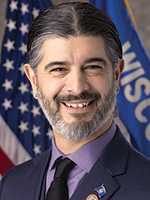
This bill proposes creating a publicly financed health care plan for Wisconsin residents and establishes a new Office of the Ombudsman for Patient Advocacy within the Department of Health Services. The ombudsman would be appointed by the health secretary to advocate for patients, and the bill creates a separate health plan fund to manage money for the program, including federal payments and donations. The legislation defines key terms like "enrollee" and "medically necessary" care, authorizes the department to seek federal waivers to implement the plan, and sets up rules for how health care providers are classified and compensated. However, the bill failed to pass in the Senate on March 23, 2026, so these changes have not been enacted.
This bill creates a new Office of the Public Intervenor within the state insurance commissioner's office to help individuals with insurance claims, policies, and appeals for medical procedures and medications. It establishes rules requiring insurers to process disability insurance claims within reasonable timeframes, provide detailed explanations for claim denials, and disclose when artificial intelligence is used in claim decisions. The office can levy assessments on insurers based on their premium volume to fund its operations and conduct audits of claims denial practices. Additionally, the bill prohibits specific insurer practices such as using vague policy terms, stalling claim reviews, or allowing non-physician personnel to determine medical necessity.
This bill requires health insurance plans, including those for government employees and public schools, to cover prosthetic limbs and custom orthotic braces when deemed medically necessary by a licensed healthcare provider. The law defines prostheses as devices that replace missing limbs and custom orthotic braces as personalized devices that correct or support musculoskeletal conditions, ensuring coverage includes materials, instruction, and repairs under specific circumstances. Coverage must match or exceed federal standards and apply to replacement or repair when medically needed due to changes in the patient's condition or when repair costs exceed 60 percent of replacement costs. The bill also mandates that plans maintain access to at least two in-network providers in the state and requires written explanations for any coverage denials based on medical necessity.
This bill aims to protect patients from unexpected medical bills by establishing rules for how health insurance plans must handle emergency care and services provided by out-of-network providers. It requires insurance plans to cover emergency medical services without prior authorization and ensures that cost-sharing amounts for out-of-network emergency care are no higher than what would apply for in-network care. Additionally, the bill mandates that plans pay out-of-network providers directly for services rendered at participating facilities and counts patient cost-sharing payments toward in-network deductibles and out-of-pocket maximums. These provisions apply to defined network plans, preferred provider plans, and self-insured governmental plans that have networks of participating providers.
This bill would ban the sale of products containing intentionally added PFAS chemicals starting in 2032, covering items like food packaging, cookware, cosmetics, and textiles used in homes. It requires manufacturers to submit detailed information about PFAS use in their products and allows the state to add more product categories to the ban through future rules. A complete ban on all intentionally added PFAS would take effect in 2038, except for uses deemed necessary for public safety or the environment. The law includes exemptions for medical devices, firefighting foam, and products governed by federal law, with a penalty of $100 per violating product per day for noncompliance.
This bill establishes a program to eliminate medical debt for eligible Wisconsin residents by creating a $10 million annual appropriation for the Department of Health Services to purchase and cancel outstanding medical bills. To qualify, residents must either have household income at or below 400 percent of the federal poverty line or owe medical debt equal to at least 5 percent of their annual household income. The department will identify eligible individuals, negotiate with healthcare providers and debt collectors to buy their outstanding balances, and then formally abolish the debt while minimizing tax consequences for recipients. The program prioritizes purchasing debt from providers serving low-income populations and those in areas disproportionately affected by medical debt, with annual reporting required to track the number of debts eliminated and demographic information of affected residents.
This bill establishes statutory rights for individuals, healthcare providers, insurance companies, and manufacturers to access and provide fertility treatments without interference, while also creating a legal mechanism for enforcement through private lawsuits. It defines fertility treatment broadly to include procedures like in vitro fertilization, egg and sperm preservation, genetic testing, and related medications, requiring that services follow widely accepted medical standards. The legislation mandates that health insurance issuers cover fertility treatments and allows the state to seek federal waivers to reimburse these services through the Medical Assistance program if necessary. Additionally, it grants individuals the right to make decisions about their reproductive genetic material and establishes legal protections for providers to continue treatments they have already begun.
This bill requires health care plans to publicly disclose which medical services require prior authorization and the specific rules governing those requirements. It mandates that these lists be posted on websites in plain language without requiring users to create accounts, and it sets standards for how clinical review criteria must be developed and updated. The legislation also grants the state insurance commissioner authority to create rules for certain limited service health organizations and includes provisions to prevent claims denials when prior authorization requirements were not in effect at the time of service.
This bill requires health care plans to publicly disclose their prior authorization requirements on their websites in plain language, making it easier for patients and providers to understand which services need approval before being covered. It mandates that plans maintain complete lists of required authorizations, including when rules began and ended, and ensures clinical review criteria are based on nationally recognized, evidence-based standards. The legislation also grants the state insurance commissioner authority to create rules regarding prior authorization exemptions and establishes protections against claim denials when prior authorization rules change after services are already provided.
This bill aims to protect health insurance enrollees from unexpected medical bills by establishing rules for how insurance plans must handle emergency care and services provided by out-of-network providers. It requires insurance plans to cover emergency medical services without requiring prior authorization and ensures that cost-sharing amounts for out-of-network emergency care are no higher than what would apply for in-network care. Additionally, the bill mandates that plans pay out-of-network providers directly for emergency services and certain non-emergency services provided at in-network facilities, preventing patients from being billed for the difference between the out-of-network rate and the recognized amount. These provisions apply to defined network plans, preferred provider plans, and self-insured governmental plans that have networks of participating providers.