Issue · Healthcare

Healthcare

Every healthcare bill, vote, and legislator stance in Wisconsin, automatically classified by Maddy, our AI policy reader.

Total bills
13
2025-2026 Regular Session
Top supporter
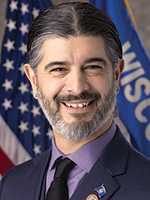
Shannon Zimmerman
79% support rate
Top opponent
Russell Goodwin
31% support rate
Ranked legislators
10
5 support · 5 oppose
Key legislators

Who's moving healthcare in Wisconsin

Legislators moving healthcare in Wisconsin
Legislator Party Stance Support rate Votes
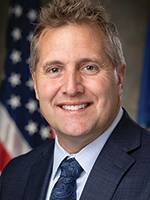
Shannon Zimmerman
Shannon Zimmerman House · District 30
R
Support
79% 35
Will Penterman
Will Penterman House · District 38
R
Support
71% 41
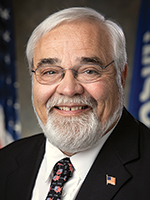
Jeff Mursau
Jeff Mursau House · District 36
R
Support
69% 44
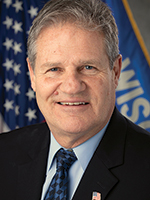
Chanz Green
Chanz Green House · District 74
R
Support
67% 47
Paul Melotik
Paul Melotik House · District 22
R
Support
67% 47
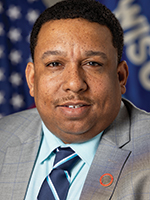
Russell Goodwin
Russell Goodwin House · District 12
D
Oppose
31% 42
Joe Sheehan
Joe Sheehan House · District 26
D
Oppose
33% 43
Vinnie Miresse
Vinnie Miresse House · District 71
D
Oppose
35% 46
Ryan Clancy
Ryan Clancy House · District 19
D
Oppose
38% 44
Christian Phelps
Christian Phelps House · District 93
D
Oppose
39% 47
Showing 1–10 of 13 bills

All healthcare bills

failed · Wisconsin · Senate Mar 23, 2026

SB 746: Relating to: local health officer authority to mandate business closure to control communicable disease.

SB 746 repeals a specific statute (252.03 (2j)) that currently grants local health officers the authority to mandate business closures during communicable disease outbreaks. This bill directly affects local health officials and businesses by removing their legal power to order closures for disease control. The key mechanism is simply the deletion of the existing provision from state law, eliminating this specific tool for public health responses. The bill does not create new requirements or exceptions - it solely removes an existing authority.
Sub-Topics Public Health
vetoed · Wisconsin · Senate May 13, 2026

SB 799: Relating to: parental access to health records of minors.

SB 799 modifies parental access to minors' health records. It requires parents to obtain written consent from minors aged 14 or older before accessing their health records, unless the minor is developmentally disabled (where consent isn't required). The bill also restricts access for parents who caused child protection cases (e.g., abuse/neglect), denying them access to health records if their child was placed under child protection services due to their actions. This applies specifically to health records covered under statutes related to patient care and treatment.
failed · Wisconsin · Assembly Mar 23, 2026

AB 756: Relating to: local health officer authority to mandate business closure to control communicable disease.

AB 756 repeals a specific statute (252.03(2j)) that granted local health officers the authority to mandate business closures to control communicable diseases. This bill directly affects local health officials, removing their existing legal power to order such closures, and impacts businesses that could have been subject to these mandates. The key mechanism is simply the removal of this statutory provision, with no new requirements or processes added. As a procedural repeal, it does not create new obligations but eliminates a specific existing authority.
Sub-Topics Public Health
signed · Wisconsin · Senate Oct 22, 2025

SB 183: Relating to: reimbursement of emergency services under the Medical Assistance program when a patient is not transported, reporting on changes to the scope of practice of emergency medical responders and emergency medical services practitioners, and eligibility for the expenditure restraint incentive program. (FE)

SB 183 modifies reimbursement rules for emergency medical services under Wisconsin's Medical Assistance program. It sets a maximum $175 reimbursement rate for emergency responders when patients are not transported to a hospital. The bill also requires reporting on changes to emergency medical responder scope of practice and updates eligibility for the expenditure restraint incentive program. These changes directly affect emergency medical service providers billing the Medical Assistance program.
vetoed · Wisconsin · Assembly May 13, 2026

AB 104: Relating to: prohibiting gender transition medical intervention for individuals under 18 years of age.

AB 104 prohibits health care providers from performing or referring minors under 18 for medical interventions intended to change their physical characteristics to match a gender different from their biological sex. It specifically bans surgeries (like hysterectomy or orchiectomy), mastectomies, puberty-blocking drugs, and high-dose cross-sex hormone treatments. Exceptions apply for genetic disorders of sex development, treating complications from prior procedures, or immediate life-threatening conditions. Violations could result in license revocation for health care providers by the licensing board.
Sub-Topics Medical Licensing
failed · Wisconsin · Assembly Mar 23, 2026

AB 163: Relating to: redeterminations of eligibility for the Medical Assistance program and database confirmation for public assistance program eligibility. (FE)

AB 163 requires regular eligibility reviews for the Medical Assistance program (a public health benefits program) every six months, replacing automatic renewals. Recipients must report changes affecting their benefits within 10 days or face a six-month loss of coverage. The bill mandates state agencies to cross-check public benefit databases against death records and other state databases (like employment or prison records) every three months to remove deceased individuals and verify eligibility. It also establishes data-sharing agreements between agencies to confirm applicant information using sources like federal benefit records, with all eligibility reviews required to be completed by January 1, 2026.
Sub-Topics Medicaid Public Health
failed · Wisconsin · Senate Mar 23, 2026

SB 311: Relating to: prohibiting funding for health services for unlawfully present individuals. (FE)

SB 311 prohibits state and local government funds - including those from counties, cities, towns, and federal funds passing through the state treasury - from covering health care services for individuals not lawfully present in the U.S. It directly affects undocumented immigrants seeking health care in Wisconsin. The bill creates a new statute (20.926) banning such funding, with two exceptions: it does not apply if federal law requires payment, or if applying the ban would cause the state to lose federal funds. This policy change restricts public funding for health services based solely on immigration status.
Sub-Topics Sanctuary Policies
failed · Wisconsin · Senate Mar 23, 2026

SB 450: Relating to: nonprofit agricultural organization health benefit coverage.

SB 450 allows specific member-owned agricultural cooperatives (defined as pre-1922 organizations with 501(c)(5) status) to provide health benefit coverage exclusively for their members and families. The bill requires these organizations to offer coverage in all state counties, file insurance commissioner attestations, and provide annual actuarial reviews to ensure financial stability. It mandates clear written notice that this coverage is not health insurance and cannot satisfy federal insurance requirements, while prohibiting exclusions for preexisting conditions beyond six months or denying coverage based on provider type. Organizations must also reinsure risks with state-authorized companies and establish complaint resolution processes similar to standard health insurance.
Sub-Topics Insurance
vetoed · Wisconsin · Assembly May 13, 2026

AB 674: Relating to: prohibiting knowingly covering organ transplantation and related care under health insurance policies and the Medical Assistance program if the organ is transplanted in or originates from a country known to have participated in forced organ harvesting. (FE)

AB 674 prohibits health insurance plans and the Medical Assistance program from covering organ transplants or related care if the organ was transplanted in or originated from a country designated by the department as participating in forced organ harvesting. The bill applies to disability insurance, self-insured health plans, and Medical Assistance. It defines "forced organ harvesting" as removal via coercion, deception, or abuse of power, and requires the department to designate affected countries. Life-saving post-transplant care remains covered even if the transplant itself is prohibited under the bill.
Sub-Topics Insurance
vetoed · Wisconsin · Senate May 13, 2026

SB 405: Relating to: a civil cause of action for a minor injured by a gender transition procedure.

SB 405 creates a legal right for minors injured by gender transition procedures to sue healthcare providers for physical, psychological, emotional, or physiological harm. The bill defines "gender transition procedure" broadly (including puberty blockers and cross-sex hormones) but excludes treatments for certain medical conditions like disorders of sexual development. It requires providers to document a minor's gender identity for two years, obtain certification from multiple healthcare professionals confirming the procedure is the only treatment for a mental health concern, and provide specific risk warnings to minors and parents before consent. The law allows lawsuits to be filed before the minor turns 33, with defenses available if providers follow the required documentation and consent protocols.
Sub-Topics Mental Health
Showing 1 to 10 of 13 bills
1 2 Next