Issue · Healthcare

Healthcare

Every healthcare bill, vote, and legislator stance in Wisconsin, automatically classified by Maddy, our AI policy reader.

Total bills
399
2025-2026 Regular Session
Top supporter
Shannon Zimmerman
79% support rate
Top opponent
Russell Goodwin
31% support rate
Ranked legislators
10
5 support · 5 oppose
Key legislators

Who's moving healthcare in Wisconsin

Legislators moving healthcare in Wisconsin
Legislator Party Stance Support rate Votes
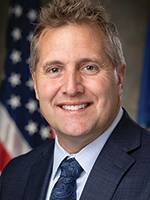
Shannon Zimmerman
Shannon Zimmerman House · District 30
R
Support
79% 35
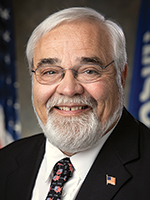
Will Penterman
Will Penterman House · District 38
R
Support
71% 41
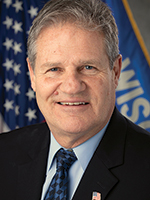
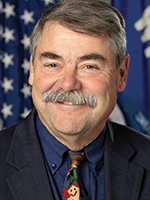
Jeff Mursau
Jeff Mursau House · District 36
R
Support
69% 44
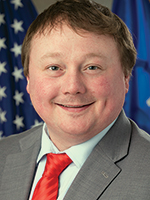
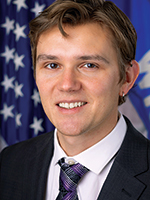
Chanz Green
Chanz Green House · District 74
R
Support
67% 47
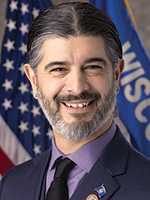
Paul Melotik
Paul Melotik House · District 22
R
Support
67% 47
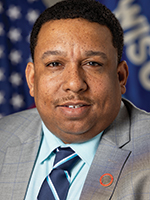
Russell Goodwin
Russell Goodwin House · District 12
D
Oppose
31% 42
Joe Sheehan
Joe Sheehan House · District 26
D
Oppose
33% 43
Vinnie Miresse
Vinnie Miresse House · District 71
D
Oppose
35% 46
Ryan Clancy
Ryan Clancy House · District 19
D
Oppose
38% 44
Christian Phelps
Christian Phelps House · District 93
D
Oppose
39% 47
Showing 21–30 of 399 bills

All healthcare bills

failed · Wisconsin · Assembly Mar 23, 2026

AB 1189: Relating to: limitation on retroactive claim denials under health insurance policies.

This bill would limit when health insurance companies can ask people to pay back money they already received for medical claims. It directly affects individuals with disability insurance policies, health maintenance organizations, and other health coverage plans. Under the new rules, insurers can only request repayment of already paid claims within 12 months of the initial payment, or 18 months if the claim involved coordination with other programs like Medicare or state medical assistance. The only exception allows retroactive denials if the original claim information was found to be fraudulent.
Sub-Topics Insurance Medicare
failed · Wisconsin · Senate Mar 23, 2026

SB 1087: Relating to: disrupting access to a reproductive health service facility or place of religious worship and providing a penalty.

This bill creates new criminal penalties and civil remedies for intentionally disrupting access to reproductive health service facilities or places of religious worship. It prohibits actions such as using force or physical obstruction to injure, intimidate, or interfere with individuals seeking or providing reproductive health services, as well as damaging property at these locations. Violations are classified as a Class A misdemeanor for first offenses and a Class I felony for repeat offenses. The legislation also allows affected individuals and entities to file civil lawsuits seeking injunctive relief, damages, and attorney fees, while permitting prosecutors to seek civil forfeitures ranging from $10,000 to $25,000 depending on the severity and frequency of the violation.
Sub-Topics Women's Health
failed · Wisconsin · Assembly Mar 30, 2026

AB 1109: Relating to: use of artificial intelligence to deny prior authorization for medical necessity or experimental status.

This bill prohibits disability insurance policies and self-insured health plans from using artificial intelligence to deny prior authorization requests for medical necessity or experimental treatments. Instead, it requires that a licensed human healthcare provider must review these specific requests before any denial can occur. The law applies to limited service health organizations, preferred provider plans, and defined network plans, with exceptions for plans covered by collective bargaining agreements. If passed, the restrictions would take effect at the start of the fourth month following the bill's publication.
failed · Wisconsin · Senate Mar 23, 2026

SB 1161: Relating to: ambulance staffing, late renewal and reinstatement of an emergency medical services practitioner license or emergency medical responder certificate, license and certification reciprocity standards for emergency medical responders and emergency medical services practitioners, and a tax subtraction for stipends received by volunteer emergency responders. (FE)

This bill proposes changes to ambulance staffing rules, license renewal procedures, certification reciprocity standards, and tax benefits for volunteer emergency responders in Wisconsin. It would allow physicians, physician assistants, and registered nurses to practice their full scope of duties while staffing ambulances without departmental restrictions. The bill also simplifies the process for out-of-state emergency medical responders to obtain Wisconsin licenses by reducing documentation requirements and establishes clear pathways for late license renewal and reinstatement based on how long a license has been expired. Additionally, it creates a tax subtraction of up to $2,000 for stipends received by volunteer emergency responders based on calls or shifts worked.
failed · Wisconsin · Senate Mar 23, 2026

SB 1162: Relating to: eliminating recovery by the state for birth expenses paid through the Medical Assistance program. (FE)

This bill would prohibit the state from seeking reimbursement from alleged fathers for pregnancy and birth expenses already paid by the Medical Assistance program for unmarried mothers who were recipients of that program at the time of birth. The legislation amends existing statutes to prevent courts from ordering alleged fathers to repay these specific costs, while still allowing the state to pursue other medical support obligations from parents. By creating a new statute section and modifying several existing sections, the bill ensures that state-funded birth expenses for eligible unmarried mothers cannot be recovered through paternity judgments or court orders. The changes apply to paternity orders issued on or after the bill's effective date, leaving other medical support requirements intact for cases not covered by this specific provision.
Sub-Topics Substance Abuse
failed · Wisconsin · Assembly Mar 23, 2026

AB 1116: Relating to: installation of a newborn infant safety device at an emergency medical services station.

This bill updates Wisconsin statutes to allow hospitals, fire stations, emergency medical services stations, and law enforcement agencies to install newborn infant safety devices for surrendering babies. The law defines these devices as wall-mounted units with separate exterior and interior access points and requires them to be monitored 24 hours a day with surveillance cameras. It also permits parents unable to reach a designated surrender location to call 911 for assistance in relinquishing custody of their newborn. The bill establishes specific operational requirements for facilities that choose to use these devices, including regular physical checks and alarm system testing.
failed · Wisconsin · Assembly Mar 25, 2026

AB 1100: Relating to: a sales and use tax exemption for the sale of over-the-counter drugs. (FE)

This bill would exempt over-the-counter drugs from state sales and use taxes. It directly affects consumers purchasing non-prescription medications and retailers selling these products. The legislation defines over-the-counter drugs as those with specific labeling requirements, including a drug facts panel or a list of active ingredients. By removing the tax burden, the bill aims to lower costs for buyers of these common health products. The change would take effect on the first day of the third month after the bill is published.
failed · Wisconsin · Senate Mar 23, 2026

SB 1136: Relating to: prior authorization for treatment of severe misalignment or malocclusion of teeth under health insurance policies and plans.

This bill prohibits disability insurance policies and self-insured health plans from using the Salzmann Evaluation Index alone to deny coverage for treating severe misalignment or malocclusion of teeth. It directly affects dental coverage under various health insurance plans, including limited service organizations, preferred provider plans, and defined network plans. The legislation requires these plans to consider additional clinical factors beyond the Salzmann Index when making prior authorization decisions for orthodontic treatment. The bill applies to policies and plans starting with the 2026-2027 plan year, with additional provisions for collective bargaining agreements.
Sub-Topics Insurance
failed · Wisconsin · Senate Mar 23, 2026

SB 1119: Relating to: protection of pregnant individuals’ information, authorization for disclosure, data breach, and providing a penalty.

This bill establishes privacy protections for health information collected at unregulated pregnancy services centers, requiring written authorization from individuals before their nonpublic personal health information can be shared. It defines specific types of health information and pregnancy-related services, and outlines requirements for authorization forms including details about the information to be disclosed, who it will be shared with, and the right to revoke consent at any time. The legislation also mandates that these centers notify affected individuals if there is a data breach and prohibits discrimination against people who do not grant authorization for information disclosure. Any violations of these privacy requirements would be treated as unfair and deceptive trade practices under existing state law.
Sub-Topics Cybersecurity
failed · Wisconsin · Senate Mar 23, 2026

SB 1115: Relating to: minimum nurse staffing ratios in hospitals, registered nurses’ right to refuse a work assignment, prohibiting mandatory overtime for registered nurses, and providing a penalty.

This bill establishes minimum nurse-to-patient staffing ratios for various hospital units, such as limiting registered nurses to no more than four patients in emergency units or two patients in intensive care units. It requires hospitals to create and publicly post annual staffing plans that include input from nursing staff, maintain detailed records of actual staffing levels, and establish committees with a majority of frontline nurses to oversee staffing decisions. The legislation also grants registered nurses the right to refuse work assignments that violate these ratios and prohibits mandatory overtime for nurses. Hospitals that fail to comply with staffing requirements or submit plans by the deadline face financial penalties, including a $25,000 forfeiture for missing deadlines and daily fines for non-compliance with corrective action plans.
Showing 21 to 30 of 399 bills
Previous 1 2 3 4 40 Next