

Maddy summaryHB 4591 adds school athletic directors to an existing West Virginia law recognizing certified professionals. It provides a salary bonus and reimbursement for certification expenses to athletic directors who hold a nationally recognized credential from the National Interscholastic Athletic Administrators Association (NIAAA). This aligns athletic directors with other certified school staff (like nurses and counselors) who already receive similar benefits for meeting national certification standards. The bill aims to encourage certification, support recruitment, and recognize professional development in school athletics. It does not create new funding but extends existing provisions to athletic directors.
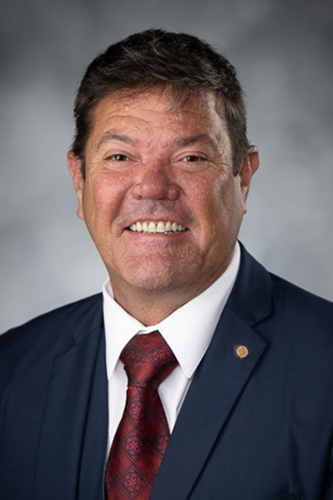
Del. Mike Hornby
Sponsored bills
Maddy summaryHB 4500 authorizes Berkeley County Commission to levy a special excise tax on sales of tangible personal property and services within the Berkeley County Economic Opportunity Development District. This tax would fund economic development initiatives in the designated district, directly affecting businesses operating within its boundaries and residents who purchase taxable goods or services there. The bill specifies that the district will remain active until 2054, unless terminated earlier under existing law, and aligns with similar provisions for other counties’ economic districts. The tax is limited to sales within the district’s defined boundaries and must be approved through required legislative processes.
Maddy summaryHB 5661 increases Medicaid dental provider reimbursement rates in West Virginia. It expands Medicaid coverage for diagnostic/preventative and restorative dental services (excluding cosmetic procedures) to adults aged 21+ with a $2,000 per two-year spending limit. The bill requires the Department of Human Services to raise dental provider payments by at least 20% by December 1, 2028, and mandates annual reports on dental program costs. This directly affects dental providers who treat Medicaid patients and adult Medicaid beneficiaries seeking dental care.
Maddy summaryHB 4989 establishes a state-funded pilot program offering free cancer screenings to West Virginia's active and retired firefighters. The program provides a comprehensive screening package including a multi-cancer blood test, abdominal/thyroid/liver ultrasound, lung CT if needed, and skin cancer screening, with a $1,300 cost limit per person. Firefighters may self-fund screenings before July 1, 2026, and seek reimbursement, while the state covers costs for the 24-month pilot starting July 1, 2026. A committee will develop the program plan, track participation and results, and report findings to state leaders after 12 and 24 months.
Maddy summaryHB 5197 shortens the time homeowners have to challenge a tax deed from two years to one year if they weren't properly notified of the sale. It requires anyone suing to set aside a tax deed to deposit full redemption funds with the court clerk before proceeding. The bill also strengthens the requirement that property purchasers must prove they made "reasonably diligent" efforts to notify potential owners before selling property at tax sale. These changes directly affect property owners who missed tax sale notices and tax deed purchasers seeking to secure title.
Maddy summaryHB 5471 increases annual salaries for West Virginia judges and magistrates, effective July 1, 2026. It raises magistrates' pay to $75,880 (from $63,250), Supreme Court justices to $154,600 (from $149,600), circuit judges to $143,600 (from $138,600), and family court judges to $126,424 (from $103,950). The bill also clarifies retirement contribution rules for judicial positions. These changes directly affect all active state judges and magistrates, with no county-level funding required for these salary adjustments.
Maddy summaryHB 5176 creates a searchable online database managed by the West Virginia State Police for individuals convicted of specific animal cruelty offenses, including violations of sections like §61-8-19 (cruelty to animals). The database will include names, birth dates, offense details, and county of conviction for those convicted of listed misdemeanor or felony animal abuse crimes. Convicted individuals must pay a $125 annual fee (to be paid to their county State Police office) to maintain their listing, with fees deposited into a dedicated State Police fund. Removal from the database is possible after 5 years for misdemeanors or 15 years for felonies (with proof of rehabilitation), or immediately if the conviction is expunged or pardoned.
Maddy summaryHB 4568 prohibits serving legal documents (like summonses) for civil or Family Court cases on property owned by counties in West Virginia. This directly affects plaintiffs trying to initiate lawsuits against county entities and county governments as defendants. The bill adds a new section to state law (§56-3-35) explicitly banning such service on county-owned land. It does not change existing rules for serving process on private property or in other locations. The law would take effect upon enactment.
Maddy summaryHB 4693 declassifies Community and Technical Education (CTE) teaching positions at community colleges and trades-based high school instructors teaching CTE courses, allowing counties to target additional funding to specific roles in critical need. Currently, all CTE positions are grouped together, requiring county funding to be distributed across all positions; this bill removes that classification barrier. The bill maintains existing state funding for these positions while enabling counties to add supplemental funds to high-demand roles like skilled trades or healthcare education. This change aims to help fill staffing shortages in key CTE fields by letting counties offer targeted financial incentives without reducing state support.
Maddy summaryHB 5668 establishes the Central West Virginia Economic Development and Rural Revitalization Program to address economic challenges in eight specific counties: Webster, Clay, Braxton, Roane, Calhoun, Wirt, Lewis, and Gilmer. The bill creates a state program within the Department of Commerce that provides grants, loans, and technical assistance for projects like business development, infrastructure improvements, broadband expansion, and tourism initiatives. It also introduces a 25% tax credit for businesses making qualified investments in the region that create or retain full-time jobs. Projects must be located in the designated counties and prioritize job creation, private funding leverage, and support for economically distressed communities.