

Maddy summaryHB 4026 requires West Virginia electric utilities to include detailed analyses of advanced transmission technologies in their integrated resource plans filed with the Public Service Commission. This affects all utilities operating in the state that submit these plans, including major providers like American Electric Power and Dominion Energy. The bill mandates comprehensive assessments of technologies such as advanced conductors, dynamic line rating, and power flow controls, covering their economic feasibility, technical viability, potential benefits, and deployment schedules. These analyses must address how such technologies improve grid efficiency, reliability, and safety for customers. The requirement applies to all new or updated resource plans filed after July 1, 2026.
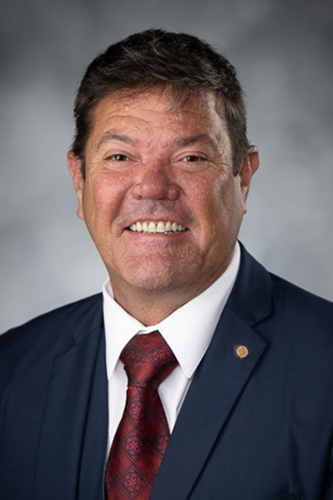
Del. Mike Hornby
Sponsored bills
Maddy summaryHB 5163 exempts child-care programs operated by county school boards exclusively for the children of their employees or students from most state licensing requirements. This directly affects county school districts and their employees/students who rely on these on-site child-care services. The bill adds this exemption to existing licensing rules while allowing the State Board of Education to create safety and health rules for these programs. It does not change current requirements for other child-care providers, such as family day-care homes or private facilities.
Maddy summaryHB 5351 modernizes how counties collect fees from emergency communication service users to cover enhanced 911 systems and address conversion costs. It allows county commissions to impose a single fee per physical address (residential, commercial, or business location) regardless of technology used, including VoIP services for in-state subscribers. The fee must cover system upgrades, city-style addressing conversions, and operational costs, but cannot be charged multiple times for different services at the same location. This update ensures fee collection aligns with modern communication technologies while maintaining transparency for users.
Maddy summaryHB 4772 requires West Virginia's Medicaid agency to verify enrollee status monthly by matching Medicaid records against state death records (from the Office of Vital Statistics) and the federal Social Security Death Master File. If a person has died, their Medicaid coverage must be terminated immediately, effective the date of death, stopping all future payments. The bill mandates data-sharing agreements with federal agencies, annual audits by the state Inspector General, and yearly reports to the legislature on the number of deceased enrollees removed and estimated cost savings. This directly affects deceased Medicaid recipients (whose records are automatically removed) and aims to prevent unnecessary payments, saving state funds.
Maddy summaryHB 5203 prohibits West Virginia municipalities from issuing any local identification card specifically for voting in municipal elections. It requires that any identification used for voting must already be authorized by state law for statewide elections, preventing cities from creating their own voting IDs. The bill directly affects local governments that might have considered adopting unique municipal ID systems for election purposes. This ensures municipal elections follow the same voter ID standards as state elections, without creating additional local requirements.
Maddy summaryHB 5554 modifies funding rules for political party headquarters in West Virginia. It sets a $10,000 annual limit per donor for contributions to party headquarters committees and caps total funding at $1 million per party. The bill prohibits using these funds for satellite offices, political activities, or non-headquarters expenses. It also requires detailed financial reporting to the Secretary of State for contributions exceeding $250, including donor names and contribution amounts. This directly affects state and county political parties maintaining physical headquarters.
Maddy summaryThis House resolution formally recognizes President Donald J. Trump for various policies and actions that the West Virginia House of Delegates claims have benefited the state. The document highlights specific initiatives including regulatory reforms in the energy sector, tax relief measures, funding for rural healthcare, and programs aimed at reducing prescription drug costs and establishing investment accounts for newborns. It also cites border security improvements and drug control efforts as contributing factors to public safety and economic well-being. The resolution expresses appreciation for these actions and requests that the formal recognition be sent to the President.
Maddy summaryThis House Resolution honors the life and legacy of the late West Virginia legislator Larry D. Kump, who passed away on February 28, 2026. The resolution formally expresses the House of Delegates' condolences to Kump's family and acknowledges his service as a representative for Berkeley County across three different terms. It recognizes his career in criminal justice and mediation, his commitment to limited government, and his role as a devoted family member and church leader. The document is a ceremonial tribute rather than a law that changes policy or affects public programs.
Maddy summaryHB 4962 creates a legal process for residents, tenants, or community groups to address drug activity on properties. To file a lawsuit, they must prove specific neighborhood harms like increased police calls, trash accumulation, safety concerns, or diminished property values. Property owners found responsible for drug-related nuisances face civil penalties or criminal charges under this law.
Maddy summaryThis House Resolution urges the Capitol Building Commission and Department of Administration to assess and address hazardous trees along California Avenue and Kanawha Boulevard on the State Capitol Complex grounds. The resolution requests an immediate evaluation of trees that have caused property damage through falling limbs and broken trunks over the past two years. It specifically asks officials to trim trees back to the grass side of sidewalks or remove and replace hazardous trees to protect public safety and state property. This non-binding resolution directs state agencies to take preventative maintenance actions without mandating specific enforcement measures.