

Maddy summaryHJR 39 proposes a constitutional amendment to change how the West Virginia State Board of Education is structured. It would replace the current system of nine governor-appointed members with five elected regional members (serving four-year terms, limited to two terms) and four appointed members (serving staggered terms). The amendment requires the Board to submit proposed policies to the Legislature for review, approval, or rejection. This change, if approved by voters in 2026, would take effect for the 2028 election cycle and directly affects how board members are selected and how education policies are reviewed.
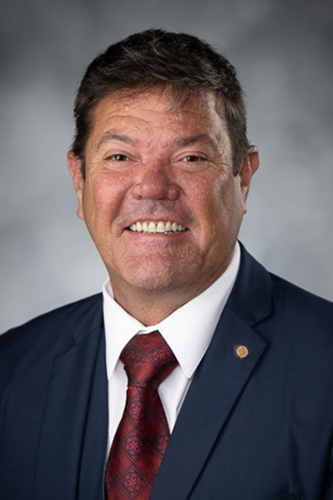
Del. Mike Hornby
Sponsored bills
Maddy summaryHB 4950 establishes the West Virginia Freedom and Innovation Pilot Act of 2026, creating a voluntary program for any West Virginia county to join. Participating counties would receive $5,775 per enrolled student (as of December 2025) with a 1% annual funding increase if enrollment grows, while being exempt from state-mandated staffing ratios, service quotas, and central salary schedules - though they must still follow the Third Grade Success Act and federal requirements. Counties in the program maintain full control over school calendars, class sizes, salaries, and benefits, but administrative costs are capped at 7% of their total annual budget. The pilot begins July 1, 2026, and will be reviewed by the Legislative Oversight Commission on Education Accountability by July 1, 2031, after which it will sunset unless extended.
Maddy summaryHB 4997 prohibits individuals convicted of terroristic threats involving schools or children (under §61-6-24(b)) from residing within 1,000 feet of any educational facility, including public/private schools, preschools, or daycares where children are regularly present. This residency restriction applies automatically during probation or parole, or as a sentencing condition if no supervision is ordered. Violations are classified as felonies punishable by 1-5 years in prison, up to $10,000 in fines, or both, and may lead to revocation of probation. The bill uses GIS or property records to measure proximity and aligns with existing sex offender residency rules under §62-12-26.
Maddy summaryHB 4834 amends West Virginia law to explicitly permit women’s wrestling as a sanctioned sport in public high schools and public charter schools. The bill directly affects school districts and athletic programs by allowing them to officially recognize and sponsor girls' wrestling teams under existing athletic regulations. It adds women’s wrestling to the list of permitted interscholastic athletic events without changing eligibility rules for students. The change requires the West Virginia Secondary School Activities Commission to approve wrestling as a sanctioned sport under its authority.
Maddy summaryThis bill (HB 5543) would authorize West Virginia's State Treasurer to coordinate the state's SMART529 education savings program with a fictional "federal Trump Accounts" program referenced in the bill. It specifies the Treasurer may provide educational materials about permissible uses under federal law but prohibits fund transfers outside federal allowances. The bill defines "Trump Account" using non-existent federal code sections (26 U.S. Code § 6434 and Section 530A of the Internal Revenue Code), which do not correspond to any actual federal program. The bill is currently in committee referral stage (introduced February 16, 2026) but appears to contain inaccurate references to federal law.
Maddy summaryHB 5570 proposes to exempt transportation companies (common or contract carriers) that move processed recycled materials for commercial or industrial businesses from certain state regulations. Specifically, it would remove requirements for vehicles transporting these materials from business customers to recycling facilities. The exemption applies only to "processed source-separated recycled materials" and does not eliminate safety or insurance rules that carriers must still follow. This bill directly affects waste haulers and businesses generating recyclable materials who use contracted transportation services.
Maddy summaryThis is a commemorative House resolution honoring former West Virginia House Speaker and Chief Justice Timothy P. Armstead following his passing. It memorializes his service, names a conference room in the House as the "Speaker Tim Armstead Memorial Conference Room," and extends condolences to his family. The resolution does not create new laws or affect policy - it formally recognizes his legacy and contributions to West Virginia.
Maddy summaryHB 5066 would amend West Virginia election law to prohibit the public release of employers' names and addresses for individuals who contribute more than $250 to political campaigns in a single election cycle. Currently, campaign finance reports require disclosure of contributors' major business affiliation and occupation (including employer details) for such contributions, but this bill would make it illegal to share that specific information with the public. The measure directly affects donors who give over $250, shielding their employer information from public view. Violations would be punishable as a misdemeanor under the new provisions.
Maddy summaryHB 5493 would require West Virginia courts to offer convicted sex offenders (specifically those found guilty of crimes against minors under §61-8-12 or related statutes) a choice between hormone treatment (medroxyprogesterone acetate or MPA) or surgical castration as an additional penalty, alongside standard sentencing. Courts must first confirm a defendant's medical suitability for MPA treatment through a court-appointed expert, and the treatment duration is specified in the sentence. Refusing MPA treatment after sentencing could result in a 1-5 year prison term. The bill also mandates a prerelease risk assessment for these offenders before their release from prison.
Maddy summaryThis House Resolution (HR 6) expresses the West Virginia House of Delegates' support for developing natural gas pipeline infrastructure, specifically an intra-Panhandle pipeline connecting western gas fields to the Eastern Panhandle. It aims to improve access to locally produced natural gas for residents, support industrial and commercial growth, and create jobs across the state. The resolution highlights West Virginia's status as a top natural gas producer and notes that existing pipelines transport most output out of state, while Maryland's opposition to pipeline extensions is cited as a barrier. It does not create new laws or funding but urges responsible infrastructure expansion to boost economic development. As a procedural resolution, it has no direct legal effect but signals legislative backing for pipeline projects.