

Maddy summaryHB 3505 requires health insurance policies covering cancer chemotherapy to include coverage for scalp cooling systems starting January 1, 2026. These systems are defined as devices used to cool the scalp and prevent hair loss during chemotherapy treatment. The mandate applies to all individual and group health insurance plans, though coverage may still involve standard deductibles, coinsurance, or copayments consistent with other covered benefits. The bill directly affects cancer patients seeking hair preservation during treatment and insurers offering chemotherapy coverage.
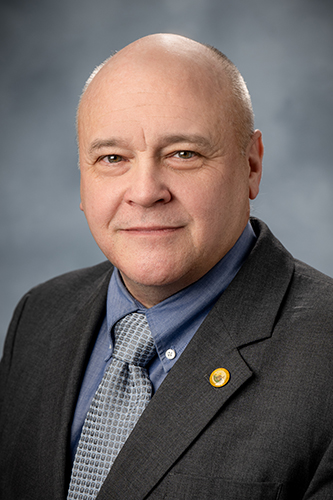
Del. Ray Canterbury
Sponsored bills
Maddy summaryHB 3519 transfers $155,288,050 from the Governor’s Office-Civil Contingent Fund (unspent funds for emergency use) to the Higher Education Policy Commission’s budget for the 2025 fiscal year. The bill creates a new line item titled "Deferred Maintenance of Institutions - Surplus" under the Higher Education Policy Commission’s administrative account. This reallocates unused state funds specifically for deferred maintenance at public colleges and universities, without creating new spending or changing tax policies. The bill directly affects higher education institutions by providing funding for building repairs and infrastructure upkeep.
Maddy summaryHCR 88 is a ceremonial resolution honoring two West Virginia first responders nominated for the Medal of Valor. It specifically recognizes Captain Donald Lawson (New Martinsville Police) for rescuing two people from carbon monoxide poisoning despite his own hospitalization, and Darrell Lambert (Lake Volunteer Firefighter) for entering a burning building without protective gear to save a trapped resident, sustaining burns in the process. The resolution formally confirms the Legislature's approval of their award and directs the House Clerk to send a copy to Governor Morrisey. This is a symbolic honor with no new policy or funding changes, directly affecting only these two nominees. It passed unanimously in both chambers on April 3, 2025.
Maddy summaryHB 3013 requires movie theater chains operating six or more theaters across multiple locations in West Virginia to provide open captioning for at least two weekly showings of films that include open captioning in their production. It also mandates that theaters offer audio description upon request for films that feature audio description. The law excludes drive-in theaters and prohibits requiring new equipment purchases if it would create an undue financial burden on theaters. This bill directly affects larger theater chains and aims to improve accessibility for deaf, hard-of-hearing, blind, and low-vision patrons.
Maddy summaryHCR 78 is a non-binding resolution urging West Virginia's Division of Highways to prioritize completing I-73 (the "King Coal Highway") across Wayne, Mingo, McDowell, Mercer, and Wyoming counties. It requests the highway agency treat the project as a high priority to improve economic development and emergency access, especially after recent flooding exposed transportation challenges in the region. The resolution asks the state to provide necessary funding and executive support to expedite the highway's completion but does not allocate new funds or create new law. It directly affects the Division of Highways and residents of the five specified counties by formally advocating for this infrastructure project.
Maddy summaryHCR 55 is a commemorative resolution requesting the West Virginia Division of Highways rename a specific 1.2-mile stretch of Seneca Trail (between coordinates 37.765157, -80.466491 and 37.787638, -80.452570) to the "Vance Brothers Six Military Veterans Highway." It honors six Vance brothers from Fairlea, WV, who collectively served 71 years in the U.S. Army and Air Force. The resolution directs the Division of Highways to install signage identifying the renamed road segment. As a procedural resolution, it does not create new policy but formally commemorates the veterans' service.
Maddy summaryThis bill (HCR 82) is a commemorative resolution requesting the West Virginia Division of Highways rename Can Creek Bridge in Greenbrier County as the "U.S. Army PFC Paul Ralph Bittinger Sr. Memorial Bridge." It directly affects the bridge located at coordinates (37.80392, -80.30595) on CR 036/03 over Can Creek, which is currently locally known as Can Creek Bridge. The resolution asks the Division of Highways to install signs identifying the bridge with this memorial name, honoring PFC Bittinger's WWII service and local ties.
Maddy summaryHouse Resolution 12 urges West Virginia's members of Congress to oppose a potential federal funding cut for the Local Food for Schools and Child Care (LFSCC) program. The LFSCC program provided $660 million over three years to help schools and child care sites purchase locally grown food, directly supporting farmers, ranchers, and local food businesses. This resolution expresses concern that terminating the program would harm rural economies and child nutrition efforts, as the funding was specifically used for fresh, minimally processed foods in school meals. The resolution does not create new policy but requests action from West Virginia's congressional delegation to preserve existing funding.
Maddy summaryHB 2646 allows eighth and ninth-grade students in West Virginia to attend summer school specifically to improve their grades and meet academic eligibility requirements for fall sports. The bill amends existing law to explicitly permit this use of summer school programs, which previously focused on general remedial or accelerated instruction. Key provisions ensure counties can operate these programs with tuition limited to actual costs, offer reduced fees for financially needy students, and maintain existing teacher pay structures. This change directly affects middle and high school athletes seeking to qualify for sports participation under current academic standards.
Maddy summaryHCR 72 designates March 20, 2025 as "Black Lung Awareness Day" in West Virginia. It honors coal miners affected by black lung disease (coal worker's pneumoconiosis), a preventable occupational lung condition caused by coal dust exposure. The resolution does not create new laws, funding, or policy changes - it serves as a ceremonial observance recognizing the disease's impact and existing protections like the Black Lung Benefits Act. It follows the Federal Coal Mine Health and Safety Act's emphasis on miner safety without altering current regulations.