

Maddy summaryHB 4376, titled "Say No to Good Old Boy Governance," prohibits elected state officials from appointing family members to state or local government positions. The bill defines "family member" broadly to include spouses, parents, children, grandparents, grandchildren, siblings, and extended relatives like aunts, uncles, nieces, and nephews. This law applies specifically to elected officials holding state office (such as state legislators or governors) who have appointment authority for public roles. It aims to prevent nepotism by banning the practice of favoring relatives in government appointments.
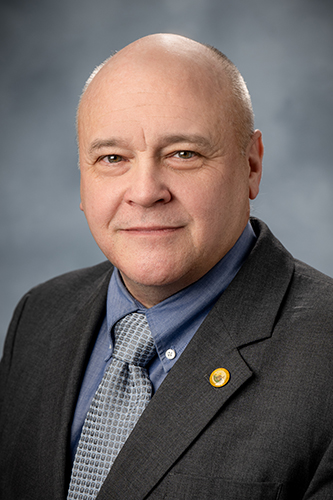
Del. Ray Canterbury
Sponsored bills
Maddy summaryHJR 11 proposes amending West Virginia's state constitution to increase the homestead exemption from $10,000 to $20,000. This change would directly affect homeowners aged 65 or older, or those permanently and totally disabled, who own their primary residence as their principal place of abode. The bill would exempt the first $20,000 of assessed value for qualifying residential property from ad valorem property taxes. This constitutional amendment requires voter approval at the 2026 general election to take effect. The current exemption amount is $10,000 under the existing constitutional provision.
Maddy summaryThis bill simplifies the process for handling small estates in West Virginia that do not include real property (like a house). It allows heirs to transfer assets valued at $50,000 or less using a sworn affidavit instead of requiring court-appointed personal representatives. The affidavit must detail the decedent’s death, assets, heirs, and confirm no pending court proceedings. This directly affects individuals inheriting small estates without real property, removing the need for bonds or court oversight while ensuring creditors are paid.
Maddy summaryHB 2678, now Chapter 100 of the 2025 Regular Session Acts, establishes new regulations for school zones around public and private schools in the state. The bill directly affects school districts, local law enforcement, and drivers operating near school property during designated hours. While the specific provisions (such as speed limits or enforcement protocols) are not detailed in the provided context, the bill creates a statutory framework for defining and managing school zone boundaries. It became law after receiving gubernatorial approval on April 25, 2025.
Maddy summaryThis concurrent resolution (HCR 86) requests the West Virginia Division of Highways to rename Indian Creek Bridge (WV 122 over Indian Creek in Monroe County) as the "U.S. Army PFC Robert F. Mann Memorial Bridge." It commemorates PFC Robert F. Mann, a West Virginia native who died in combat during WWII (March 10, 1945) while serving in Patton's Third Army. The resolution has passed both legislative chambers and is now complete; it does not create new policy or affect any residents or programs.
Maddy summaryHCR 56 is a commemorative resolution requesting the West Virginia Division of Highways name Greenbrier Avenue Bridge (located over Howard Creek in Greenbrier County, with coordinates 37.79351, -80.30456) the "U.S. Army SP4 Thomas William 'Tom Bill' Dudley, Sr. Memorial Bridge." The resolution honors Dudley, a local resident, Army veteran, and community leader who contributed to youth sports and civic service in White Sulphur Springs. The bill directs the Division of Highways to install signage identifying the bridge with this name. As a procedural resolution, it does not create new laws or affect policy, but formally recognizes Dudley's legacy.
Maddy summaryHCR 28 is a commemorative resolution requesting the West Virginia Division of Highways name a specific road segment as "U.S. Army Private First Class Frank Maddy Memorial Road." The resolution designates the portion of War Ridge Road from its intersection with Ballengee Road in Summers County to its intersection with Little Stoney Creek Road in Monroe County. It honors Private First Class Frank Lee Maddy, a WWII soldier from Monroe County who died in combat in the Philippines in 1945. The resolution asks for signage at both ends of the named road segment to memorialize his service.
Maddy summaryHB 3520 redirects $56.2 million in unused funds from 10 specific state accounts - such as the Treasurer’s Office ($20 million) and Insurance Commission Fund ($30 million) - into the State Fund’s General Revenue surplus for the 2025 fiscal year. The bill transfers money from accounts where balances exceeded necessary funding needs, as noted in the legislature’s findings. This action increases the available surplus balance in General Revenue for potential future appropriations. The bill does not create new spending but reallocates existing unspent funds to the state’s general treasury.
Maddy summaryHCR 99 is a legislative resolution requesting the Joint Standing Committee on the Judiciary to study policies preventing financial fraud and scams in West Virginia. It directs the committee to examine current state laws, review national approaches, and focus on four key areas: reducing robocalls and spoofing, addressing cryptocurrency-related scams (noting $1.4 million in losses in 2023), improving victim restitution, and protecting against property title fraud. The resolution cites data showing 8,000 West Virginians lost $27 million to fraud in 2024, with national losses exceeding $12.5 billion. The committee must report findings and recommendations to the legislature, governor, and attorney general by December 31, 2025. This is a study resolution, not a law, and does not create immediate policy changes.
Maddy summaryHCR 96 is a resolution urging West Virginia's members of Congress to request that the President maintain funding for the Local Food for Schools and Child Care (LFSCC) program. The LFSCC program provided $660 million over three years to help schools and childcare centers purchase local, fresh, or minimally processed food directly from farmers. This resolution does not change funding but asks congressional representatives to advocate against proposed federal cuts to the program, which supports both child nutrition and local agricultural economies. The resolution was passed by West Virginia's legislature on April 9, 2025.