

Maddy summaryHCR 72 designates March 20, 2025 as "Black Lung Awareness Day" in West Virginia. It honors coal miners affected by black lung disease (coal worker's pneumoconiosis), a preventable occupational lung condition caused by coal dust exposure. The resolution does not create new laws, funding, or policy changes - it serves as a ceremonial observance recognizing the disease's impact and existing protections like the Black Lung Benefits Act. It follows the Federal Coal Mine Health and Safety Act's emphasis on miner safety without altering current regulations.
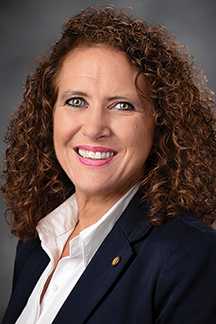
Del. Kathie Hess Crouse
Sponsored bills
Maddy summaryHB 2158 removes the expiration dates (sunset clauses) for additional registration fees on pet food in West Virginia. Specifically, it eliminates the temporary deadlines (June 30, 2027 for bulk pet food and June 1, 2027 for smaller packages) that currently require businesses to pay extra fees. These fees - $50 per product for bulk pet food and $35 per product for smaller packages - will now be permanently collected. The funds will continue flowing into the West Virginia Spay Neuter Assistance Fund, which supports spay/neuter services provided by licensed veterinarians statewide. This change directly affects pet food manufacturers and distributors who must register their products.
Maddy summaryHB 2502 requires West Virginia internet and telecom providers to automatically credit customers for service interruptions lasting five or more days (120 hours) when the outage isn't caused by the customer. Credits must be calculated proportionally to the days without service and applied in the next billing cycle. The Attorney General can enforce this by suing providers for excessive charges and imposing civil penalties up to $5,000 per violation. Providers must also report monthly outage data (including credit amounts and geographic scope) to the Attorney General's Consumer Protection Division, excluding mobile service disruptions.
Maddy summaryHB 2651 changes employment terms for certain education administrators in West Virginia counties. It mandates that general and special supervisors or directors of instruction employed by county boards of education serve "at the will and pleasure" of the board, meaning they can be terminated without cause at any time. This directly affects these specific administrative roles, shifting their status from potentially protected positions to at-will employment. The bill amends Section 18-5-32 of the state code to explicitly state this employment condition, while maintaining existing requirements for teaching certificates and substitute teaching duties.
Maddy summaryHB 2087 requires West Virginia public schools to post adopted curriculum online by the start of each school year, with access limited to students, parents, or guardians. It grants parents, custodians, or guardians the right to inspect classroom materials (including books) upon request, including scheduling appointments within 10 business days and receiving explanations linking materials to state standards. The bill also mandates that teachers list required books on class syllabi and make them available to parents upon request. Additionally, it establishes a complaint process for non-compliance, allowing parents to report issues to school superintendents, with annual statewide reporting of complaints to the Legislative Oversight Commission. (Note: The bill specifically affects parents/guardians of enrolled students, not general taxpayers as noted in the title.)
Maddy summaryHB 2475 raises pay for special education staff in West Virginia. It matches the salary of Special Education Aides (Aide V) to Early Childhood Classroom Assistant Teachers' pay scale and adds a 5% increase for those aides. It also provides a 10% pay increase for self-contained special education teachers. The bill defines a "critical vacancy" as a position needed for student safety or compliance, requiring certified staff to fill such roles immediately until a new hire is secured. This directly affects special education aides and teachers in self-contained classrooms across West Virginia school districts.
Maddy summaryHB 3295 establishes a "Troops-to-Teachers" program to recruit veterans into teaching positions in West Virginia public schools. The bill requires the state superintendent to create this program specifically targeting veterans, including retirees, for teaching roles. Veterans will receive a hiring preference in public school employment, as outlined in existing law (§6-13-1). This program is integrated into West Virginia’s teacher certification framework under revised education code sections (§18A-3-1 and §18A-3-2a).
Maddy summaryThis bill (HCR 11) is a concurrent resolution requesting the West Virginia Division of Highways to rename Bridge Number 54-014/00-013.22 (locally known as the Fifth Street Bridge) in Wood County as the "Thomas A. Azinger Memorial Bridge." It directly affects the bridge signage and official designation for the structure carrying WV 014 over the Little Kanawha River. The resolution, adopted by the House and referred to the Senate, formally commemorates Delegate Thomas A. Azinger, a former West Virginia House member who served from 1994-2012 and 2018, and passed away in July 2024.
Maddy summaryHB 2618 would automatically restore firearm rights to West Virginia residents who complete sentences for nonviolent felonies, eliminating the need for separate court petitions. It specifically applies to individuals convicted of nonviolent crimes but excludes those convicted of violent felonies, certain drug offenses (like Schedule I-III controlled substances except marijuana), or domestic violence misdemeanors. The bill amends West Virginia law to remove automatic firearm prohibitions once sentences and court-ordered penalties like fines are fully served. This changes current practice where individuals must seek judicial restoration of rights after completing their sentence. The bill is currently pending in the House Judiciary Committee after being introduced on February 19, 2025.
Maddy summaryHB 2760 establishes a partnership between Workforce West Virginia and the State Board of Education to implement a STEM-focused online learning platform for high schools and technical schools in West Virginia, with an initial emphasis on chemistry education. Starting in the 2025-2026 school year, the program will begin with 10 selected schools, expanding to all participating schools after two years. Participating schools will receive instructional resources and teacher training using the platform, which complements existing digital literacy standards. The program requires an evaluation by January 2027 to assess student impact and recommend continuation, expansion, or termination.