

Maddy summaryHB 3488, the West Virginia Homeschool Student Athletics Participation Act, allows homeschool students in organized athletic teams to compete in regular-season sports against West Virginia Secondary School Activities Commission (WVSSAC) member schools. Homeschool teams must follow similar health, safety, and eligibility rules as public and private schools, carry comparable insurance, and agree to WVSSAC policies, but their results will not count toward official rankings, standings, or postseason tournaments. Participating schools can choose voluntarily whether to schedule games against homeschool teams without penalty. The bill ensures homeschool participation does not affect member schools' win-loss records or championship eligibility.
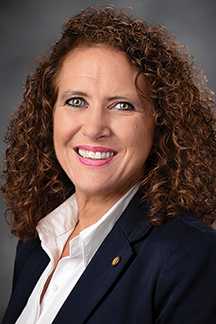
Del. Kathie Hess Crouse
Sponsored bills
Maddy summaryHJR 40 proposes a constitutional amendment to change how members of the West Virginia State Board of Education are selected. It would replace the current system of nine appointed members with a hybrid model: five members elected on a partisan basis from five geographic regions (serving staggered four-year terms), and four members appointed by the Governor with Senate consent. The amendment would require the Board to submit any rules or policies they create to the Legislature for review, approval, amendment, or rejection. If approved by voters in the 2026 general election, these changes would take effect with the 2028 general election, modifying the current appointment system for the Board.
Maddy summaryHB 3442 would expand self-defense protections in West Virginia by allowing residents to use deadly force without retreating in their home, residence, or curtilage (immediate surrounding area) when they reasonably fear death or serious harm from an intruder. It creates a complete legal defense against both civil lawsuits and criminal charges for lawful defensive use of force, including against intruders attempting to enter or commit felonies on property. The bill also extends these protections to situations outside the home where a person reasonably believes they or others face imminent death or serious harm that can only be stopped with deadly force. It specifically states that individuals acting within these rules are not required to retreat and will be entitled to recover court costs and fees if sued. This bill directly affects homeowners, residents, and others defending their property or persons under these specified circumstances.
Maddy summaryHB 3335 amends West Virginia law to automatically declare drivers with suspended or revoked licenses at fault for any automobile accident they are involved in. This directly affects drivers whose licenses have been suspended or revoked, making them liable for all resulting injuries or property damage without requiring proof of negligence. The key provision adds that such drivers violate §17B-4-3 of the code and are considered at fault for the accident. The bill shifts fault determination solely based on license status, changing how liability is assessed in collision cases. (Bill text: §55-7-9(b), introduced March 13, 2025).
Maddy summaryHB 3378 establishes a legal expectation of privacy in West Virginia legislators' private offices within the State Capitol or official legislative spaces. It makes it illegal for anyone - including staff, visitors, or journalists - to record audio, video, or electronic communications without the legislator’s prior consent, or to install surveillance devices without written permission. Exceptions include security measures by Capitol personnel, recordings with explicit consent, and court-authorized surveillance. Violating this law would be a felony punishable by up to five years in prison or a $10,000 fine. The bill directly affects legislators, their staff, and anyone entering legislative offices.
Maddy summaryHB 3385 requires medication-assisted treatment (MAT) programs in West Virginia to establish written policies for community engagement and location planning. The bill prohibits new MAT programs from locating within 0.5 miles of schools or daycares (with limited variances for existing programs), bans recruitment incentives like rewards for patient referrals, and mandates 60-day public notice before new locations. Programs must notify county commissions and mayors via certified mail, detailing their community impact plans, and obtain local approval before operating. These requirements apply to all MAT facilities, including opioid treatment programs and office-based providers, with a waiver process requiring written justification and safety documentation.
Maddy summaryHB 3383 creates the Great Expectations Pilot Program to support West Virginia youth aging out of foster care in transitioning to community college. The program pairs eligible foster youth (those who were in foster care when earning their high school diploma or GED) with full-time coaches at a single community college, who provide personalized guidance on college applications, financial aid, transportation, career planning, and accessing support services. It allocates $95,000 annually from state general revenue to cover the coach's salary, benefits, and program resources. The three-year pilot, starting September 2025 at one college, will be evaluated in 2029 to determine potential statewide expansion.
Maddy summaryHB 2781 requires West Virginia judicial officers to consider a person's residency status when determining bail for specific misdemeanor offenses. It applies to cases involving violent misdemeanors, offenses against minors, weapons use, drug violations, sexual abuse, serious traffic offenses, or property crimes exceeding $250 in value. The bill mandates judges to evaluate whether the person is a resident of West Virginia or the U.S. as part of "good cause" for release, alongside other factors like community ties and flight risk. This change modifies existing bail procedures by explicitly adding residency as a consideration for these misdemeanor cases. The bill does not alter penalties but affects how bail conditions are set for eligible defendants.
Maddy summaryThis bill updates West Virginia's campaign finance rules by allowing corporations and membership organizations (including nonprofits and LLCs) to directly contribute to candidates, candidate committees, or political action committees. It clarifies reporting requirements for these contributions and defines key terms like "corporation" and "contribution" to improve transparency. The changes affect candidates, their committees, and corporate donors by streamlining disclosure rules for campaign spending. The bill focuses on modernizing reporting standards rather than restricting contributions.
Maddy summaryHB 3332 permanently grants land reuse agencies and municipal land banks the right of first refusal to purchase certain tax-delinquent properties before public auction. It affects these specific local entities by allowing them to buy properties meeting one of three criteria: assessed value of $50,000 or less, municipal liens exceeding current back taxes, or being on a vacant property registry for 24+ consecutive months. The bill removes a sunset date on this provision, making the right permanent. This change enables these agencies to acquire qualifying properties directly, bypassing public auction, without altering the existing tax lien process.