

Maddy summaryHB 4395 requires school boards to continue investigations into allegations that school personnel harmed student safety or welfare, even if the employee resigns or transfers to another school. It mandates that investigations must be completed regardless of the employee's employment status, and county superintendents must report all such cases - including reasons for suspension - to the state superintendent within seven business days. The state superintendent will maintain a confidential database of all investigated personnel, including the basis for investigations or disciplinary actions. This bill directly affects school personnel, school boards, and county superintendents by ensuring ongoing accountability for potential child safety violations.
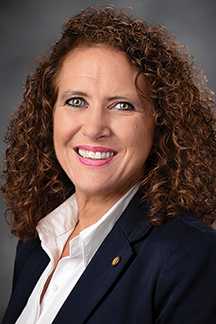
Rep. Kathie Hess Crouse
Sponsored bills
Maddy summaryHB 4798 requires all West Virginia schools to implement a wearable panic alert system called "Alyssa's Law" for staff by December 31, 2026. The bill mandates that every school staff member (including teachers) receives a device capable of instantly triggering 9-1-1 calls and campus-wide lockdowns while integrating with local emergency systems. Schools must also provide annual training on device use and share security data (like cameras and maps) with law enforcement. This policy directly affects all school staff across the state and aims to improve emergency response during crises. The bill is currently in committee review and has not yet become law.
Maddy summaryHB 5484 creates a new felony crime in West Virginia for conspiring to deny medical care to victims of sexual exploitation, assault, incest, or abuse. It directly affects individuals who work together (conspire) to block victims from accessing licensed medical treatment for injuries or conditions caused by these crimes. The bill establishes penalties of 5-10 years in prison, a $50,000 fine, or both for violations. This law specifically targets efforts to prevent victims from receiving necessary medical care following sexual offenses, without altering existing abortion laws.
Maddy summaryHB 5466 renames and clarifies the "Batterer Intervention and Prevention Abuse Intervention Program" (now simply called a "batterer intervention program") within West Virginia's domestic violence laws. The bill updates definitions to specify that these programs must offer in-person options alongside virtual classes and require licensed providers to teach nonviolent strategies for intimate partners. It also revises the Family Protection Services Board's membership to include specific representatives from domestic violence programs, the West Virginia Coalition Against Domestic Violence, and batterer intervention programs, while adjusting funding distribution to allocate 15% of the Family Protection Fund for board administration and splitting remaining funds between domestic violence programs. This bill directly affects licensed domestic violence programs, batterer intervention providers, and the board managing these services.
Maddy summaryHB 5089 requires West Virginia public schools to accept transcripts from all types of schools (including homeschools, charter schools, private schools, and Hope Scholarship programs) when students enroll or re-enroll. It mandates that public schools record the class, grade, and source (e.g., "homeschool" or "charter school") directly on the student's public school transcript. Schools must also submit annual demographic reports to the Legislative Oversight Commission on Education Accountability (LOCEA) detailing re-enrolling students' backgrounds and prior educational settings. This bill directly affects students transferring between different school types and public schools receiving those students.
Maddy summaryHB 4577 creates a reciprocity agreement with the Republic of Ireland for driver licenses, allowing Irish license holders to drive in West Virginia without retaking tests if their license meets comparable standards. The bill requires that foreign license standards (specifically for Ireland) align with West Virginia's, and mandates that drivers operating under this agreement comply with the state's mandatory motor vehicle liability insurance and financial responsibility laws. This agreement applies only to Ireland and does not alter the standard driver's license examination process for new applicants in West Virginia.
Maddy summaryHB 4592 requires West Virginia colleges and universities to create standardized safety mapping data for campus buildings and grounds, directly affecting all public institutions of higher education. The bill mandates that maps include detailed floor plans, hazard locations, emergency equipment, and accurate aerial imagery, all formatted to integrate with public safety software without additional costs. These maps must be verified on-site, stored within the U.S., and shared permanently at no cost with local police, fire, EMS, and the state emergency management division. The requirement becomes effective September 1, 2026, with counties eligible to receive up to $4,500 per school for implementation.
Maddy summaryHB 4819 would change West Virginia's licensing rules for professions requiring state authorization. It prevents disqualification for most past criminal convictions unless the crime directly relates to the profession's duties and poses a clear public risk. Licensing agencies must now consider factors like the crime's nature, time passed since conviction, and evidence of rehabilitation (such as completed treatment or employment history) before denying a license. Applicants with past convictions can petition for reconsideration after five years without new offenses (excluding violent/sexual crimes), with agencies required to respond within 60 days. This affects all individuals seeking professional licenses in West Virginia, including fields like healthcare, education, or licensed trades.
Maddy summaryHB 4008 establishes West Virginia's Business Ready Sites Program, which certifies properties for economic development readiness. Local governments and economic development entities (like counties, cities, or economic development authorities) can apply to have their sites evaluated for readiness, including access to utilities, transportation, and environmental status. The program provides two funding mechanisms: matching grants (up to 50% of improvement costs) and micro grants (up to $100,000 for sites ≥5 acres, $250,000 for sites >20 acres), both requiring repayment if the site is sold or leased for development within 12 months. All funds must be used directly to fix site deficiencies identified in the evaluation, with re-evaluations and recertification required after improvements.
Maddy summaryHB 4196 requires licensed medication-assisted treatment (MAT) programs in West Virginia to offer long-acting reversible contraception (LARC), such as IUDs or implants, to patients receiving methadone or suboxone for substance use treatment. This applies to all facilities providing these services under the state's licensing framework, adding it as a standard requirement to existing operational rules. The bill directly affects MAT facilities, which must now integrate LARC options into their care protocols, and patients using methadone or suboxone at these locations. It creates a concrete policy change by mandating access to these contraceptive methods without requiring additional patient steps.