

Maddy summaryHB 4148 requires real estate salesperson license applicants in West Virginia to submit proof of U.S. citizenship or legal authorization to work in the United States. This directly affects individuals seeking to become real estate salespersons in the state. The bill amends §30-40-13 of the West Virginia Code to add this documentation requirement alongside existing education and exam standards. It does not change the education or exam requirements but adds a new verification step for applicants' immigration status. The law applies only to salesperson licenses, not other real estate professional licenses.
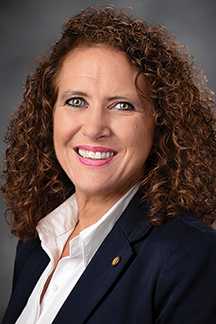
Del. Kathie Hess Crouse
Sponsored bills
Maddy summaryThis House resolution formally recognizes President Donald J. Trump for various policies and actions that the West Virginia House of Delegates claims have benefited the state. The document highlights specific initiatives including regulatory reforms in the energy sector, tax relief measures, funding for rural healthcare, and programs aimed at reducing prescription drug costs and establishing investment accounts for newborns. It also cites border security improvements and drug control efforts as contributing factors to public safety and economic well-being. The resolution expresses appreciation for these actions and requests that the formal recognition be sent to the President.
Maddy summaryThis House Resolution honors the life and legacy of the late West Virginia legislator Larry D. Kump, who passed away on February 28, 2026. The resolution formally expresses the House of Delegates' condolences to Kump's family and acknowledges his service as a representative for Berkeley County across three different terms. It recognizes his career in criminal justice and mediation, his commitment to limited government, and his role as a devoted family member and church leader. The document is a ceremonial tribute rather than a law that changes policy or affects public programs.
Maddy summaryThis House Resolution urges the Capitol Building Commission and Department of Administration to assess and address hazardous trees along California Avenue and Kanawha Boulevard on the State Capitol Complex grounds. The resolution requests an immediate evaluation of trees that have caused property damage through falling limbs and broken trunks over the past two years. It specifically asks officials to trim trees back to the grass side of sidewalks or remove and replace hazardous trees to protect public safety and state property. This non-binding resolution directs state agencies to take preventative maintenance actions without mandating specific enforcement measures.
Maddy summaryHB 5341 creates a public registry of domestic violence offenders in West Virginia, maintained by the State Police and accessible online. Individuals convicted of domestic violence against an intimate partner (with at least one prior conviction) or of sexual assault, abuse, or causing serious bodily injury must register and pay a $150 fee, with $50 funding family court services and $100 supporting domestic violence legal aid. The registry includes basic identifying details like name, date of birth, and conviction dates but excludes sensitive information such as addresses or Social Security numbers. Removal from the registry occurs after 5 years for one prior conviction, 10 years for two prior convictions or severe offenses, or for life with three or more prior convictions, applying to offenses occurring on or after July 1, 2026.
Maddy summaryHB 4067 would provide a child care subsidy for the children of employees working at least 20 hours per week in licensed child care centers or certified family child care homes in West Virginia, regardless of the employee's household income. The bill requires the state department to subsidize child care services at these facilities for the employees' children. This directly affects child care workers who currently may not qualify for subsidies based on income, ensuring they can access affordable care for their own children. The policy change eliminates income requirements for this specific subsidy program, focusing solely on the employee's work hours in the child care sector.
Maddy summaryHB 4062 allows homeschool students participating in organized homeschool athletic teams to compete against West Virginia Secondary School Activities Commission (WVSSAC) member schools in regular-season games. It requires homeschool organizations to follow similar health, safety, and eligibility rules as public/private schools and provide comparable insurance. Crucially, homeschool teams cannot be included in official WVSSAC rankings, standings, or postseason tournaments, and member schools may choose whether to schedule games with them. The bill ensures homeschool participation does not affect official records of WVSSAC member schools while creating a framework for their involvement.
Maddy summaryHB 4065 amends West Virginia's Hope Scholarship Board composition by adding three parent members appointed by the Governor (with Senate approval). These parent members must be state residents from geographically diverse areas, represent parents of students in varied educational settings (like microschools), and serve staggered three-year terms. The bill maintains existing voting members (State Treasurer, Auditor, Attorney General) and non-voting members (Superintendent, Higher Education Chancellor, Minority Affairs Director), while specifying that parent appointments must meet residency and diversity requirements. This procedural change directly affects the board's makeup and the process for selecting parent representatives on the Hope Scholarship Board.
Maddy summaryHB 4817 changes the name of West Virginia's "Charter Schools Stimulus Fund" to the "Charter Schools Startup Fund" and modifies its administration. The bill requires charter school applicants to submit applications directly to the West Virginia Professional Charter School Board, expands eligible uses of funds to cover startup costs like personnel, instructional materials, equipment, and building renovations, and eliminates prior financial capacity requirements. It mandates repayment with interest if schools fail to open within 30 months after receiving grants (up to $300,000 initially, plus $100,000 later), with the Board managing distributions based on funding availability. This bill directly affects new and existing charter school applicants and schools seeking startup financial support in West Virginia.
Maddy summaryHB 4950 establishes the West Virginia Freedom and Innovation Pilot Act of 2026, creating a voluntary program for any West Virginia county to join. Participating counties would receive $5,775 per enrolled student (as of December 2025) with a 1% annual funding increase if enrollment grows, while being exempt from state-mandated staffing ratios, service quotas, and central salary schedules - though they must still follow the Third Grade Success Act and federal requirements. Counties in the program maintain full control over school calendars, class sizes, salaries, and benefits, but administrative costs are capped at 7% of their total annual budget. The pilot begins July 1, 2026, and will be reviewed by the Legislative Oversight Commission on Education Accountability by July 1, 2031, after which it will sunset unless extended.