

Maddy summaryHB 4053 establishes the "Blue Envelope Program" to improve communication between law enforcement and drivers with autism spectrum disorder, dementia, or intellectual/developmental disabilities during traffic stops. Eligible drivers (with a valid license/permit) can request a specially designed blue envelope containing their license, registration, and emergency contact information, along with a vehicle decal and communication guidance for officers. The program, set to launch January 1, 2027, will be administered through the West Virginia Division of Motor Vehicles, sheriff's offices, and police stations.
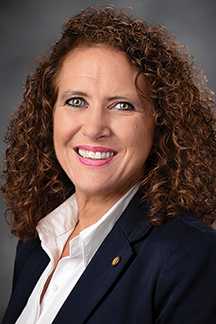
Del. Kathie Hess Crouse
Sponsored bills
Maddy summaryHB 4625 amends West Virginia's definitions for property transfer excise taxes, clarifying which transactions qualify for tax exemptions. It removes an existing exemption for certain property transfers while adding new exemptions for transfers between family members (spouse, parent-child, grandparent-grandchild, siblings) and between charitable organizations. The bill also refines definitions of key terms like "document," "value," and "person" to better determine tax applicability. These changes directly affect individuals and entities involved in property sales or gifts, particularly in family or charitable contexts, by altering which transfers are exempt from the excise tax.
Maddy summaryHB 5012 amends West Virginia law to allow school superintendents, with board approval, to reassign school personnel (like teachers and support staff) during the school year to address unexpected enrollment changes. It directly affects teachers and staff who might be moved between schools or grade levels when actual student numbers differ from projected numbers after May 1. Key provisions require superintendents to notify affected employees in writing by April 1, provide a hearing opportunity before May 1, and prioritize less senior staff for reassignment. The bill specifically permits these adjustments to meet pupil-teacher ratios or class size standards during the school year, but prohibits reassignments after the second school month.
Maddy summaryThis bill requests the Joint Committee on Government and Finance to study women's collegiate sports programs in West Virginia, focusing on financial sustainability, name image and likeness impacts, and Title IX obligations. The study will examine current funding levels, endowment feasibility, revenue-sharing models, and operational efficiency methods to support female student-athletes. The committee must submit a report by January 1, 2027, to state officials with findings, conclusions, and potential legislative recommendations. Funding for the study will come from existing legislative appropriations to the committee.
Maddy summaryHB 5537 repeals four outdated sections of West Virginia's Education Code: §18-2E-5 and §18-2E-12 (related to education performance audits and digital literacy projects), §18-2I-1 (professional development for educators), and §18-8-6 (High School Graduation Improvement Act). The bill directly affects the state's education code by removing obsolete provisions that no longer apply. This is a procedural update to streamline the code, with no new policies or funding changes. The bill passed the House on March 3, 2026, and is now in the Senate for review.
Maddy summaryHB 4588 requires West Virginia's State Treasurer to participate in a federal tax credit program that allows individuals to receive tax credits for contributions to scholarship organizations. The bill mandates the Treasurer to annually identify and publish a list of qualified nonprofit scholarship organizations and eligible schools meeting federal and state requirements. Eligible schools must comply with West Virginia education laws, and students must be eligible for public school enrollment under federal criteria. Scholarship funds can cover elementary and secondary education expenses as defined by federal law, with the Treasurer accepting applications year-round for organization inclusion.
Maddy summaryHB 4656 modifies West Virginia's school attendance laws by ending the compulsory attendance requirement at age 18 (previously 17), meaning 18-year-olds no longer face penalties for chronic absenteeism. It replaces "truancy" with "chronic absenteeism," removes criminal penalties for 18-year-olds, and requires schools to notify them directly about unexcused absences - same as parents. The bill establishes new referral pathways to human services for wrap-around support, shifts handling of chronic absenteeism to juvenile welfare (not criminal) proceedings, and defines key terms like "student support specialist." It directly affects students aged 17-18, school staff, and county human services departments.
Maddy summaryHB 5091 amends West Virginia's Real Estate License Act to clarify and strengthen duties for real estate licensees (brokers, associate brokers, and salespersons). It requires licensees to provide written disclosures about agency relationships, brokerage services, and compensation before any contract, and to give each signing party a copy of the contract at the time of signing. The bill prohibits requiring buyer's agency agreements before a purchase offer is signed, mandates contracts include definite expiration dates, and bans fees for representation after a contract expires if a consumer switches brokers. These changes directly affect real estate licensees and consumers in West Virginia property transactions by increasing transparency and preventing unfair contract terms.
Maddy summaryHB 5163 exempts child-care programs operated by county school boards exclusively for the children of their employees or students from most state licensing requirements. This directly affects county school districts and their employees/students who rely on these on-site child-care services. The bill adds this exemption to existing licensing rules while allowing the State Board of Education to create safety and health rules for these programs. It does not change current requirements for other child-care providers, such as family day-care homes or private facilities.
Maddy summaryHB 5203 prohibits West Virginia municipalities from issuing any local identification card specifically for voting in municipal elections. It requires that any identification used for voting must already be authorized by state law for statewide elections, preventing cities from creating their own voting IDs. The bill directly affects local governments that might have considered adopting unique municipal ID systems for election purposes. This ensures municipal elections follow the same voter ID standards as state elections, without creating additional local requirements.