

Maddy summaryThis bill authorizes a Congressional Gold Medal to honor African American soldiers and sailors who served in the Union forces during the Civil War, specifically recognizing the United States Colored Troops (USCT) and African American Navy personnel. The medal will be presented posthumously by Congress, designed by the Treasury Secretary, and permanently displayed at the Smithsonian Institution. It also allows for the sale of bronze duplicates to cover costs, with proceeds going to the U.S. Mint. The bill directly commemorates the service of approximately 200,000 USCT soldiers and 19,000 African American sailors who served despite systemic discrimination.
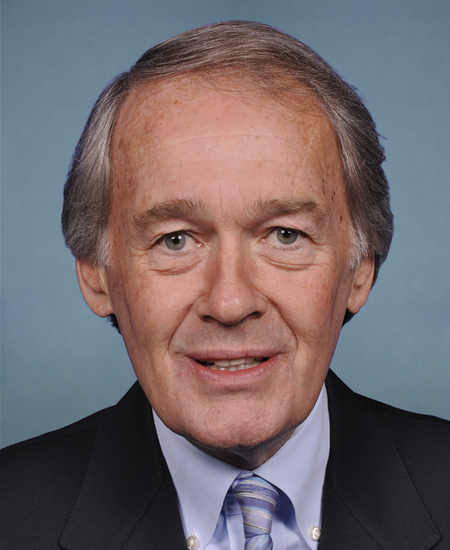
Sen. Edward J. Markey
Sponsored bills
Maddy summaryThe Keep Americans Safe Act bans the import, sale, manufacture, transfer, or possession of large capacity ammunition magazines (defined as holding more than 10 rounds) for most civilians, while exempting law enforcement officers, retired officers, and certain security personnel. It requires new magazines to have serial numbers and manufacturing dates, and allows federal funding for buy-back programs to remove these magazines from circulation. The law grandfathered existing magazines owned before enactment and excludes specific uses like campus law enforcement or nuclear facility security. This directly affects civilians owning high-capacity magazines but not police, military, or authorized security personnel.
Maddy summaryS 282, the Arctic Refuge Protection Act of 2023, designates approximately 1,559,538 acres of the Arctic National Wildlife Refuge in Alaska as wilderness under federal law. This provision directly affects the Coastal Plain area of the refuge by restricting activities like oil drilling, mining, and development, as wilderness designation prohibits such uses. The bill amends the National Wildlife Refuge System Administration Act to formally add this specific area to the National Wilderness Preservation System, using a map dated October 20, 2015, for precise boundaries. The change would protect the land from most human alteration while maintaining its ecological integrity.
Maddy summaryThis bill creates a federal grant program to help states and tribes implement Extreme Risk Protection Orders (ERPOs), which allow courts to temporarily remove firearms from individuals who may pose a danger to themselves or others. To qualify for funding, states must have laws including due process protections like hearings before orders are issued. The bill also amends federal law to include ERPOs in background checks and requires states to notify federal databases about these orders. It ensures ERPOs issued in one state will be recognized by courts in other states. This would directly affect individuals subject to ERPOs, law enforcement officers, and courts that implement these orders.
Maddy summaryThis bill requires federally licensed firearm dealers, importers, and manufacturers to securely store firearms and business records when their premises are closed. Specifically, it mandates that firearms must be secured using hardened steel rods through the trigger guard (with shielded locks and anchoring) or stored in locked fireproof safes, cabinets, or vaults. Paper records must also be kept in secure locations like locked safes or vaults. Violations carry escalating penalties: $1,000-$10,000 fines for first offenses, license suspension for second offenses, and license revocation for third offenses. The storage rules for firearms take effect one year after enactment, while record storage requirements begin 90 days after enactment.
Maddy summaryThis bill requires the Federal Trade Commission to create rules within one year banning gun manufacturers, dealers, and importers from marketing firearms or related products (including accessories and ammunition) to people under 18. It specifically prohibits tactics like using cartoon characters, kids' merchandise (e.g., hats or toys), or small-sized guns designed to appeal to minors. Enforcement would be led by the FTC, with states and individuals also able to pursue legal action for violations. The law defines "minor" as under 18 and applies to all firearm-related marketing, not just the products themselves.
Maddy summaryThis bill repeals the District of Columbia Home Rule Act's provision (Section 740) that allowed the President to assume emergency control of the District of Columbia's police force. It removes the federal government's authority to override local police management during emergencies. The bill directly affects DC police operations by eliminating a specific federal intervention mechanism. The change is procedural, updating the Home Rule Act to reflect the removal of this presidential power.
Maddy summaryThis bill would significantly strengthen pesticide regulations by requiring the EPA to immediately suspend registration of pesticides that may cause cancer, neurological harm, or other serious risks if they aren't reviewed within specified timeframes. It would ban the use of organophosphate pesticides, neonicotinoids, and paraquat, which have been linked to health problems in children and environmental harm to pollinators. The bill also mandates full disclosure of all ingredients on pesticide labels, including inert chemicals that can be toxic, and creates a mandatory reporting system for farmworker pesticide exposure incidents with penalties for non-compliance. These changes would directly affect pesticide manufacturers, farmers, and farmworkers, while aiming to protect children, communities, and the environment from harmful pesticide exposure.
Maddy summaryThis bill transfers command authority over the District of Columbia National Guard from the U.S. President and federal officials to the Mayor of Washington, D.C. It directly affects the DC National Guard and its operations by amending multiple laws to replace references to the President, Secretary of the Army, or "Commanding General" with the Mayor. Key provisions include changing the Mayor to the Commander-in-Chief (Section 2(a)), appointing officers under the Mayor’s authority (Section 2(c)), and updating federal statutes (Titles 10 and 32) to reflect this change. The bill ensures the Mayor, not federal officials, now oversees all aspects of the DC National Guard, aligning with the District’s home rule framework.
Maddy summaryThis bill amends the Family and Medical Leave Act to create a new eligibility standard for education support professionals (ESP) in public schools, such as paraeducators, secretaries, custodians, and food service workers. It allows these employees to qualify for leave if they’ve worked at least 60% of their expected monthly hours from the previous school year, rather than requiring full-time hours. Employers must maintain records of each employee’s expected monthly hours for review by the Secretary. The change directly affects school support staff in public K-12 schools and institutions of higher education funded by state taxpayers.