

Maddy summaryThis bill significantly expands the Low-Income Home Energy Assistance Program (LIHEAP) to provide both heating and cooling assistance to low-income households struggling with energy costs. It increases annual funding from $2 billion to $400 billion for fiscal years 2024-2033, expands eligibility to include households with a 3% or higher energy burden, and adds specific cooling assistance provisions for heat waves. The bill prevents energy shutoffs and late fees for participants, requires states to operate the program year-round, and includes provisions for renewable energy and weatherization assistance. It directly affects low-income households, particularly those in areas experiencing extreme temperature events, who currently face energy burdens three times higher than other households.
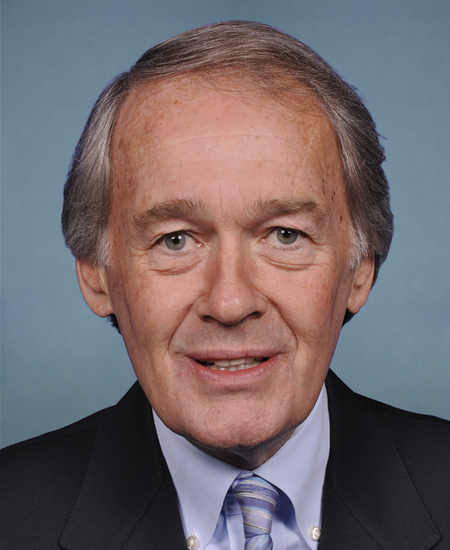
Sen. Edward J. Markey
Sponsored bills
Maddy summaryThe Social Security Expansion Act increases benefits for many recipients by raising the first bend point percentage from 90% to 95% and adding a 22% increase for those eligible after 2023. It establishes a new minimum benefit for low earners based on years worked, with benefits reaching up to 125% of the poverty guideline for individuals with 30+ years of work. The bill extends eligibility for children of beneficiaries until age 22 if they're full-time students and changes the cost-of-living adjustment index to the Consumer Price Index for Elderly Consumers. Additionally, it introduces new taxes on high earners, including a payroll tax on wages between the Social Security contribution base and $250,000, and increases the tax rate on investment gains from 3.8% to 16.2%, while consolidating the two existing Social Security trust funds into a single Social Security Trust Fund.
Maddy summaryS 325, the Supreme Court Ethics Act, establishes new ethics rules for Supreme Court justices and creates an enforcement mechanism. It requires the Judicial Conference to issue a binding code of conduct for justices within one year, followed by the appointment of an Ethics Investigations Counsel to handle public complaints about potential violations and conduct harming the Court's administration. The Counsel must investigate allegations, report annually on complaints, and disclose reasons for recusal or denial of recusal motions in public court records. This directly affects Supreme Court justices and the public's ability to monitor judicial conduct.
Maddy summaryThe Stop the Wait Act of 2023 shortens the waiting period for Social Security Disability Insurance (SSDI) benefits and improves Medicare access for people with disabilities. It phases out the current 5-month SSDI waiting period: reducing it to 3 months for applications filed in 2023-2025, 2 months for 2026, and 1 month for 2027, with full elimination by January 1, 2028. The bill also allows individuals under 65 who qualify for SSDI to receive Medicare coverage retroactively from their first month of SSDI eligibility, rather than waiting 24 months. This directly affects millions of SSDI applicants and beneficiaries who would otherwise face extended delays in accessing critical financial and health benefits.
Maddy summaryThe No Tax Breaks for Outsourcing Act modifies corporate tax rules to prevent companies from avoiding U.S. taxes on income generated through foreign operations. It requires country-by-country reporting of income for multinational corporations, closes loopholes related to "inverted corporations" (foreign companies acquiring U.S. firms to benefit from lower tax rates), and limits interest deductions for certain multinational financial reporting groups. The bill also treats foreign corporations managed and controlled in the U.S. as domestic for tax purposes. These changes primarily affect large multinational corporations with significant foreign operations, with provisions applying to taxable years beginning after December 31, 2022.
Maddy summaryThis bill requires U.S. Customs and Border Protection to ensure certain immigrants a meaningful opportunity to consult with legal counsel during immigration inspections at ports of entry or during deferred inspections. It directly affects individuals like lawful permanent residents returning from travel, refugees, asylees, and others with valid visas or parole documents. Key provisions mandate that CBP provide this consultation within one hour of starting secondary inspection, allow counsel to present evidence, and accommodate in-person meetings when possible. A special rule prevents lawful permanent residents from abandoning their status without first receiving legal advice, unless they provide a written waiver.
Maddy summaryThis bill amends the Communications Act to clarify that "franchise fees" paid by community television providers must be monetary (not in-kind). It specifically changes the definition in Section 622(g)(1) to require that fees be "other monetary assessment," preventing non-monetary payments. The change directly affects community television stations that pay these fees to local governments. It is a technical adjustment to fee requirements, not a new program or funding change.
Maddy summaryThis bill allows veterans with combat-related disabilities and less than 20 years of service to receive both military retired pay and VA disability compensation simultaneously. Previously, such veterans had their retired pay reduced to avoid "concurrent receipt" of both benefits. The bill removes the 20-year service requirement for this group, applying specifically to those retired under Chapter 61 of Title 10 with a combat-related disability as defined in existing law. It does not change eligibility for veterans with non-combat disabilities or those with 20+ years of service.
Maddy summaryThis bill expands legal protections for domestic violence and stalking survivors by broadening the definition of "intimate partner" to include current and former dating partners, ensuring more survivors qualify for federal protections. It creates a new federal definition for "misdemeanor crime of stalking," requiring that the offense involves repeated harassment causing reasonable fear for the victim or specific people they care about (like family, cohabiting partners, or pets). The law also adds a new firearm restriction: people convicted of such stalking offenses cannot possess firearms, with limited exceptions for expunged convictions. These changes directly affect survivors seeking legal protection and individuals convicted of stalking under federal or state law.
Maddy summaryThe Child Care for Every Community Act establishes a comprehensive federal program to provide universal, affordable child care and early learning services to all children under school age. The bill authorizes $500 million annually for fiscal years 2024-2034 to fund prime sponsors (including States, localities, and tribal organizations) that operate programs meeting national quality standards. It requires programs to be accessible to all children with fees based on family income (capping at 7% of income for non-low-income families), prioritizing vulnerable groups like children with disabilities, dual language learners, and low-income families. The legislation mandates comprehensive services including health, nutrition, family support, staff training, fair compensation, and community involvement in program design and operation.