

Maddy summaryThis bill requires background checks for most private firearm transfers between unlicensed individuals by mandating that such transfers occur through a licensed dealer. It directly affects unlicensed buyers and sellers of firearms who would otherwise transfer guns without checks, except for specific exceptions like family gifts, law enforcement transfers, temporary safety-related transfers, or transfers for hunting/shooting at designated locations. Key provisions include requiring licensed dealers to conduct background checks as if they were transferring the firearm themselves and adding a new requirement for written certification from the unlicensed transferee. The bill does not create a national gun registry and leaves state laws intact.
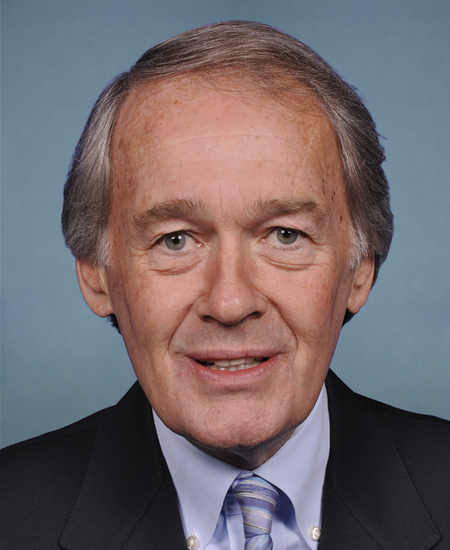
Sen. Edward J. Markey
Sponsored bills
Maddy summaryThe DISCLOSE Act of 2023 requires organizations making campaign-related disbursements over $10,000 to disclose detailed information about their funding sources, including the names and addresses of major donors and the top 5 or 2 funders for political communications. It closes loopholes allowing foreign nationals to influence U.S. elections by prohibiting foreign contributions to ballot initiatives and requiring disclosure of foreign money in campaigns. The bill also mandates "stand by every ad" requirements, requiring political communications to include disclaimers identifying who paid for them and listing major funders. These provisions apply to corporations, labor organizations, and other groups making political expenditures, with the goal of increasing transparency in campaign finance.
Maddy summaryThis bill authorizes Congress to award a gold medal in honor of Constance Baker Motley, a pioneering civil rights lawyer and the first African-American woman appointed to a federal judgeship. The medal will be presented posthumously to her son, Joel Motley III, and niece, Constance Royster, by congressional leaders. The bill directs the U.S. Treasury to design and strike the medal (featuring Motley's image and name) and permits the sale of bronze duplicates to cover production costs, with proceeds going to the U.S. Mint. This is a commemorative measure recognizing Motley's legacy, not a policy change affecting public programs or regulations.
Maddy summaryThis bill amends the Employee Retirement Income Security Act (ERISA) to allow retirement plan fiduciaries to consider environmental, social, and governance (ESG) factors when making investment decisions. Specifically, it permits fiduciaries to factor in ESG considerations - such as climate impact or diversity practices - as part of standard investment analysis or as tie-breakers when competing investments have comparable financial returns and risk. The bill clarifies that fiduciaries need not provide extra documentation for these ESG considerations and ensures ESG-aligned investments can still serve as default options in retirement plans. It directly affects retirement plan managers (e.g., for 401(k)s) and the investment choices they make for employee savings.
Maddy summaryThe American Opportunity Accounts Act creates tax-free savings accounts for children to build financial assets. It establishes American Opportunity Accounts (AO accounts) for individuals born after December 31, 2007, who are under 18 and have a valid IRS-recognized ID. The government makes an initial $1,000 contribution for those born after 2023, plus annual contributions from age 0 to 18 that decrease based on household income (ranging from $2,000 to $0 for households earning 500% or more of the poverty line). Account funds can be used for education, home ownership, or other approved expenses after age 18, with the accounts exempt from counting toward eligibility for federal benefits.
Maddy summaryThe Outdoors for All Act establishes a federal grant program to fund outdoor recreation projects in underserved communities. It provides funding for eligible entities (like cities, counties, tribes, or nonprofits) to acquire land for parks or develop outdoor facilities in qualifying areas - urban regions with 25,000+ people, adjacent clusters, or tribal lands. Grants prioritize projects that improve park access in low-income neighborhoods, engage youth, create jobs, and support cultural gathering spaces, while requiring a 100% cash or in-kind match (with possible waivers). Funds cannot cover maintenance, indoor facilities, or restricted-access land, and recipients must submit annual progress reports to the Interior Secretary.
Maddy summaryThis resolution (SRES 63) is a symbolic Senate measure formally celebrating Black History Month. It acknowledges the contributions of African Americans to U.S. history and society, recognizes the origins of Black History Month (beginning as Negro History Week in 1926), and encourages nationwide reflection on this history. The resolution does not create new laws or policies but serves as a formal Senate acknowledgment of the significance of Black History Month in February. It aims to honor the legacy of African American pioneers and promote learning about their impact on the nation.
Maddy summaryThis bill imposes a new tax on major U.S. oil companies with annual crude oil production or import volumes exceeding 300,000 barrels per day. The tax rate equals 50% of the excess of the quarterly Brent crude oil price over the 2015-2019 average, adjusted for inflation. Revenue from this tax funds the "Protect Consumers from Gas Hikes Fund," which then provides refundable tax credits to eligible individuals (with income limits up to $150,000 for joint filers) to offset gasoline costs. The policy directly affects large oil producers and provides direct financial relief to qualifying consumers through quarterly tax refunds.
Maddy summaryS 399, the "Saving the Civil Service Act," limits how federal agencies can move positions between the competitive service (where hiring is open and based on merit) and the excepted service (where hiring is more flexible). It restricts transferring positions to excepted service without meeting specific criteria, requires employee consent for any transfer between service types, and caps transfers during a presidential term at either 1% of an agency's workforce or five employees, whichever is greater. Agencies must also report all such transfers to Congress annually with justifications, and the Office of Personnel Management must issue implementing regulations within 90 days of the bill's enactment. This directly affects federal employees whose positions may be moved between service types and all federal agencies managing personnel transfers.
Maddy summaryThis bill increases the tax rate on corporate stock buybacks from 1% to 4% for companies purchasing their own shares. It also creates an exception for stock issued to certain covered employees (like executives under existing compensation rules), meaning those shares wouldn't count toward the tax. The tax hike applies to buybacks occurring after the bill's enactment date, while the employee stock exception applies to stock issued after enactment. The bill directly affects corporations that repurchase shares, particularly those with executive compensation plans involving stock grants.