Primary Regulators of Insurance Vote Act of 2021 This bill establishes a state insurance commissioner as a voting member of the Financial Stability Oversight Council. The member is appointed by the President with the advice and consent of the Senate. Under current law, this member is nonvoting and selected by state insurance commissioners.
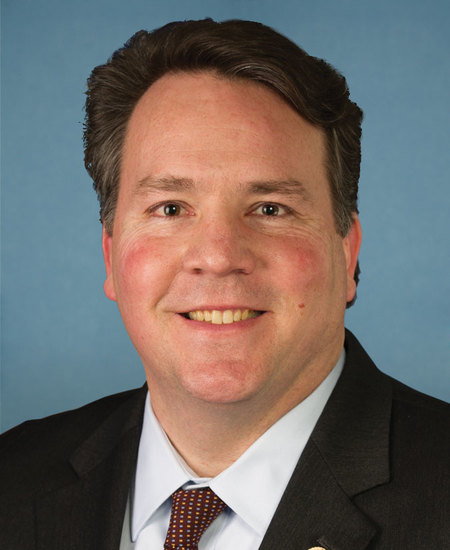
Rep. Alexander X. Mooney
Sponsored bills
Get Americans Back To Work Act This bill makes an individual ineligible for federal pandemic unemployment compensation (FPUC) after June 30, 2021. It also reduces the amount of FPUC to $150.00 for weeks of unemployment ending after May 31, 2021, and ending on or before June 30, 2021. Under current law, an individual is eligible for FPUC for weeks of employment ending on or before September 6, 2021 in the amount of $300.
Repealing Illegal Freedom and Liberty Excises Act or the RIFLE Act This bill repeals the excise tax on the transfer of firearms. The bill shall not be construed as placing any regulated firearms under the jurisdiction of the U.S. Consumer Product Safety Commission.
No Taxpayer Funding for the U.N. Population Fund This bill prohibits the use of funds to provide contributions directly or indirectly to the United Nations Population Fund (UNFPA). The UNFPA is a United Nations agency that supports access to sexual and reproductive health services, including voluntary family planning, maternal health care, and sexuality education.
This joint resolution proposes a constitutional amendment prohibiting total outlays for a fiscal year from exceeding total receipts for that fiscal year or 18% of the U.S. gross domestic product unless Congress authorizes the excess by a two-thirds vote of each chamber. The prohibition excludes outlays for repayment of debt principal and receipts derived from borrowing. The amendment requires a two-thirds vote of each chamber of Congress to levy a new tax, increase the rate of any tax, or increase the debt limit. The amendment provides any Member of Congress with standing and a cause of action to seek judicial enforcement of this amendment if authorized by a petition signed by one-third of the Members of either chamber of Congress. Courts are prohibited from ordering any increase in revenue to enforce this amendment.
Informed Consent Act This bill establishes new federal criminal offenses related to the performance of abortions and sterilization procedures. First, the bill prohibits knowingly performing an abortion or sterilization procedure without obtaining informed consent. It provides exceptions, including for an abortion or sterilization procedure that is necessary to save a mother whose life is endangered by a physical (but not psychological or emotional) disorder, illness, or condition. An individual who performs a prohibited abortion or sterilization procedure is subject to criminal penalties—a fine, a prison term of up to 10 years, or both. Second, the bill requires federal employees and contractors, as well as employees and contractors of certain federally funded entities, who know about a prohibited abortion or sterilization procedure to report it as soon as possible. An individual who knows about a prohibited abortion or sterilization procedure but fails to report it is subject to a fine, a prison term of up to three years, or both.

LEOSA Reform Act This bill broadens the authority for certain law enforcement officers to carry concealed firearms across state lines. Specifically, the bill allows qualified active and retired law enforcement officers to carry concealed firearms and ammunition (including magazines) in school zones; in national parks; on state, local, or private property that is open to the public; and in certain federal facilities that are open to the public. Further, the bill permits states to reduce the frequency with which retired law enforcement officers must meet certain qualification standards.
Gun Owner Privacy Act This bill restricts the use of federal funds in connection with the implementation and operation of a firearms-related background check system. Specifically, it prohibits the use of federal funds for a firearms-related background check system that does not immediately destroy all information about a person who is eligible to own firearms, or the implementation or collection of a tax or fee in connection with a firearms-related background check.
Pain-Capable Unborn Child Protection Act This bill establishes a new criminal offense for performing or attempting to perform an abortion if the probable post-fertilization age of the fetus is 20 weeks or more. A violator is subject to criminal penalties—a fine, a prison term of up to five years, or both. The bill provides exceptions for an abortion (1) that is necessary to save the life of the pregnant woman, or (2) when the pregnancy is the result of rape or incest. A physician who performs or attempts to perform an abortion under an exception must comply with specified requirements. A woman who undergoes a prohibited abortion may not be prosecuted for violating or conspiring to violate the provisions of this bill.
Abortion Providers Loan Elimination Act This bill makes abortion providers ineligible to receive a loan under the Paycheck Protection Program, which was established to support small businesses in response to COVID-19. This prohibition shall not apply to hospitals or entities that exclusively provide abortions (1) where the pregnancy is the result of rape or incest, or (2) where the pregnancy endangers the life of the mother. The Inspector General of the Small Business Administration must report on the number of paycheck protection loans made to the Planned Parenthood Federation of America and to other abortion providers.