Protecting Retirement Savers and Everyday Investors Act This bill prohibits states and local governments from imposing taxes upon a securities industry participant based on the number, volume, or value of securities transactions processed or consummated by the participant, with exceptions.
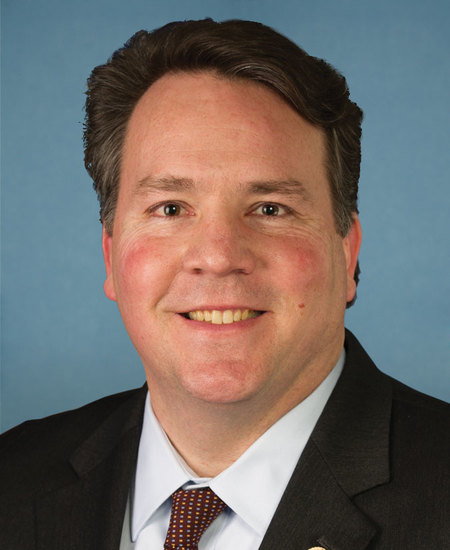
Rep. Alexander X. Mooney
Sponsored bills
This concurrent resolution expresses the sense of Congress that a carbon tax would be detrimental to American families and businesses and is not in the best interest of the United States.
Pausing Unrelenting Markups on Petroleum Act of 2021 or the PUMP Act of 2021 This bill suspends the excise tax on gasoline other than aviation gasoline during a specified holiday period. The bill defines holiday period as the period beginning on the enactment date of this bill and ending on the latest of (1) the first date after enactment on which the public health emergency declared for COVID-19 is no longer in effect, or (2) 180 days after enactment.
Non-Opioids Prevent Addiction In the Nation Act or the NOPAIN Act This bill temporarily establishes separate payments for certain non-opioid treatments under the Medicare prospective payment system for hospital outpatient department services and the payment system for ambulatory surgical center services. The bill applies to pain management treatments that are able to replace or reduce opioid consumption, as shown through clinical trials or data.
This bill eliminates federal pandemic unemployment compensation on May 31, 2021. Under current law, this supplementary compensation is available to claimants in participating states until September 6, 2021.
This resolution designates National Pregnancy Center Week.
Stop CRT Act This bill grants Executive Order 13950 the force and effect of law. That order prohibits federal agencies and contractors from advancing specified policies or training related to race or sex.
Family Support Services for Addiction Act of 2021 This bill directs the Substance Abuse and Mental Health Services Administration to award grants to certain nonprofits to develop or expand services for individuals with substance use disorders and their families.
Freedom to Work Act This bill requires federal agencies to review and reduce occupational licensing requirements. Specifically, each executive agency must review relevant laws, policies, and regulations that institute occupational licensing requirements for agency positions, or that cause a state, local, or tribal government to adopt licensing requirements for positions within their jurisdictions, and identify possible changes to eliminate such requirements or to provide alternatives that are the least restrictive while also maintaining consumer protection. Agencies must implement changes to the extent permissible under law. The bill also requires states to describe their plans to reduce occupational licensing barriers as part of their unified state plans for programs under the Workforce Innovation and Opportunity Act. Several executive orders have required similar review of occupational licensing requirements. For example, the executive order titled Increasing Economic and Geographic Mobility, which was issued on December 14, 2020, outlined certain principles for occupational licensing requirements, including that such requirements should be the least restrictive to competition while also maintaining consumer protection; the order directed executive agencies to review and identify changes to their regulations, guidance, and policies in accordance with these principles. Additionally, the executive order titled Promoting Competition in the American Economy , which was issued on July 9, 2021, directs the Federal Trade Commission to consider addressing practices that inhibit competition, including unfair occupational licensing restrictions, through regulations.

Combatting Racist Training in the Military Act of 2021 This bill prohibits the Armed Forces and academic institutions of the Department of Defense from promoting specified anti-American and racist theories (e.g., that any race is inherently superior or inferior to any other race). Specifically, the bill prohibits including anti-American and racist theories or materials in curricula, reading lists, seminars, workshops, trainings, or other educational or professional settings in a manner that could appear as sponsorship, approval, or endorsement; contracting with, hiring, or otherwise engaging speakers, consultants, diversity trainers, and other persons for the purpose of advocating anti-American and racist theories; compelling members of the Armed Forces to affirm or profess belief in anti-American and racist theories; and segregating members of the Armed Forces by race in any setting, including educational and training sessions.