Maddy summaryHR 7365, the VETS Safe Travel Act, provides free TSA PreCheck access to veterans with specific service-connected disabilities. It applies to veterans enrolled in VA healthcare who have lost or lost use of an extremity, experience paralysis, or have permanent blindness, requiring mobility aids like wheelchairs or prosthetics. The bill requires TSA and the VA to coordinate implementation within one year, including outreach to veterans about this benefit and reporting to Congress on progress.

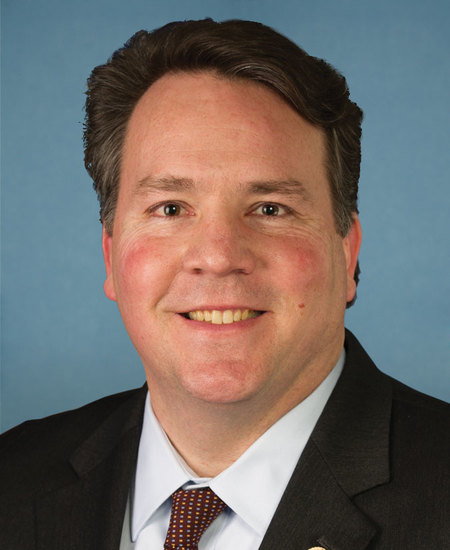
Rep. Alexander X. Mooney
Sponsored bills
Maddy summaryThis bill extends funding for the Gabriella Miller Kids First Pediatric Research Program at the National Institutes of Health (NIH) through 2028, replacing the previous 2014-2023 authorization. It directs NIH to administer pediatric research funds through its Division of Program Coordination (instead of the "Common Fund") and requires NIH to coordinate pediatric cancer and disease research while prioritizing projects that avoid duplicating existing NIH work. The bill also mandates a report to Congress within five years detailing funded pediatric research projects and their advancements. This directly affects NIH's pediatric research funding structure and oversight, focusing on cancer and other childhood diseases.
Maddy summary# Summary of Proposed Legislation This comprehensive legislative proposal contains multiple sections addressing election integrity, campaign finance reform, cybersecurity, census operations, and related government functions. Key provisions include: 1. **Campaign Finance Reforms**: - Increased thresholds for political committee reporting requirements - Repeal of requirements for political committees to report donor identification - Exemption of uncompensated internet communications from contribution/expenditure treatment - Protection of donor privacy for tax-exempt organizations through the "Speech Privacy Act of 2023" 2. **Election Security**: - Establishment of a process for testing and monitoring cybersecurity vulnerabilities in election equipment - Requirements for the Secretary of Homeland Security to notify state officials about election cybersecurity incidents - Exclusive authority for the Election Assistance Commission regarding guidelines for voting system certification 3. **Census and Redistricting**: - Establishment of a permanent Census Monitoring Board with bipartisan composition to review census operations - Clarification of state authority over congressional redistricting maps - Provisions regarding the Speaker of the House's authority to join civil actions related to apportionment 4. **Other Key Provisions**: - Termination of the Disinformation Governance Board and prohibition on funding similar entities - Amendments to the Federal Election Campaign Act to increase reporting thresholds and exempt certain communications - Various technical corrections to existing campaign finance law The legislation appears to focus on enhancing election security, reducing regulatory burdens on political organizations, protecting donor privacy, and strengthening oversight of census operations while maintaining constitutional boundaries between federal and state authority.

Maddy summaryThis bill updates distance requirements for critical access hospitals (CAHs) in rural or mountainous areas. It changes the standard from a 35-mile drive to a 15-mile drive for ambulance services and CAH designation eligibility. Hospitals already designated as CAHs that met the previous 15-mile requirement (for mountainous terrain or secondary roads) can maintain their status even if they later expand within 10-15 miles of their original location. The changes take effect January 1, 2025, directly affecting rural hospitals providing essential emergency care in remote regions.
Maddy summaryHR 1727, the Chesapeake and Ohio Canal National Historical Park Commission Extension Act, extends the expiration date of the commission overseeing the Chesapeake and Ohio Canal National Historical Park. The bill amends Section 6(g) of the Chesapeake and Ohio Canal Development Act (16 U.S.C. 410y-4(g)) to change the commission's end date from an unspecified year to October 1, 2031. This procedural extension does not alter the park's management policies or create new obligations; it simply prolongs the commission's existing mandate. The bill was enacted on December 23, 2024, after passing both the House and Senate in 2024.
Maddy summaryThe FOCA Act of 2023 requires federal agencies to stop mandating or banning contractor agreements with labor organizations (like union contracts) in construction project bids and contracts. It directly affects federal contractors, subcontractors, and agencies managing construction projects funded by the government. The bill prohibits favoring or penalizing contractors based on their labor affiliation status, aiming to promote fair competition and reduce costs. It also mandates updates to federal contracting rules within 60 days of enactment to implement these changes.
Maddy summaryThis bill would make it a federal crime for licensed physicians to perform or attempt to perform an abortion at any point after fertilization, with limited exceptions to save a pregnant woman's life when facing a physical condition, or to remove a dead unborn child from miscarriage or stillbirth, or for ectopic pregnancy. It would prohibit federal funding for abortions through programs like Medicaid, the Children's Health Insurance Program, Indian Health Service, Veterans Health Administration, TRICARE, and Title X family planning services, except in those limited circumstances. The bill also prohibits group health plans and insurance from covering abortions, with the same exceptions. It defines "unborn child" as a human being from fertilization until live birth and "abortion" as any action intended to terminate a pregnancy.
Maddy summaryThis bill requires Medicare Advantage plans to implement electronic prior authorization systems by 2027 and publish detailed data on their approval and denial rates for medical services by 2026. It directly affects Medicare Advantage plans (private insurers offering Medicare coverage) and their enrollees (seniors 65+), mandating transparency about prior authorization decisions, processing times, and appeal outcomes. Key provisions include requiring plans to report annual statistics on request approvals/denials, average processing times, and use of technology, with this data published publicly by the Centers for Medicare & Medicaid Services. The bill also sets timelines for plan responses to prior authorization requests and mandates reports to Congress on implementation and impacts.
Maddy summaryThe Essential Caregivers Act of 2024 requires nursing homes and similar facilities to allow residents to designate essential caregivers who provide emotional support or assistance with daily activities. During emergencies when regular visitation is restricted, facilities must permit at least one essential caregiver access to residents daily and cannot deny access without following specific procedures. Facilities may deny access for a maximum of 7 days during emergencies (or 14 days with state approval), and must provide a written explanation and appeal process if access is denied. The bill establishes a 48-hour appeal process for residents and caregivers to challenge denials, with facilities required to prove violations during appeals. This law applies to Medicare skilled nursing facilities, Medicaid nursing facilities, intermediate care facilities, and certain inpatient rehabilitation facilities.
Maddy summaryThis bill restricts health savings accounts (HSAs), Archer MSAs, health flexible spending accounts, health reimbursement arrangements, and retiree health accounts from covering most abortion expenses. It prohibits these accounts from reimbursing costs for abortions unless the pregnancy resulted from rape or incest, or the woman faces a life-endangering physical condition (as certified by a physician). The policy change directly affects individuals using these specific health accounts who seek abortion coverage, excluding all other abortion-related expenses from tax-advantaged reimbursement. The exceptions are narrowly defined to cover only cases involving rape/incest or severe health risks to the woman.