

Maddy summary# Summary of Proposed Legislation This document outlines a comprehensive U.S. legislative proposal with several key components: 1. **Research Restrictions**: - Requires certification from Federal research grant recipients that they are not Chinese citizens or participants in Chinese talent programs - Prohibits employment of Chinese nationals in federally funded research - Requires institutions receiving Federal assistance to agree not to knowingly employ individuals participating in Chinese talent programs 2. **Foreign Gifts and Contracts Disclosure**: - Mandates disclosure of foreign gifts/contracts over $50,000 to universities - Requires public reporting of restricted/conditional gifts/contracts - Creates a searchable public database of foreign gifts to universities - Requires institutions to maintain policies regarding foreign gifts to faculty and staff 3. **Investment Restrictions**: - Restricts tax-exempt organizations from holding investments in "disqualified Chinese companies" (defined as corporations incorporated in China or with significant Chinese government ownership) - Requires annual reporting on such investments - Allows limited waivers with public disclosure 4. **Taiwan Policy**: - Prohibits U.S. government from recognizing PRC claims to sovereignty over Taiwan without Taiwan's consent - Requires U.S. government to treat Taiwan's democratically elected government as the legitimate representative of the people of Taiwan - Requires a strategy to protect U.S. businesses from Chinese coercion efforts 5. **Additional Provisions**: - Requires participants in Chinese talent programs to register as agents of the Chinese government - Amends economic espionage laws to include education and research - Mandates disclosure of certain funds received by visa holders The legislation represents a significant effort to limit Chinese influence in U.S. academic institutions, research, and business sectors while establishing a more robust policy framework regarding Taiwan.
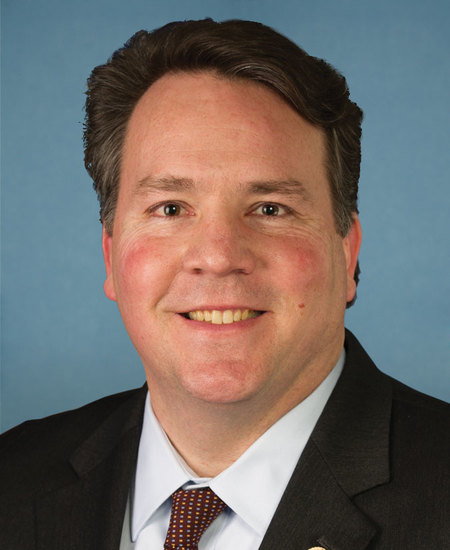
Rep. Alexander X. Mooney
Sponsored bills
Maddy summaryHR 7427 clarifies that states may use Temporary Assistance for Needy Families (TANF) funds to support pregnancy centers and other "alternatives to abortion" programs that provide life-affirming services like counseling, parenting resources, and material support to pregnant individuals. The bill explicitly defines these programs as those promoting childbirth over abortion through services such as prenatal care coordination, job training, infant supplies, and adoption referrals, while excluding entities that provide or facilitate abortions. It also prohibits federal discrimination against grantees or states that fund such programs, including preventing the government from imposing unfair requirements or cutting funding based on a provider's opposition to abortion. This bill directly affects pregnancy centers, adoption agencies, and maternity homes receiving TANF funding, ensuring their eligibility under existing federal law. The legislation responds to a 2023 federal proposal that threatened to restrict such funding.
Maddy summaryHR 6222, the Justice for Victims of COVID Act, establishes a compensation program for families of U.S. citizens who died from COVID-19. It creates a fund financed by a 10% tariff on Chinese imports, which pays eligible survivors for out-of-pocket medical costs and up to $50,000 in lost wages. The program requires petitioners to prove COVID-19 was the primary cause of death, with payments distributed equally among surviving spouses, children, or parents. The bill also allows lawsuits against China for pandemic-related misrepresentations, creating a presumption that such statements caused harm. This applies solely to U.S. citizen deaths directly linked to the pandemic, with compensation limited to documented medical expenses and lost income.
Maddy summaryThe Maximum Pressure Act (HR 6114) is a legislative proposal that would maintain and expand U.S. sanctions against Iran. The bill would codify existing sanctions, require Iran to meet 12 specific conditions before sanctions could be lifted (including ending support for terrorism, releasing hostages, and ending nuclear enrichment), and expand sanctions on Iran's Revolutionary Guard Corps and missile programs. It also establishes new reporting requirements for the U.S. government to monitor Iran's activities and the impact of sanctions. The legislation would require congressional review before any sanctions could be lifted or modified, preventing the executive branch from unilaterally easing restrictions.
Maddy summaryHR 4673, the Ending Normal Trade Relations with China Act of 2023, would end the U.S. policy granting China lower tariffs on its exports. If enacted, it would require all Chinese-made goods to pay standard U.S. tariffs (the rates in column 2 of the Harmonized Tariff Schedule) starting two years after the law's passage, instead of the reduced "normal trade relations" rates. The bill also prevents future extension of this preferential status and allows the President to further increase tariffs on Chinese products. This change would directly affect Chinese exporters and U.S. importers of Chinese goods by raising their costs.
Maddy summaryThe Leveling the Playing Field 2.0 Act (HR 3882) updates U.S. trade law to better address international trade practices that disadvantage American businesses. It establishes special rules for handling multiple investigations of the same merchandise (called "successive investigations"), requiring the Commerce Department to consider previous injury determinations when making new findings. The bill also creates mechanisms to address market distortions from foreign government subsidies, including currency undervaluation, and strengthens procedures to prevent duty evasion through certification requirements for importers. These changes primarily affect foreign exporters of goods subject to U.S. antidumping and countervailing duty investigations, as well as U.S. importers of those goods.
Maddy summaryThis bill simplifies regulations for rural health clinics (RHCs) by reducing administrative burdens. It allows RHCs to contract with physician assistants and nurse practitioners (instead of requiring direct employment), updates the definition of "rural" to exclude areas with 50,000+ residents, and removes outdated lab service requirements by requiring only "prompt access" to clinical labs. These changes directly affect RHCs, enabling them to more flexibly staff and operate while complying with state practice laws. The amendments take effect January 1, 2024, applying to services provided on or after that date.
Maddy summaryThis bill removes geographic restrictions on Medicare telehealth services, allowing rural beneficiaries to receive care at home or remotely starting January 1, 2025. It specifically expands access for critical access hospitals and rural health clinics by standardizing payments for telehealth services and permitting audio-only visits for certain providers like doctors and clinics with established patient relationships. The bill also extends Medicare flexibilities for Federally Qualified Health Centers (FQHCs) and rural health clinics beyond 2024. These changes aim to improve healthcare access in underserved rural communities by removing prior barriers to telehealth.
Maddy summaryThis bill prohibits federal funding for gender transition procedures - including hormone therapy, puberty blockers, and surgeries like genital reassignment - across all federal programs and health plans. It exempts procedures for medical conditions (such as disorders of sex development) and treatment of complications arising from such procedures. The bill also blocks Affordable Care Act premium tax credits and cost-sharing reductions for health plans covering these services, though individuals may purchase separate non-federal-funded coverage. State and private insurers can still offer such coverage using their own funds, but federal subsidies cannot be applied to it.
Maddy summaryThis bill repeals the tax on Social Security benefits for seniors, making those benefits fully tax-free. It directly affects seniors who receive Social Security benefits and are currently subject to income tax on a portion of those payments. The key provision removes Section 86 of the tax code that previously included benefits in gross income, while a separate funding mechanism appropriates money to Social Security trust funds to replace the lost revenue. The bill ensures Social Security trust funds remain fully funded without requiring new tax increases.