This resolution expresses the sense of the House of Representatives that the U.S. government should not infringe upon the ability of American citizens to act in accordance with their sincerely held religious beliefs. It condemns any behavior by the states that limits the ability of individuals to express such beliefs.
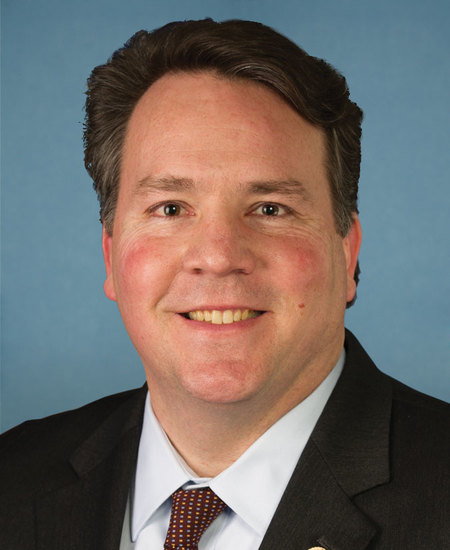
Rep. Alexander X. Mooney
Sponsored bills
Woman's Right To Know Act This bill specifies requirements for informed consent that health care providers must obtain before performing an abortion procedure. Providers must present a woman seeking an abortion with an authorization form at least 24 hours before performing the procedure. The form must (1) include specified information concerning gestational age, associated developmental characteristics, and medical risks; (2) disclose penalties that providers may face for failing to obtain the requisite informed consent; and (3) include an affirmation that the individual signing the form understands the information. The form must be signed and witnessed in person and retained in the medical file. Providers do not have to obtain such consent if, in reasonable medical judgment, obtaining it would pose a greater risk of death or substantial physical impairment of a major bodily function, excluding psychological or emotional conditions, of the pregnant woman. The bill also establishes civil penalties for providers who do not comply with these requirements.
English Language Unity Act of 2021 This bill establishes English as the official language of the United States. It establishes a framework for implementation and enforcement, including by testing English as part of the naturalization process.
Life at Conception Act This bill declares that the right to life guaranteed by the Constitution is vested in each human being at all stages of life, including the moment of fertilization, cloning, or other moment at which an individual comes into being. Nothing in this bill shall be construed to authorize the prosecution of any woman for the death of her unborn child.
Protect Our Military Families' 2nd Amendment Rights Act This bill broadens the scope of allowable firearms transactions involving active duty service members and their spouses. Specifically, the bill allows a licensed gun dealer, importer, or manufacturer to sell or ship a firearm or ammunition to the spouse of a member of the Armed Forces on active duty outside the United States. Current law already allows a licensed dealer, importer, or manufacturer to sell or ship a firearm or ammunition to a member of the Armed Forces on active duty outside the United States. The bill also specifies that, for purposes of federal firearms laws, a member of the Armed Forces on active duty, or his or her spouse, is a resident of the state in which (1) the member or spouse maintains legal residence, (2) the permanent duty station of the member is located, and (3) the member maintains a home from which he or she commutes to the permanent duty station.

Second Amendment Preservation Act This bill prohibits the use of FY2021 appropriations to enforce any measure, law, regulation, or guidance issued by the Bureau of Alcohol, Tobacco, Firearms and Explosives after November 1, 2020; or to enforce, implement, or advance any measure, law, regulation, or guidance relating to the lawful use, purchase, sale, possession, or transportation of firearms by any U.S. citizen.
Sanctity of Human Life Act This bill defines the beginning of human life for purposes of legal and constitutional attributes and privileges of personhood. Specifically, it declares that the right to life guaranteed by the Constitution is vested in each human and is a person's most fundamental right; each human life begins with fertilization, cloning, or its equivalent; and Congress, each state, the District of Columbia, and each U.S. territory have the authority to protect all human lives.
No Taxpayer Funding for Abortion and Abortion Insurance Full Disclosure Act of 2021 This bill modifies provisions relating to federal funding for, and health insurance coverage of, abortions. Specifically, the bill prohibits the use of federal funds for abortions or for health coverage that includes abortions. Such restrictions extend to the use of funds in the budget of the District of Columbia. Additionally, abortions may not be provided in a federal health care facility or by a federal employee. Historically, language has been included in annual appropriations bills for the Department of Health and Human Services (HHS) that prohibits the use of federal funds for abortions—such language is commonly referred to as the Hyde Amendment. Similar language is also frequently included in appropriations bills for other federal agencies and the District of Columbia. The bill makes these restrictions permanent and extends the restrictions to all federal funds (rather than specific agencies). The bill's restrictions regarding the use of federal funds do not apply in cases of rape, incest, or where a physical disorder, injury, or illness endangers a woman's life unless an abortion is performed. The Hyde Amendment provides the same exceptions. The bill also prohibits qualified health plans from including coverage for abortions. Currently, qualified health plans may cover abortion, but the portion of the premium attributable to abortion coverage is not eligible for subsidies.
This resolution supports the recognition of Overdose Awareness Day, including by lowering U.S. flags at federal buildings to half-staff.
Fighting Emerging Narcotics Through Additional Nations to Yield Lasting Results Act or the FENTANYL Results Act This bill creates two programs, establishes a reporting requirement, and otherwise modifies provisions to facilitate global cooperation against synthetic drug trafficking. Specifically, the bill requires the Department of State to establish a program to provide capacity-building assistance for law enforcement agencies of specified countries to identify, track, and detect certain synthetic drugs (e.g., fentanyl). The State Department must also carry out an international exchange program for drug demand reduction experts to provide educational and professional development on demand-reduction matters relating to the illicit use of narcotics and other drugs. The bill requires the State Department to include new sections in its annual international narcotics control strategy report that contain (1) an assessment of the countries likely involved in the trafficking of synthetic opioids; and (2) policies of responding to new psychoactive substances. The bill also expands the definition of major illicit drug producing country to include countries that produce synthetic drugs. Under current law, foreign assistance may be withheld from such countries.