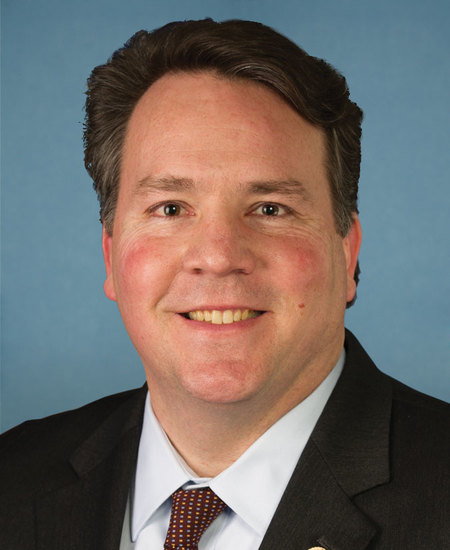
Photo of Alexander X. Mooney
R United States House · District 2 · Former member · West Virginia

Rep. Alexander X. Mooney

Compare
Total votes
2,168
all sessions
Attendance
93%
152 missed
Lower than 94% of chamber peers
With party
92%
of cast votes
Lower than 78% of chamber peers
Bipartisan score
4%
crosses aisle rarely
Higher than 75% of chamber peers
Sponsored
760
bills & resolutions
Near the chamber average
Committees
0
assignments
760 bills and resolutions

Sponsored bills

Total
760
Primary
46
Co-sponsor
714
This page
760
matching current filters
Co-sponsor HR 6132
In committee · United States House · Co-sponsor
Public Safety Enhancement Act of 2021

Public Safety Enhancement Act of 2021 This bill reauthorizes through FY2026 the Community Oriented Policing Services (COPS) grant program. Additionally, the bill requires a certain amount of funds made available under the COPS grant program to be used for the hiring and retention of law enforcement officers.

In committee Nov 1, 2022 1 co-sponsor
Co-sponsor HR 6099
In committee · United States House · Co-sponsor
Recognizing the Unborn Act of 2021

Recognizing the Unborn Act of 2021 This bill replaces the term fetus with unborn child throughout federal law, including provisions relating to abortions and medical research. The bill also creates a default statutory definition for unborn child : a child in utero, or a member of the species Homo sapiens , at any stage of development, who is carried in the womb.

In committee Nov 1, 2022 1 co-sponsor
Co-sponsor HR 5895
In committee · United States House · Co-sponsor
Ending Payments to Non-American Citizens Act

Ending Payments to Non-American Citizens Act This bill prohibits making amounts from the Judgment Fund available to an alien who is not a lawful permanent resident unless specifically authorized by law. (The Judgment Fund is an account for paying judgments and settlements against the United States.)

In committee Nov 1, 2022 1 co-sponsor
Co-sponsor HR 5874
In committee · United States House · Co-sponsor
Restoring America’s Leadership in Innovation Act of 2021

Restoring America's Leadership in Innovation Act of 2021 This bill revises several aspects of patent law. The bill changes the U.S. patent system back to a first-to-invent system, in which the first inventor to conceive of an invention is entitled to a patent. Currently, the first person to file an application that meets all the necessary requirements is entitled to the patent. Several types of administrative patent challenge proceedings are abolished, as well as the Patent and Trademark Office (PTO) body that decides those proceedings. The bill relaxes the standard for what constitutes patent-eligible subject matter. The only ineligible inventions shall be those that exist in nature independent or prior to human activity or that exist solely in the human mind. The bill also makes it easier for a patent owner that has won an infringement case in court to secure a permanent injunction against the infringing defendant. Specifically, there shall be a presumption that further infringement would cause irreparable harm to the prevailing patent owner, and the burden shall be on the infringer to prove otherwise. (Currently, a prevailing patent owner seeking a permanent injunction must prove, among other things, that further infringement would cause irreparable harm.) The bill limits what types of publications shall be treated as prior art that could be used to make an invention be considered to be anticipated or obvious (and therefore not patentable). The bill authorizes the PTO to keep and spend all the fees that it collects.

In committee Nov 1, 2022 1 co-sponsor
Co-sponsor HR 5854
In committee · United States House · Co-sponsor
Illegal Immigrant Payoff Prohibition Act

Illegal Immigrant Payoff Prohibition Act This bill prohibits the payment of a settlement to an alien for a civil action brought against the United States in connection with the alien's inadmissibility to, or unlawful presence in, the United States.

In committee Nov 1, 2022 1 co-sponsor
Co-sponsor HR 5557
In committee · United States House · Co-sponsor
DEMOCRACIA Act

Denying Earnings to the Military Oligarchy in Cuba and Restricting Activities of the Cuban Intelligence Apparatus Act or the DEMOCRACIA Act This bill provides for asset- and visa-blocking sanctions for conduct relating to Cuba. It also establishes an interagency task force to facilitate access to uncensored internet in Cuba. The President must sanction foreign persons that provide financial support to Cuban government sectors involved in human rights abuses or terrorism (e.g., the defense sector). This includes foreign persons that (1) are military contractors or mercenaries operating on behalf of the Cuban government, or (2) violate laws restricting trade with Cuba. Specified transactions, including remittances to immediate family members (subject to some limitations) and payments related to U.S. military and diplomatic sites, are not subject to these sanctions. The President must also sanction (1) foreign persons complicit or engaged in human rights abuses or corruption, (2) foreign persons supporting such conduct, and (3) specified Cuban government officials and their affiliates. The bill provides humanitarian exceptions to these sanctions, for example, donating food or agricultural commodities to organizations or individuals unaffiliated with the Cuban government. The President may not license sanctionable conduct, and U.S. persons seeking to engage in a permitted transaction must submit a written request to the Office of Foreign Asset Control of the Department of the Treasury. The President may waive the sanctions in the interest of U.S. national security. To terminate the sanctions, the President must certify that the Cuban government has legalized all political activities and taken other steps to promote political rights and freedoms. Congress must then enact a joint resolution approving the termination.

In committee Nov 1, 2022 1 co-sponsor
Co-sponsor HR 5239
In committee · United States House · Co-sponsor
Good Samaritan Health Professionals Act of 2021

Good Samaritan Health Professionals Act of 2021 This bill extends liability protection for harm caused by acts or omissions by volunteer health care professionals in the course of providing certain health care services during specified public-health or national emergencies or major disasters. However, such liability protection shall not apply if (1) the harm was caused by willful or criminal misconduct, gross negligence, reckless misconduct, or a conscious flagrant indifference to the rights or safety of the individual harmed; or (2) the health care professional provided services under the influence of alcohol or an intoxicating drug.

In committee Nov 1, 2022 1 co-sponsor
Co-sponsor HR 5136
In committee · United States House · Co-sponsor
Teleabortion Prevention Act of 2021

Teleabortion Prevention Act of 2021 This bill restricts the use of telehealth for chemical abortions (also known as medication abortions). Specifically, it requires a provider who dispenses or prescribes medication for a chemical abortion to physically examine the patient, be physically present at the location of the chemical abortion, and schedule a follow-up visit. The bill provides an exception for a chemical abortion that is necessary to save the life of a mother whose life is endangered by a physical disorder, illness, injury, or condition. The bill establishes criminal penalties—a fine, a prison term of up to two years, or both—for a provider who does not comply with the requirements. A patient who undergoes a chemical abortion may not be prosecuted.

In committee Nov 1, 2022 1 co-sponsor
Co-sponsor HR 5092
In committee · United States House · Co-sponsor
To prohibit the Federal Government from requiring any citizen to be vaccinated, including Federal agencies from requiring its employees to take any vaccination, without the citizen being fully advised in writing of all known potential risks from the vaccine and consultation with a physician followed by the voluntary informed consent of the citizen, and for other purposes.

This bill sets out informed consent requirements for, and restricts the authority of the federal government to require, vaccinations. Specifically, the bill requires written, informed consent from any individual who receives a vaccine in the United States and imposes a criminal fine for violations of this requirement. In addition, the bill prohibits the federal government from requiring vaccinations of U.S. citizens or federal employees unless the citizen or employee is advised in writing of all known risks of, consults with a physician about, and provides voluntary informed consent for the required vaccine.

In committee Nov 1, 2022 1 co-sponsor
Co-sponsor HR 4341
In committee · United States House · Co-sponsor
CARA 3.0 Act of 2021

CARA 3.0 Act of 2021 This bill addresses substance use disorders by expanding access to treatment and recovery services, providing for housing protections, and requiring other activities. Specifically, the bill reauthorizes, establishes, and expands support for treatment and recovery services. This includes increasing access to treatment in the criminal justice system and other settings and for particular populations, such as pregnant and postpartum individuals and youth and young adults. Additionally, the bill expands Medicare and Medicaid coverage for treatment, including by expanding telehealth access to medication to treat substance use disorders. The bill also temporarily requires that non-opioid pain treatment options be reimbursed separately, instead of on a packaged basis, under Medicare. As a condition of receiving certain federal funding, states must mandate the use of prescription drug monitoring programs (PDMPs) by prescribers and dispensers and impose additional PDMP requirements. Moreover, prescribers of potentially addictive drugs must complete continuing education requirements. The bill also revises the registration process for providers who prescribe certain medications to treat substance use disorders, including by eliminating the provider's patient limit for such medications. In addition, the Substance Abuse and Mental Health Services Administration must carry out activities to promote access to high-quality recovery housing. The bill also sets out protections for individuals with substance use disorders who live in, or apply to live in, federally assisted housing. Furthermore, the bill requires other activities to address substance use, such as support for workforce education and training; public awareness campaigns and similar outreach; and research on prevention strategies, insurance coverage, and treatment modalities.


In committee Nov 1, 2022 1 co-sponsor
Showing 401 to 410 of 760 bills
Previous 1 … 40 41 42 … 76 Next