

No Frivolous Application for Short-Barreled Shotguns Act or the NFA SBS Act This bill removes certain short-barreled shotguns from the definition of firearms for purposes of the National Firearms Act. It also eliminates the prohibition on the sale or transportation of such shotguns in interstate commerce and treats persons who acquire or possess a short-barreled shotgun as meeting the registration or licensing requirements for such shotguns where such requirements are determined by reference to the National Firearms Act. The bill preempts state or local laws that impose a tax or recordkeeping requirements on short-barreled shotguns. The Department of Justice must destroy records relating to the registration of shotguns described by this bill within one year after the enactment of this bill.
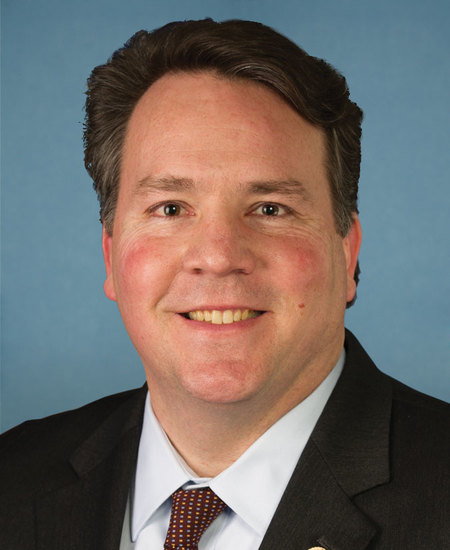
Rep. Alexander X. Mooney
Sponsored bills
Second Amendment is Essential Act of 2021 This bill directs the Department of Homeland Security to designate the business of importing, manufacturing, or dealing firearms, or importing or manufacturing ammunition, as a critical infrastructure sector. Additionally, the bill states that individuals who are employed by those entities are critical infrastructure workers. The term critical infrastructure means systems and assets, physical or virtual, so vital to the United States that the incapacity or destruction of such systems and assets would have a debilitating impact on security, national economic security, national public health and safety, or any combination of those matters.
Firearm Due Process Protection Act This bill expands the grounds for pursuing judicial remedies related to certain firearm transfers. Additionally, the bill establishes procedural rules applicable to actions for judicial remedies. Current law authorizes judicial remedies for an individual who is erroneously denied a firearm (e.g., an individual is denied a firearm but the individual is eligible to receive or possess a firearm). This bill authorizes remedies for an individual who experiences an extended delay (i.e., a delay of more than 60 days) on a firearm transfer. Additionally, the bill requires an expedited hearing on an action for judicial remedies and places the burden of proof on the respondent to show by clear and convincing evidence that the individual was ineligible to receive or possess a firearm.
Conrad State 30 and Physician Access Reauthorization Act This bill modifies the Conrad 30 Waiver program, which incentivizes qualified foreign physicians to serve in underserved communities. It also extends statutory authority for the program for three years from this bill's enactment. Aliens coming to the United States under a J-1 nonimmigrant visa to receive medical training typically must leave the country and reside for two years abroad before being eligible to apply for an immigrant visa or permanent residence. The Conrad program waives this requirement for individuals who meet certain qualifications, including serving for a number of years at a health care facility in an underserved area. The bill increases the number of waivers that a state may obtain each fiscal year from 30 to 35 if a certain number of waivers were used the previous year, and provides for further adjustments depending on demand. An alien physician may be employed at an academic medical center to meet the Conrad program's employment requirements if the alien's work is in the public interest, even if the medical center is not in an underserved area. Employment contracts for alien physicians under the Conrad program shall contain certain information, such as the maximum number of on-call hours per week the physician shall have to work. Certain alien physicians (along with the physician's spouse and children) shall be exempt from the direct annual numerical limits on immigration, including those physicians that have met certain requirements related to visas for physicians to serve in underserved areas.
This resolution expresses the House of Representatives' support for the goals and ideals of National Veterans Small Business Week, celebrates the millions of people in the United States—especially veterans and their spouses—who benefit from Small Business Administration programs, and expresses appreciation for the continued service to the United States by the nation's veterans through small business ownership and entrepreneurship.
Major Richard Star Act This bill provides that combat-disabled uniformed services retirees with fewer than 20 years of creditable service may concurrently receive, without reduction, veterans' disability compensation and retired pay or combat-related special compensation.
Credit Union Board Modernization Act This bill revises the frequency of meetings required to be held by a credit union's board of directors. Specifically, the bill requires monthly meetings for new credit unions during their first five years and for credit unions with a low soundness rating. All other credit unions must hold at least six meetings annually, with at least one meeting held during each fiscal quarter. Currently, all credit union boards must meet at least once a month.
This bill requires the Department of the Treasury to define the Federal Reserve note dollar in terms of a fixed weight of gold, based on that day's closing market price of gold. Federal Reserve Banks must exchange Federal Reserve notes with gold at this price. If a Federal Reserve Bank does not do this, Treasury must make any exchange and place a corresponding lien on the assets of that bank. In addition, Treasury and the Board of Governors of the Federal Reserve must report on U.S. gold holdings.
Educational Choice for Children Act This bill allows individuals and corporations a new tax credit after 2022 for charitable contributions to tax-exempt organizations that provide scholarships to elementary and secondary school students. Such students must be members of a household with incomes not greater 300% of the area median gross income and be eligible to enroll in a public elementary or secondary school. The bill excludes from the gross income of taxpayer dependents any scholarship amount for the elementary or secondary education expenses of eligible students. It also prohibits governmental control over scholarship granting organizations.
Invest to Protect Act of 2022 This bill directs the Office of Community Oriented Policing Services within the Department of Justice to award grants to local and tribal governments that employ fewer than 125 law enforcement officers. Grant funds may be used for various activities, including to provide de-escalation training and improve recruitment and retention.