No Retaining Every Gun In a System That Restricts Your Rights Act This bill modifies the retention requirements for firearm transaction records of federal firearms licensees (FFLs) that go out of business. Current law generally requires FFLs that go out of business to deliver their firearm transaction records to the Bureau of Alcohol, Tobacco, Firearms and Explosives (ATF). This bill removes the requirement for FFLs that go out of business to deliver their firearm transaction records to the ATF. Further, the bill requires the ATF to destroy all out-of-business records it has collected from FFLs.
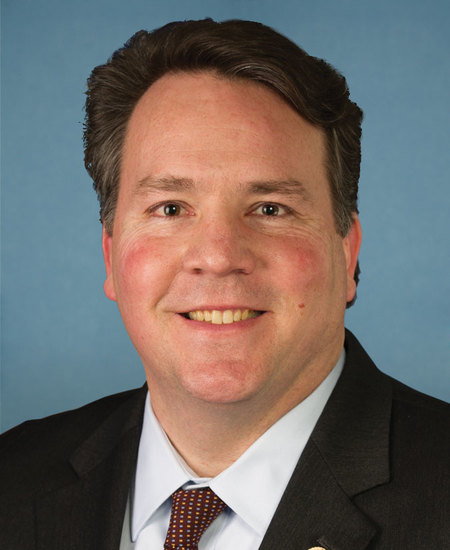
Rep. Alexander X. Mooney
Sponsored bills
Russian Travel Sanctions for a Democratic Ukraine Act This bill imposes visa-blocking sanctions on certain citizens of Russia. Specifically, the President must impose such sanctions on citizens of Russia who are (1) Russian oligarchs, (2) employees of Russia's government, or (3) employees of companies that are owned by or receive funding from Russia's government. The President must also impose the sanctions on family members of such individuals. The President must coordinate with allies, including NATO member states, on the imposition of such sanctions. The President may waive the application of such sanctions in certain instances.
No Backdoor Gun Control Act of 2022 This bill removes the category of any other weapon from the definition of firearm under the National Firearms Act. The bill treats persons who acquire or possess any other weapon as meeting registration or licensing requirements under the National Firearms Act. The bill requires the Department of Justice to destroy any records relating to the registration of any other weapon not later than one year after the enactment of this bill.
No Taxpayer Funds for Illegal Immigrants Act This bill prohibits using federal funds pursuant to a federal contract, grant, loan, or cooperative agreement for any organization that provides legal representation or legal orientation for non-U.S. nationals ( aliens under federal law) who are unlawfully present in the United States and are placed in removal proceedings. The bill also prohibits using any federal funds for the Legal Access at the Border program, any successor programs, or federal solicitations for commercial products or services related to such programs.
Stopping Traffickers and Their Accomplices Act of 2022 This bill requires an abortion provider to notify the National Human Trafficking Hotline if the provider has a reasonable suspicion that the patient is a victim of trafficking. It also requires each abortion provider to complete annual training on how to identify and respond appropriately to individuals who are at risk of or who have experienced trafficking. The bill establishes penalties for violations.
Prenatal Nondiscrimination Act of 2022 or the PRENDA Act of 2022 This bill creates new federal crimes related to the performance of sex-selection abortions (i.e., abortions based on the sex or gender of an unborn child). It subjects a violator to criminal penalties—a fine, a prison term of up to five years, or both. It also authorizes civil remedies, including damages and injunctive relief. A woman who undergoes a sex-selection abortion may not be prosecuted or held civilly liable.
Putin Accountability Act This bill imposes sanctions pertaining to Russia and addresses related issues. The President must impose sanctions, with some exceptions, on individuals and entities that knowingly and directly provide specialized financial messaging services to Russia's central bank (or enables access to such services); entities responsible for constructing, financing, or operating Nord Stream 2 (a pipeline constructed to increase Russian natural gas exports) and the corporate officers and controlling shareholders of such entities; individuals and entities in Russia involved in kleptocracy, Russian government activities to subvert U.S. democratic institutions and interests, or Russian government disinformation campaigns against the United States; and entities that are Russian state development corporations, as well as any officials of such an entity. The President must impose property-blocking sanctions on such individuals and entities and also visa-blocking sanctions on the individuals. The President must also (1) issue regulations to prohibit U.S. individuals and entities from dealing in Russian sovereign debt; and (2) issue a determination as to whether certain specified Russian individuals meet the criteria to be subject to sanctions under various authorities, including this bill. The Department of State must (1) designate Russia a state sponsor of terrorism, and (2) report to Congress a determination of whether Russia-affiliated armed entities in the Donbas region of Ukraine meet the criteria to be designated as foreign terrorist organizations. The bill prohibits expending funds to engage with Russia's government on cyber issues or arms control negotiations until certain conditions have been met.
Guaranteeing Ukrainian Autonomy by Reinforcing its Defense (GUARD) Act of 2022 This bill provides support for Ukraine and imposes sanctions related to Nord Stream 2, the pipeline constructed to increase exports of natural gas from Russia. The Department of State must periodically report to Congress a determination as to whether Russia's government meets the criteria to be designated a state sponsor of terrorism. The bill authorizes the State Department to provide Foreign Military Financing assistance to Ukraine in FY2022. The bill also authorizes providing Ukraine with lethal assistance, such as anti-armor weapon systems and anti-aircraft weapons systems. From FY2022-FY2026, Ukraine shall have priority access to excess defense articles. During the same time period, the bill also authorizes providing Ukraine with assistance, including (1) International Military Education and Training assistance; (2) assistance to strengthen cybersecurity and intellectual property enforcement; (3) support and training for banking reform, subsidy reform, corporate governance, and the privatization of state-owned enterprises; and (4) assistance to combat corruption and improve the rule of law. Within 15 days of this bill's enactment, the President must impose sanctions on any entity responsible for planning, constructing, or operating Nord Stream 2, as well as any corporate officer of such an entity. The bill also subjects the President's authority to waive certain sanctions to congressional review. The U.S. Agency for Global Media may expand broadcasting in countries of the former Soviet Union to combat Russian disinformation. The bill requires reports to Congress on various topics, including a strategy on using U.S. diplomacy to support Ukraine.

Halt All Lethal Trafficking of Fentanyl Act or the HALT Fentanyl Act This bill places fentanyl-related substances as a class into schedule I of the Controlled Substances Act. A schedule I controlled substance is a drug, substance, or chemical that has a high potential for abuse; has no currently accepted medical value; and is subject to regulatory controls and administrative, civil, and criminal penalties under the Controlled Substances Act. Additionally, the bill establishes a new, alternative registration process for schedule I research that is funded by the Department of Health and Human Services or the Department of Veterans Affairs or that is conducted under an investigative new drug exemption from the Food and Drug Administration. The bill also makes several other changes to registration requirements for conducting research with controlled substances, including permitting a single registration for related research sites in certain circumstances, waiving the requirement for a new inspection in certain situations, and allowing a registered researcher to perform certain manufacturing activities with small quantities of a substance without obtaining a manufacturing registration.
Highway Accident Fairness Act of 2021 This bill makes staging a collision with a commercial motor vehicle a federal crime and modifies legal procedures for suits arising from commercial motor vehicle accidents. A person who operates a motor vehicle and intentionally collides with a commercial motor vehicle (or arranges for another person to cause such a collision) is subject to a fine, a prison term of up to 20 years, or both. If the collision results in serious bodily injury or death, the prison term may not be less than 20 years. With respect to legal procedures, the bill (1) requires a plaintiff in a suit concerning a bodily injury or death that involves one or more commercial motor vehicles to disclose the identity of any third party who is financing the litigation in exchange for a portion of the plaintiff's recovery, and (2) grants federal courts jurisdiction over such actions in cases where damages exceed $5 million.