

Maddy summaryThis bill blocks federal funding for states or local governments that suspend open or concealed firearm carry licenses. It directly affects state and local authorities by denying them access to federal financial assistance (such as for infrastructure or public programs) if they implement such license suspensions. The key mechanism is a funding penalty: any state or local government suspending gun permits forfeits eligibility for federal grants defined under 31 U.S.C. § 7501(a)(5). The policy change is a direct condition on federal aid, not a new regulation on gun ownership.
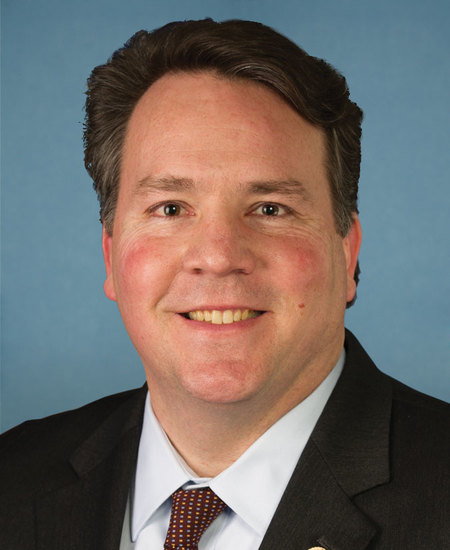
Rep. Alexander X. Mooney
Sponsored bills
Maddy summaryHR 5203, the AGRITOURISM Act, establishes a new Office of Agritourism within the U.S. Department of Agriculture (USDA). This office, led by a Director appointed by the Secretary, will promote agritourism activities - including farm-based education, recreation, direct sales, accommodations, and dining - to support rural agricultural businesses. The bill requires the USDA to coordinate with existing agencies, update programs, provide technical assistance, and share best practices for agritourism businesses. It directly affects small and family-run farms in all states by integrating agritourism into USDA's existing support systems. The legislation focuses on structural changes within the USDA, not new funding or regulations.
Maddy summaryThe FACTS Act (HR 5625) creates a pilot program to fund partnerships between schools and public health agencies to prevent synthetic opioid misuse among students. It authorizes $50 million annually to support evidence-based prevention programs, including professional development for school staff, student workshops, and community outreach. The bill requires schools to collect data on synthetic opioid prevalence and mandates that school health centers stock naloxone. It also amends national surveys to track youth opioid use patterns and establishes an interagency task force to coordinate prevention efforts. These provisions aim to address the growing crisis of synthetic opioid misuse among young people through education, data collection, and prevention programs.
Maddy summaryThe Safe Disposal of Opioids Act of 2023 establishes grants for community organizations, pharmacies, or health centers to create or maintain sites for safely disposing of unused prescription opioids. It imposes a 1-cent fee per 100 milligrams on opioid manufacturers/importers (excluding drugs used for addiction treatment), with funds used to cover the cost of these disposal sites and provide discounts for eligible patients. Eligible patients include those prescribed opioids for cancer pain, hospice care, or their representatives in emergencies. The bill requires the Secretary of Health and Human Services to create a simple discount system at point-of-sale to eliminate patient fees for covered opioids, funded entirely by the new fee.
Maddy summaryHR 5561, the Protecting the Right to Keep and Bear Arms Act of 2023, prevents federal agencies from using emergency declarations to implement gun control measures. It specifically prohibits the President from declaring a national emergency under the National Emergencies Act or the Robert T. Stafford Act for gun control purposes, and stops the Health and Human Services Secretary from declaring a public health emergency under the Public Health Service Act for the same reason. The bill also amends the Stafford Act to explicitly prohibit any emergency-related restrictions on possessing, manufacturing, selling, or transferring firearms, ammunition, ammunition feeding devices, or firearm accessories. This directly affects how federal agencies can respond during emergencies without violating the Second Amendment. The law aims to limit executive actions during emergencies that could restrict gun rights.
Maddy summaryHRES 684 is a symbolic congressional resolution passed by the U.S. House of Representatives on September 14, 2023, condemning New Mexico Governor Michelle Lujan Grisham's emergency order that temporarily suspended open and concealed carry firearm rights for 30 days. The resolution asserts the order violated the Second Amendment, citing Supreme Court precedents (Heller, McDonald, Bruen) and noting a federal judge had already blocked the order's firearm restrictions. It does not change any laws or impose legal consequences - it is solely a formal expression of disapproval from Congress. The resolution directly addresses the Governor's actions but has no effect on New Mexico's laws or citizens' rights.
Maddy summaryHR 5636, the "Protect Children’s Innocence Act," prohibits federal criminal penalties for performing gender-affirming medical care on minors under specific circumstances. It defines prohibited care as surgeries (like hysterectomy or mastectomy), puberty blockers, and hormone therapies at supraphysiologic doses, with exceptions for medical emergencies, intersex conditions, or life-threatening illnesses. The law only applies when the care involves interstate commerce (e.g., payments, communications, or travel across state lines). Minors receiving such care cannot be prosecuted, but they may sue providers for civil damages. The bill directly affects minors under 18, healthcare providers, and families seeking gender-affirming medical treatment.
Community Assistance for Recovery and Empowerment Act or the CARE Act This bill allows inpatient psychiatric treatment facilities and chemical dependence treatment facilities to qualify for Federal Housing Authority mortgage insurance. The bill establishes the Office of Psychiatric and Addition Treatment Facilities to oversee mortgage insurance provided to these facilities. The bill also specifies that a federally insured loan for improvements to a multifamily housing project or health facility may be used to protect against floods, hurricanes, earthquakes, and other natural disasters. The bill also expands loan insurance for certain energy conservation improvements to include health facility projects.
Maddy summaryHR 5577, the FACE Act Repeal Act of 2023, would repeal a federal law (Section 248 of Title 18, U.S. Code) that made it a crime to block access to abortion clinics or threaten clinic staff. This repeal would remove criminal penalties for obstructing access to clinics, affecting abortion providers, clinic staff, and individuals attempting to access or block clinic entrances. The bill specifically targets the repeal of this prohibition, applying to prosecutions pending or initiated after the law's enactment. It does not change other abortion-related laws or create new policies.
Maddy summaryThe Life.Gov Act (HR 5406) requires the U.S. Department of Health and Human Services to create a federal website called life.gov within one year of enactment. The website will provide pregnant and postpartum women with locally tailored resources - such as health services, financial assistance, and mental health support - via zip code searches, multilingual access, and user feedback tools. States must submit resource recommendations meeting strict criteria (e.g., no abortion providers, 3+ years of service), and the website cannot list "prohibited entities" (defined as abortion providers or supporters). The Secretary must report to Congress within 180 days on website usage, user feedback, and gaps in resources, using existing HHS funding.