

Maddy summaryHCONRES 74 is a non-binding congressional resolution expressing support for the Geneva Consensus Declaration, a 2020 agreement signed by 36 countries affirming that no international right to abortion exists, protecting life at all stages, and prioritizing the family as society's foundation. It urges the U.S. to rejoin this declaration, which the Biden administration temporarily withdrew from, while noting existing U.S. laws already prohibit federal funding for abortions or coercive family planning abroad. The resolution does not create new laws but calls on the President to restore U.S. participation and directs oversight to ensure U.S. foreign aid aligns with current abortion funding restrictions. It directly addresses U.S. foreign policy engagement with international health initiatives but does not affect domestic laws or policies.
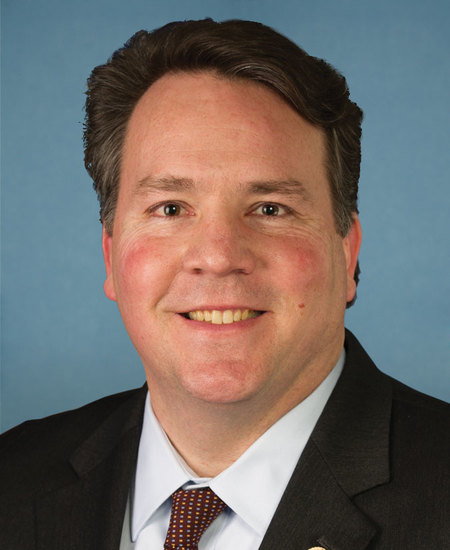
Rep. Alexander X. Mooney
Sponsored bills
This concurrent resolution condemns Cuba and China for their reported intent to build a joint military training base on Cuba. The concurrent resolution condemns China and Cuba for their active discussions to create a joint military base. It also calls for China to immediately withdraw its military and intelligence assets from the island of Cuba.
Maddy summaryHRES 771 is a non-binding resolution expressing the U.S. House of Representatives' support for Israel following Hamas' October 7, 2023, attack. It condemns Hamas' actions, affirms Israel's right to self-defense, and calls for the immediate release of hostages. The resolution also urges enforcement of existing laws restricting aid to terrorists and sanctions against Iran for supporting Hamas. It does not create new policies or allocate funds, as it is a symbolic statement of congressional support.
Maddy summaryHRES 768 is a symbolic House Resolution expressing congressional support for Israel following Hamas' October 7, 2023 attacks. It condemns Hamas' actions, reaffirms Israel's right to self-defense, and calls for the immediate release of hostages. The resolution references the U.S. commitment to Israel's security through existing military aid programs, including the 2016 U.S.-Israel Memorandum of Understanding, and emphasizes enforcement of laws like the Taylor Force Act to prevent U.S. aid from reaching terrorist groups. As a symbolic resolution, it does not create new policy but serves as a statement of congressional support for Israel.
Maddy summaryHR 5948 terminates the Office of Gun Violence Prevention within the Executive Office of the President upon enactment and prohibits the President from creating any similar successor office. The bill also bans the use of federal funds for salaries or expenses related to this office or any future equivalent. This legislation directly affects the federal executive branch by eliminating a specific office and restricting future funding for comparable initiatives.
Maddy summaryThis bill requires sponsors of emergency-use vaccines and drugs to publicly share certain safety and efficacy data within 10 days of FDA authorization. It mandates that both sponsors (e.g., pharmaceutical companies) and the Department of Health and Human Services (HHS) disclose this data on their websites, with HHS having an additional 20 days for updates. Exceptions include trade secrets and personal information. Failure to comply results in exclusion from emergency use designations and loss of eligibility for FDA funding or approvals. The law aims to increase transparency around emergency-use medical products while maintaining confidentiality protections.
Maddy summaryThis bill repeals the 2020 Horseracing Integrity and Safety Act and creates a new Racehorse Health and Safety Organization (RHSO) to establish uniform safety and medication standards for Thoroughbred, Standardbred, and Quarter Horse racing. The RHSO will develop breed-specific rules through committees of industry and regulatory experts, requiring states to maintain breed-specific databases tracking horse health, safety, and injury information. It establishes an interstate compact framework where only participating states may allow interstate wagering on covered races, while creating disciplinary procedures for violations including bans, fines, and changes to race results. These provisions directly affect owners, trainers, breeders, jockeys, racetracks, veterinarians, and other industry personnel involved in covered horseracing. The bill takes effect in stages, with key provisions beginning 90 days after the interstate compact is formed.
Maddy summaryHJRES 11 proposes a constitutional amendment that would limit Members of Congress to serving a maximum of three terms in the House of Representatives and two terms in the Senate. If passed and ratified, it would prevent any member who has already served the maximum terms from running for re-election, including time spent filling vacancies (for more than one year in the House or three years in the Senate). This amendment directly affects current and future members of Congress by changing eligibility rules for re-election. The proposal is currently a joint resolution in the House, requiring ratification by three-fourths of state legislatures to become part of the Constitution.
Maddy summaryHR 5791, the "Define the Mission Act," requires the President to submit a comprehensive strategy report to Congress within 30 days of the bill's enactment, detailing U.S. involvement in the Ukraine conflict. The report must define U.S. national interests in the conflict, set specific objectives with timelines, benchmarks, and resource estimates (including personnel and funding), list expected European NATO security contributions, and assess Russia’s natural gas market impact on resolving the conflict. It mandates the strategy must aim for a Russia-Ukraine cease-fire agreement and explicitly cannot depend on U.S. funding for Ukrainian reconstruction. The report must be unclassified but may include a classified annex for full transparency. This bill establishes a formal process for Congress to review and oversee U.S. policy toward Ukraine.
Maddy summaryHR 5811, the Public Safety and Community Support Act, allows federal Byrne JAG funds to support law enforcement-assisted deflection and diversion programs. These programs connect individuals with substance use or mental health disorders to treatment instead of arresting them for low-level offenses, using six defined pathways like "warm handoffs" by first responders. The bill requires states and local governments receiving grants to report program outcomes by race and gender, track reincarceration rates, and ensure racial equity. It also authorizes $30 million for a 5-year technical assistance grant to develop best practices and training for implementing these programs nationwide. This directly affects local law enforcement agencies, community treatment providers, and people facing arrest for non-violent offenses linked to addiction or mental health.