

Maddy summaryThis resolution urges Ukraine to reverse its 2022 suspension of adoptions by foreign nationals, including U.S. citizens. It specifically asks Ukraine to review its decision and resume such adoptions, prioritizing cases where U.S. prospective parents had already completed Ukrainian adoption requirements before the suspension or where children were part of pre-existing Ukrainian hosting programs. The resolution does not change U.S. law but formally requests Ukraine address mutual concerns to protect children's best interests. It directly affects U.S. families seeking to adopt Ukrainian children and Ukraine's adoption policies.
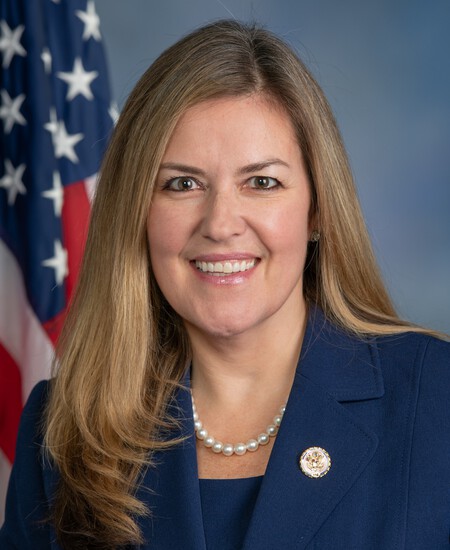
Rep. Jennifer Wexton
Sponsored bills
Maddy summaryThis bill enhances the existing American Battlefield Protection Program by expanding eligibility for grants to include Tribes, nonprofit organizations, and educational institutions, alongside States and local governments. It clarifies that eligible sites must be identified in the 1993 Civil War battlefield report or 2007 Revolutionary War/War of 1812 report, excluding sites already within National Park boundaries. The bill also requires the Secretary to submit updated battlefield condition reports to Congress every 10 years, starting two years after enactment, tracking preservation efforts and battlefield changes. These changes streamline program administration and ensure ongoing assessment of historic battlefield sites.
Maddy summaryHRES 1588 is a House resolution supporting Transgender Day of Remembrance (TDoR) by recognizing the epidemic of violence against transgender people and memorializing those killed between October 1, 2023, and September 30, 2024. It specifically honors 38 transgender or gender-nonconforming individuals whose lives were lost to violence during that period, highlighting that transgender women of color face disproportionate risks. The resolution acknowledges systemic issues like underreporting, barriers to healthcare, and higher rates of homelessness and suicide within the community. It calls for the U.S. government to prioritize solutions to this violence while affirming transgender people's right to dignity and safety. As a symbolic resolution, it does not create new laws or policies but formally recognizes these issues for congressional record.
Maddy summaryHRES 1581 is a symbolic resolution expressing congressional support for designating November 2024 as "Prematurity Awareness Month." It highlights the U.S. maternal and infant health crisis, including higher preterm birth rates and disparities affecting Black and Native American women and their infants. The resolution urges Americans, communities, and organizations to observe the month through events and education focused on preterm birth prevention. It does not create new laws or funding but aims to raise public awareness about this health issue, which contributes to infant mortality and costs an estimated $25.2 billion annually.
Maddy summaryThis resolution (HRES 1558) is a symbolic House of Representatives measure supporting October as "National Domestic Violence Awareness Month." It does not create new laws or allocate funding but formally expresses the House's support for raising awareness about domestic violence and its impacts, and urges continued backing for existing programs that address domestic violence. The resolution cites statistics on domestic violence prevalence (e.g., 24 people per minute affected by intimate partner violence) to underscore the importance of the observance. It directly affects public awareness efforts but does not change policies or directly impact individuals.
Maddy summaryHR 10099 would establish the first national domestic violence prevention action plan for the United States, creating a federal steering committee of agency officials to coordinate prevention efforts across government levels. The plan must include specific goals for primary, secondary, and tertiary prevention strategies, a $25 million public awareness media campaign, and requirements for data collection and evaluation. It would directly affect federal agencies, state domestic violence coalitions, and community organizations working on prevention, addressing the current lack of a coordinated national plan which the U.S. lacks compared to other countries like Canada and the UK. The bill requires the plan to address disproportionate impacts on marginalized communities and be based on evidence-based prevention strategies.
Maddy summaryThe Return USA Act establishes a federal pilot program to help mid-career professionals with at least three years of prior work experience re-enter government jobs after a career break of one year or more (e.g., for childcare, elder care, or health reasons). The program, called "Return USA," provides one-year mentorship, training, and professional development, prioritizing underrepresented groups like women and aiming to convert successful participants to permanent federal positions without further competition. Funded at $5 million annually starting in 2025, it requires agencies to report on participant demographics, retention rates, and program impact to Congress. The bill directly affects federal hiring practices and aims to strengthen workforce diversity by addressing barriers faced by those returning after career interruptions.
Maddy summaryHR 7032, the Congressional Budget Office Data Sharing Act, amends the 1974 Congressional Budget Act to give the Congressional Budget Office (CBO) clearer authority to quickly obtain data from executive branch agencies. The bill removes barriers to CBO requests by allowing data sharing "with or without written agreement," while requiring the CBO to maintain required confidentiality levels. It also prevents future laws from limiting this authority unless specifically referenced. The law directly affects the CBO and federal agencies that provide budget-related data, aiming to improve the CBO's ability to analyze government spending.
Maddy summaryHR 1103 requires the President to annually certify whether Hong Kong Economic and Trade Offices (HKETOs) in the U.S. merit continued diplomatic privileges and immunities. If the President certifies they no longer merit these privileges, HKETOs must cease operations within 180 days. The bill also prohibits U.S. government agencies from entering new agreements or partnerships with HKETOs unless the President certifies they merit privileges and Congress does not disapprove within 90 days. This directly affects HKETOs' operational status and U.S. agencies entering agreements with them.
Maddy summaryHR 3433, the "Give Kids a Chance Act of 2024," requires pharmaceutical companies developing certain cancer drugs to conduct pediatric studies if the drugs target molecular pathways relevant to childhood cancers. It directly affects drug manufacturers submitting new applications for cancer treatments, particularly those combining previously approved adult cancer drugs or containing a single new active ingredient. The bill amends FDA regulations to mandate these pediatric investigations only when specific conditions are met, such as when a drug's molecular target is relevant to pediatric cancer growth. The FDA must issue implementing guidance within 12 months, and reports to Congress will track implementation and effectiveness starting 2 years after enactment.