

Maddy summaryHR 6319 (the 911 SAVES Act of 2023) requires the Office of Management and Budget to reclassify public safety telecommunicators as "Protective Service Occupations" within 30 days of enactment. This change corrects their current misclassification in the federal Standard Occupational Classification (SOC) system, which is used for statistical data on jobs. The bill directly affects how these professionals - critical in emergency calls involving missing children, active threats, and officer safety - are officially categorized in government workforce data. It does not create new benefits or funding but aims to better recognize their lifesaving role through accurate federal job classification.
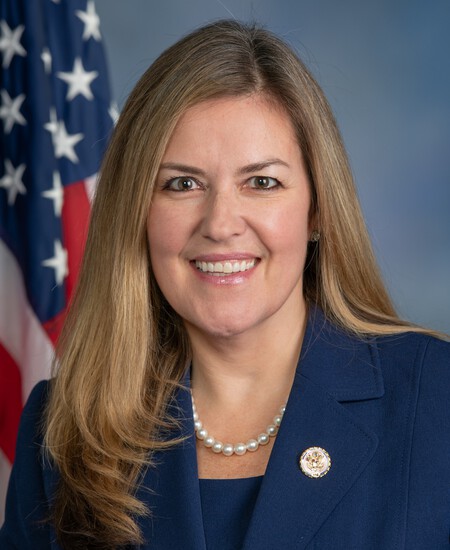
Rep. Jennifer Wexton
Sponsored bills
Maddy summaryHRES 1468 is a non-binding resolution recognizing the significant pay disparity faced by disabled women in the U.S. workforce. It cites data showing disabled women earn, on average, 50 cents for every dollar earned by nondisabled men, with even starker gaps for disabled women of color (e.g., 44 cents for disabled Latinas). The resolution highlights systemic barriers like occupational segregation, the subminimum wage, and lack of support services contributing to these inequities. It does not create new laws or affect any group directly, but formally acknowledges these disparities and reaffirms the House’s commitment to addressing wage gaps. This is a symbolic recognition, not a policy change.
Maddy summaryThis bill modifies Medicaid and CHIP rules to let eligible out-of-state healthcare providers enroll without extra state screening. It applies to providers already in Medicare or their home state program, with low fraud risk, serving children under 21 with complex medical conditions. Providers would receive 5 years of enrollment under this streamlined process, eliminating state-level barriers. The change directly affects children seeking specialized care across state lines and the providers who serve them.
Maddy summaryHRES 1397 is a non-binding congressional resolution expressing support for designating July as "Disability Pride Month" in the United States. It highlights that 61 million American adults and over 3 million children live with disabilities, notes the anniversary of the Americans with Disabilities Act (ADA) on July 26, 1990, and acknowledges ongoing discrimination risks faced by people with disabilities. The resolution calls on the public, organizations, and affected individuals to observe Disability Pride Month through celebrations and to actively prevent exclusion and discrimination against people with disabilities. It does not create new laws or funding but formally recognizes the contributions of the disability community and aligns with existing annual observances. This resolution directly supports the disability community and encourages nationwide participation in promoting inclusion.
Maddy summaryThe HEALTHY BRAINS Act of 2024 establishes a new NIH research program to study how environmental factors - like pollution, chemicals in air/water, and heavy metals - may contribute to neurodegenerative diseases (e.g., Alzheimer’s, Parkinson’s). It creates "Collaborative Centers for Neurodegenerative Disease Environmental Research" (CCNDERs) at universities and medical institutions, requiring them to conduct interdisciplinary research, develop nationwide data systems, and share findings with the public. The bill authorizes $50 million annually (2026-2030) for this program and mandates biennial reports to Congress on research progress. It directly affects NIH-funded research institutions and aims to advance prevention strategies, not patients or specific communities.
Maddy summaryHRES 1355 is a non-binding resolution supporting the designation of July 10 as Journeyman Lineworkers Recognition Day. It honors lineworkers who maintain electrical infrastructure under hazardous conditions, including during disasters, and commemorates Henry Miller, the first president of the International Brotherhood of Electrical Workers, who died on July 10, 1896, while troubleshooting an electrical outage. The resolution encourages public recognition of these workers' contributions but does not create new laws or policies.
Maddy summaryThis bill creates a national registry to help Korean American families separated from relatives in North Korea after the 1953 Korean War Armistice reunite. The Secretary of State must identify eligible families and collect their information (including deceased members) to support future in-person or video reunions. It authorizes $1 million for this registry and requires the State Department to push for family reunions during U.S.-North Korea talks, while consulting South Korea. The State Department must also report annually to Congress on the registry's status, reunion progress, and North Korea's policies affecting family reunions.
Maddy summaryThis bill (HR 2365, Public Law 118-66) directs the U.S. Department of Health and Human Services (HHS) to establish the National Parkinson’s Project. It requires HHS to create and update a coordinated national plan for preventing, diagnosing, treating, and researching Parkinson’s disease and related disorders (including multiple system atrophy and progressive supranuclear palsy), while coordinating federal research and care efforts across agencies like the NIH, CDC, and VA. The law mandates annual progress assessments, an advisory council with patient advocates and diverse experts, and annual reports to Congress on federal Parkinson’s programs and recommendations for improvement. It affects federal agencies managing Parkinson’s-related programs and aims to improve care coordination and research efficiency for patients and caregivers, with the law sunsetting in 2035.
Maddy summaryThis bill, the Virginia Plan to Reduce Gun Violence Act of 2024, establishes new requirements for firearm transfers, limits handgun purchases to one per 30 days for unlicensed individuals, and creates a national framework for extreme risk protection orders (ERPOs). It requires licensed dealers to facilitate transfers between unlicensed individuals, mandates reporting of lost or stolen firearms within 48 hours, restricts access to firearms by children under 14, and prohibits stalkers from possessing firearms. The bill also makes it unlawful for caregivers to enable children to gain access to firearms when they know the child poses a risk of violence. These provisions would directly affect firearm sellers, law enforcement agencies, individuals with firearm access issues, and caregivers of children.
Maddy summaryThis bill creates a federal framework for "extreme risk protection orders" (ERPOs) that temporarily remove firearms from individuals who pose a risk of harming themselves or others. Family members or law enforcement officers can petition a federal court for a temporary order (up to 14 days) based on probable cause, followed by a hearing within 72 hours to determine if a longer-term order (up to 180 days) is warranted. The bill requires clear and convincing evidence of risk at the hearing and mandates respondents to surrender firearms to law enforcement within 48 hours. It also includes provisions for reporting, training law enforcement on ERPOs, and a federal grant program to support state ERPO implementation, without preempting state laws.