

Maddy summaryHR 82, the Social Security Fairness Act of 2023, repeals two provisions that reduce Social Security benefits for certain government workers. It eliminates the Government Pension Offset (GPO), which cuts spousal or survivor benefits for people with pensions from jobs not covered by Social Security (like federal or state government roles), and the Windfall Elimination Provision (WEP), which lowers retirement benefits for those with similar pensions. The law takes effect for benefits paid after December 2023, requiring the Social Security Administration to adjust benefit calculations to remove these reductions. This change directly affects public-sector employees who previously had their Social Security benefits reduced due to their government pensions.
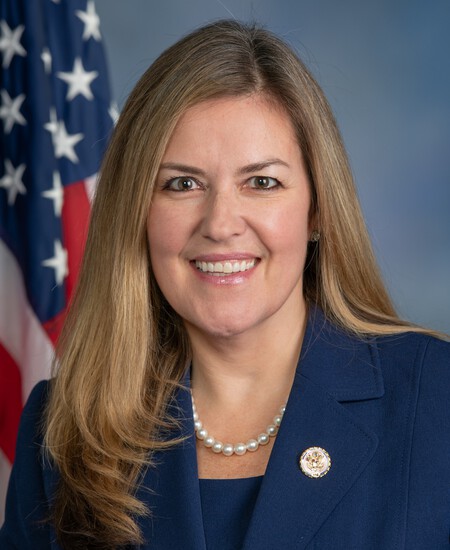
Rep. Jennifer Wexton
Sponsored bills
Maddy summaryThis bill designates a specific United States Postal Service facility at 1285 Emancipation Highway in Fredericksburg, Virginia, as the "Gladys P. Todd Post Office." It directly affects the postal service location and all official references to it. The bill changes the facility's official name in all federal records and documents, with no policy changes or funding impacts. This is a ceremonial naming designation with no substantive legislative effect.
Maddy summaryThis bill renames the U.S. Postal Service facility at 29 Franklin Street in Petersburg, Virginia, as the "John Mercer Langston Post Office Building." It updates all official federal references (including laws, maps, and documents) to use this new name. The designation is ceremonial and affects only the building's official identification, with no changes to postal operations or services. This is a standard naming resolution with no substantive policy impact.
Maddy summaryThis bill extends funding for the Gabriella Miller Kids First Pediatric Research Program at the National Institutes of Health (NIH) through 2028, replacing the previous 2014-2023 authorization. It directs NIH to administer pediatric research funds through its Division of Program Coordination (instead of the "Common Fund") and requires NIH to coordinate pediatric cancer and disease research while prioritizing projects that avoid duplicating existing NIH work. The bill also mandates a report to Congress within five years detailing funded pediatric research projects and their advancements. This directly affects NIH's pediatric research funding structure and oversight, focusing on cancer and other childhood diseases.
Maddy summaryThis bill designates a specific United States Postal Service building at 220 North Hatcher Avenue in Purcellville, Virginia, as the "Secretary of State Madeleine Albright Post Office Building." It changes the official name of this facility and updates all federal references to it to reflect the new name, honoring Madeleine Albright, former U.S. Secretary of State. The bill has no policy or funding provisions - it is a ceremonial naming resolution.
Maddy summaryThe Stop Campus Hazing Act requires colleges and universities to publicly report hazing incidents involving student organizations. It defines hazing as intentional acts causing physical or psychological harm during initiation or membership in student groups, including activities like forced substance consumption, sleep deprivation, or sexual acts. Institutions must include hazing statistics in annual security reports and publish a "Campus Hazing Transparency Report" on their websites by July 1, 2025, detailing findings about organizations violating hazing policies. The reports must include organization names, violation descriptions, and key dates while excluding personally identifiable student information. This applies to all colleges participating in federal student aid programs.
Maddy summaryHR 1727, the Chesapeake and Ohio Canal National Historical Park Commission Extension Act, extends the expiration date of the commission overseeing the Chesapeake and Ohio Canal National Historical Park. The bill amends Section 6(g) of the Chesapeake and Ohio Canal Development Act (16 U.S.C. 410y-4(g)) to change the commission's end date from an unspecified year to October 1, 2031. This procedural extension does not alter the park's management policies or create new obligations; it simply prolongs the commission's existing mandate. The bill was enacted on December 23, 2024, after passing both the House and Senate in 2024.
Maddy summaryHR 2367, the Truck Parking Safety Improvement Act, creates a federal grant program to address commercial truck parking shortages on highways. It provides competitive grants (totaling $175M-$320M over three years) for projects like building new rest areas, expanding parking at ports or truck stops, or improving safety at existing facilities. The program requires all funded parking to be free, publicly accessible to all truck drivers, and maintained without user fees. This directly affects commercial truck drivers, motor carriers, and highway safety by aiming to improve parking access, reduce traffic congestion, and enhance safety on federal-aid highways.
Maddy summaryThis bill, the Public Servants Protection and Fairness Act of 2023, amends Social Security to better protect public servants who work in jobs not covered by Social Security (such as certain government positions). It creates a new formula for calculating retirement benefits that combines both covered and noncovered earnings, ensuring public servants receive the higher of two benefit calculations. The bill also provides an additional $150 monthly payment for certain public servants whose benefits were previously reduced by the windfall elimination provision. It improves Social Security account statements to clearly show noncovered earnings and requires a study of how state retirement plans handle these benefits. These changes will apply to benefits starting in 2025.
Maddy summaryThe FAMILY Act (HR 3481) would establish a national paid family and medical leave insurance program administered by the Social Security Administration. Eligible workers would receive wage replacement benefits (up to 85% of average earnings, with a maximum of $4,000 monthly) for up to 60 caregiving days per 12-month benefit period for qualifying reasons like caring for a sick family member, personal serious health conditions, or responding to domestic violence. The program would be funded through 0.2% payroll taxes from employees and employers (with self-employed individuals paying 0.4%), with benefits coordinated with existing state programs. The law includes protections against employer retaliation for taking leave and requires employers to maintain health coverage during leave periods.