

Maddy summaryThe PROTECT 340B Act of 2023 prohibits pharmacy benefit managers (PBMs), health insurance plans, and health insurance issuers from discriminating against healthcare providers participating in the 340B drug pricing program. It specifically bans these entities from paying less for 340B drugs than they would for similar drugs dispensed by non-340B providers, imposing special requirements on 340B providers, or requiring identification of 340B drugs in billing. The bill establishes civil penalties of up to $5,000 per violation per day for PBMs that violate these protections and requires the Health Resources and Services Administration to create implementing regulations. It directly affects safety-net hospitals, clinics, and health centers that serve low-income patients, particularly those in rural areas, by protecting their ability to use 340B drug discounts to provide affordable care.
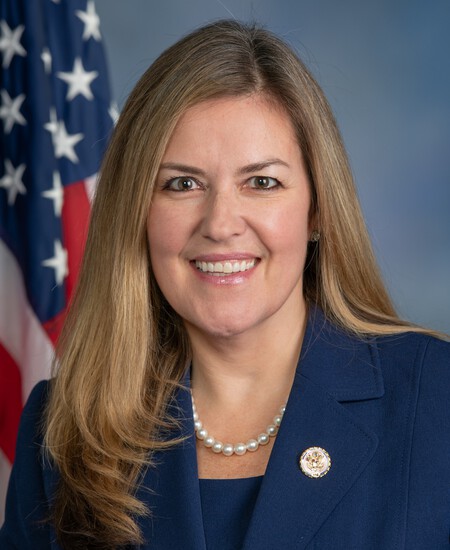
Rep. Jennifer Wexton
Sponsored bills
Maddy summaryThis bill expands Medicare coverage for hereditary cancer prevention and management. It requires Medicare to cover genetic testing for individuals with a personal or family history of hereditary cancer mutations, as defined by evidence-based guidelines from organizations like the National Comprehensive Cancer Network. The bill also mandates coverage for risk-reducing surgeries (like mastectomies or oophorectomies) when medically appropriate, and increases the frequency of recommended cancer screenings (such as mammograms, colonoscopies, and breast MRI) to at least annually for those with confirmed hereditary cancer gene mutations. These changes apply to Medicare beneficiaries with specific hereditary cancer risk factors, effective upon the bill's enactment.
Maddy summary# Summary of Proposed Election Reform Legislation This document outlines a comprehensive federal election reform bill with multiple titles addressing various aspects of voting rights, election administration, and election integrity. ## Key Provisions: ### 1. Democracy Restoration (Title I) - Restores voting rights to citizens with felony convictions who are not serving a felony sentence in a correctional institution - Requires states to notify individuals of restored voting rights upon release from prison, completion of probation, or sentencing - Prohibits states from conditioning voting rights on payment of fines or fees - Requires states to provide notification of voting rights to citizens with criminal convictions ### 2. Voter Identification Requirements (Title II) - Establishes a broad definition of acceptable identification documents (including utility bills, bank statements, student IDs, etc.) - Requires states to provide free identification to voters who lack one - Authorizes $5 million annually for 5 years to cover costs of providing identification - Sets procedures for provisional voting when identification is not presented ### 3. Voter List Maintenance (Title III) - Prohibits "voter caging" (using undeliverable mail to challenge voter registration) - Bans use of unverified match lists to remove voters from registration lists - Sets strict conditions for removing voters from registration lists - Requires states to provide notice to voters removed from registration lists ### 4. Election Integrity Measures (Title V) - Prohibits hindering or interfering with voter registration (Section 2001) - Restricts removal of local election administrators (Section 3001) - Prohibits harassment of election workers (Section 3101) - Bans deceptive practices in elections (Section 3201), including false statements about voting locations, eligibility, or endorsements ### 5. Additional Provisions - Requires states to provide notice of voting rights restoration to citizens - Establishes private rights of action for violations of the law - Sets criminal penalties for violations (up to $100,000 fines and 5 years imprisonment) - Includes provisions for federal funding to be contingent on compliance with voting rights restoration This legislation represents a significant overhaul of voting rights and election administration procedures across the United States, with a focus on expanding voting access, protecting voter rights, and ensuring fair election administration.
Maddy summaryHR 589, the MAHSA Act, imposes U.S. sanctions on Iran's Supreme Leader, President, and affiliated entities responsible for human rights abuses and terrorism. It targets the Supreme Leader's Office, the President's cabinet, security forces involved in the crackdown following Mahsa Amini's death, and entities financing abuses. The bill requires the President to annually determine and apply existing sanctions - like property blocking and visa bans - against these individuals and entities. This directly affects Iran's top leadership and security apparatus, aiming to hold them accountable for abuses including the Morality Police's role in Amini's detention and the subsequent violent suppression of protests.
Maddy summaryHR 549, the Metastatic Breast Cancer Access to Care Act, removes waiting periods for disability and Medicare coverage for people diagnosed with metastatic breast cancer. Specifically, it amends Social Security Act sections to allow immediate eligibility for disability insurance benefits (eliminating the standard waiting period) and immediate Medicare coverage (waiving the 24-month waiting period) for these patients. The bill directly affects individuals with metastatic breast cancer who would otherwise face delays in accessing critical benefits. These changes apply to applications filed or benefits beginning after the bill's enactment date. The law makes no other policy changes beyond these specific eligibility adjustments.
Maddy summaryThe EACH Act of 2023 would require federal health programs - including Medicaid, Medicare, the Indian Health Service, and TRICARE - to cover abortion services without restrictions. It repeals a provision in the Affordable Care Act that allowed states to limit abortion coverage in health insurance plans sold through state marketplaces. The bill also prohibits the federal government from restricting abortion coverage in private health insurance plans. This would directly affect millions of people, particularly low-income individuals and people of color, who are disproportionately enrolled in Medicaid and currently face barriers to abortion care due to coverage restrictions.
Maddy summaryThis bill designates the General George C. Marshall House in Leesburg, Virginia, as an "affiliated area" within the National Park System. It establishes the property - shown on a specific map - as a site to promote public appreciation of General Marshall's historic contributions, managed by the George C. Marshall International Center. The National Park Service will provide limited technical assistance and support for marketing, interpretation, and preservation through cooperative agreements, but will not acquire property or manage operations. A management plan must be developed within three years of funding.
Maddy summaryHR 7438 directs the U.S. Treasury to mint commemorative coins for the 2026 FIFA World Cup, including 100,000 $5 gold coins, 500,000 $1 silver coins, and 750,000 half-dollar coins. The coins will be sold to the public at face value plus surcharges ($35, $10, and $5 per coin, respectively), with all surcharge revenue paid to FWC2026 US, Inc. for U.S. soccer programs. These funds must support soccer initiatives, particularly in underserved communities and youth development, as specified in the bill. The coins are legal tender but will only be issued during 2026, with no net cost to the U.S. government.
Maddy summaryHR 6751 authorizes the U.S. Mint to produce commemorative coins honoring Roberto Clemente, a Hall of Fame baseball player and humanitarian, including 50,000 $5 gold coins, 400,000 $1 silver coins, and 750,000 half-dollar coins. The coins must feature Clemente's image and inscriptions like "Roberto Clemente" and "2027," with all sales including a surcharge ($5-$35 per coin) paid to the Roberto Clemente Foundation. The foundation, which supports youth sports, education, and disaster relief programs, will use these funds for its mission, while the U.S. Treasury must recover all production costs. The coins will be sold exclusively in 2027, with no net cost to the government.
Maddy summaryThe Working Dog Commemorative Coin Act (HR 807) directs the U.S. Treasury to mint three types of commemorative coins honoring working dogs' service: $5 gold coins, $1 silver coins, and half-dollar coins with specific weight and composition requirements. Each coin will carry a surcharge ($35 for $5 coins, $10 for $1 coins, $5 for half-dollars) that will be paid directly to America's VetDogs to support their programs providing service dogs for veterans, the disabled, and others. The coins will be issued in 2027 with designs reflecting working dogs' roles in military, detection, therapy, and assistance work. The legislation specifies that all surcharge revenue must fund America's VetDogs' operations without creating new government programs. This is a commemorative measure focused on honoring working dogs' contributions through coin sales, with all surcharge funds going to a specific nonprofit organization.