

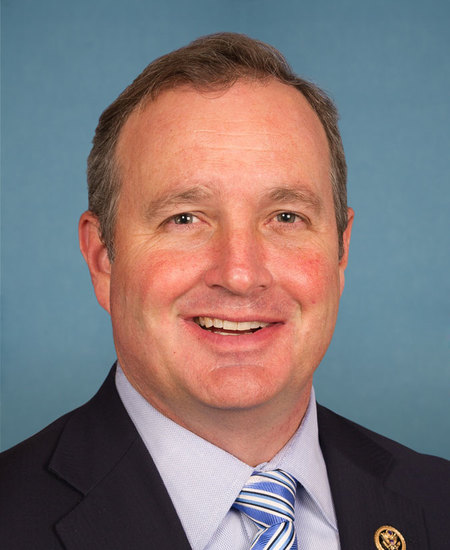
Photo of Jeff Duncan
R United States House · District 3 · South Carolina

Rep. Jeff Duncan

Compare
Total votes
2,168
all sessions
Attendance
98%
50 missed
Near the chamber average
With party
91%
of cast votes
Near the chamber average
Bipartisan score
5%
crosses aisle rarely
Higher than 75% of chamber peers
Sponsored
949
bills & resolutions
Near the chamber average
Committees
0
assignments
949 bills and resolutions

Sponsored bills

Total
949
Primary
55
Co-sponsor
894
This page
949
matching current filters
Co-sponsor HRES 974
In committee · United States House · Co-sponsor
Expressing support for the designation of the week of January 21 through January 27, 2024, as "National School Choice Week".

Maddy summaryHRES 974 is a non-binding House resolution supporting the designation of January 21-27, 2024, as "National School Choice Week." It encourages parents to learn about K-12 education options - including public schools, charter schools, private schools, and homeschooling - and promotes public awareness of educational choice. The resolution does not create new laws or policies but formally expresses the House's backing for this annual observance. It directly affects parents and students by highlighting available education pathways and urging communities to host events celebrating school choice. The resolution was introduced by multiple House members and referred to the Education Committee.

In committee Jan 18, 2024 1 co-sponsor
Co-sponsor HR 7035
In committee · United States House · Co-sponsor
Death Tax Repeal Act

Maddy summaryThe Death Tax Repeal Act would eliminate the federal estate tax and generation-skipping transfer tax for estates of people who die on or after the bill's enactment date, and for generation-skipping transfers made after that date. It would also establish a new $10 million lifetime gift tax exemption (adjusted annually for inflation) and replace the existing gift tax rate schedule with a revised structure. These changes would primarily affect high-net-worth individuals and their heirs, as the estate tax and gift tax typically apply to large estates or gifts exceeding the new exemption threshold. The bill's provisions would take effect on the date of enactment, with transitional rules for the year the bill is signed into law.

In committee Jan 18, 2024 1 co-sponsor
Co-sponsor HR 7047
In committee · United States House · Co-sponsor
Defund Davos Act

Maddy summaryHR 7047, the "Defund Davos Act," prohibits the use of federal funds from the Department of State, USAID, or any other federal agency to provide financial support to the World Economic Forum. The bill directly affects U.S. government agencies that manage international funding programs by banning their use of taxpayer money for the Forum's activities. Its key provision is a clear funding ban, ensuring no federal resources can be allocated to the World Economic Forum under any circumstances. This is a procedural measure focused solely on restricting federal expenditures, with no other policy changes or impacts described.

In committee Jan 18, 2024 1 co-sponsor
Co-sponsor HR 7045
In committee · United States House · Co-sponsor
Pregnancy Center Support Act of 2024

Maddy summaryHR 7045 creates a new 50% federal tax credit for individuals and businesses that donate to eligible pregnancy centers. Donors can claim a credit equal to half their contribution, up to $10,000 per year ($20,000 for joint filers), for donations made to centers that provide free services like counseling, prenatal care, and material support to pregnant women. To qualify, centers must be 501(c)(3) organizations operating primarily to help women carry pregnancies to term without performing or promoting abortions. The bill directly affects donors seeking tax benefits and pregnancy centers receiving support, while requiring centers to meet specific service and non-abortion criteria.

In committee Jan 18, 2024 1 co-sponsor
Co-sponsor HR 7042
In committee · United States House · Co-sponsor
RIFLE Act of 2024

Maddy summaryThe RIFLE Act of 2024 changes how the federal government handles violations by firearms licensees, affecting gun dealers and manufacturers who hold federal licenses. It creates a graduated penalty system where non-willful violations require the Attorney General to work with licensees to fix issues before taking action, while willful violations may lead to license suspension or revocation only after proper notice, hearing, and evidence of continued noncompliance. The bill establishes new procedures for administrative hearings, defines "willful" violations more clearly, and gives licensees 90 days to liquidate inventory after license expiration or revocation, with extensions possible for reasonable cause. These changes aim to create a more transparent process for addressing violations while maintaining public safety standards.

In committee Jan 18, 2024 1 co-sponsor
Co-sponsor HR 1508
In committee · United States House · Co-sponsor
Traveler’s Gun Rights Act

Maddy summaryHR 1508, the Traveler’s Gun Rights Act, clarifies who is considered a "resident" for federal gun purchase background checks. It redefines "State of residence" to include active-duty military members' duty station state or their commuting home state, and allows individuals without a physical home to use a private mailbox address. The bill modifies the National Instant Criminal Background Check System requirement to mandate that background checks include either a physical address or a private mailbox address for those without a physical residence. This change directly affects gun buyers traveling across state lines who may not be considered residents of the state where they purchase firearms under current rules.

In committee Jan 18, 2024 1 co-sponsor
Co-sponsor HR 7027
In committee · United States House · Co-sponsor
Safeguarding Charity Act

Maddy summaryThis bill clarifies that tax-exempt status for charities (under IRS Section 501(c)(3)) does not count as "federal financial assistance" for other federal programs. It directly affects tax-exempt organizations, such as charities and religious groups, by preventing their tax exemption from automatically qualifying them for other federal benefits or programs. The key provision amends the U.S. Code to define "federal financial assistance" as excluding tax exemptions, ensuring these organizations aren't mistakenly included in programs meant for recipients of direct federal funds. This change applies prospectively and does not alter how tax exemptions were treated before the bill's enactment.

In committee Jan 17, 2024 1 co-sponsor
Co-sponsor HJRES 92
In committee · United States House · Co-sponsor
Providing for congressional disapproval under chapter 8 of title 5, United States Code, of the rule submitted by the Food and Nutrition Service relating to "Application of Bostock v. Clayton County to Program Discrimination Complaint Processing-Policy Update".

Maddy summaryH.J.Res. 92 seeks congressional disapproval of a 2022 rule from the Food and Nutrition Service (FNS) that updated how discrimination complaints are processed in federal nutrition programs (like SNAP) following the *Bostock v. Clayton County* Supreme Court decision. The bill aims to block the rule’s implementation, which would have required agencies to handle discrimination complaints under the expanded protections established by *Bostock* (covering LGBTQ+ individuals). If passed, the resolution would make the FNS policy update ineffective, maintaining the previous complaint processing approach. This affects how federal nutrition programs address discrimination claims but does not change the underlying anti-discrimination law.

In committee Jan 11, 2024 1 co-sponsor
Co-sponsor HR 6744
In committee · United States House · Co-sponsor
No VA Resources for Illegal Aliens Act

Maddy summaryHR 6744, the "No VA Resources for Illegal Aliens Act," prohibits the Department of Veterans Affairs (VA) from providing health care or processing health care claims for individuals unlawfully present in the United States who are not already eligible for VA health care under existing law. This bill directly affects undocumented immigrants who do not qualify for VA benefits through standard veteran eligibility criteria. The key provision explicitly bars VA resources from being used for any care or claims processing for such individuals. The bill does not alter VA eligibility rules for veterans but prevents the use of VA funds for non-eligible non-citizens unlawfully present in the U.S.

In committee Jan 11, 2024 1 co-sponsor
Co-sponsor HR 3400
In committee · United States House · Co-sponsor
Small Businesses before Bureaucrats Act

Maddy summaryThis bill raises the dollar threshold that determines when the National Labor Relations Board (NLRB) can handle labor disputes involving small businesses. It increases the threshold for 2023 to ten times the previous year’s amount and sets up an automatic annual adjustment using the Personal Consumption Expenditure Per Capita Index (starting in 2024) to keep pace with inflation. Small businesses with payroll below this higher threshold will no longer fall under the NLRB’s jurisdiction for labor disputes. The change directly affects small businesses and the NLRB’s ability to assert jurisdiction over their labor issues, shifting oversight away from the agency for smaller employers. The amendment applies to all NLRB decisions made after the bill’s enactment date.

In committee Jan 11, 2024 1 co-sponsor
Showing 181 to 190 of 949 bills
Previous 1 … 18 19 20 … 95 Next