

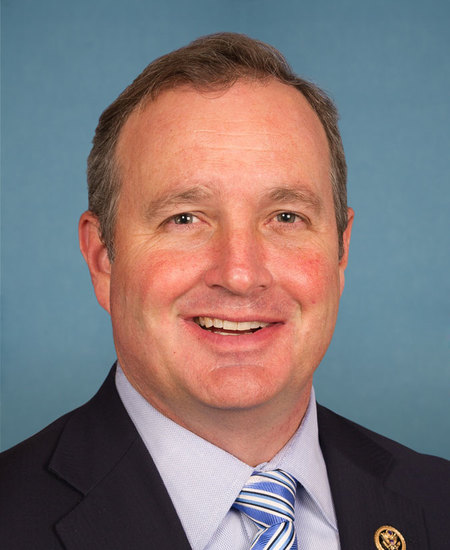
Photo of Jeff Duncan
R United States House · District 3 · South Carolina

Rep. Jeff Duncan

Compare
Total votes
2,168
all sessions
Attendance
98%
50 missed
Near the chamber average
With party
91%
of cast votes
Near the chamber average
Bipartisan score
5%
crosses aisle rarely
Higher than 75% of chamber peers
Sponsored
949
bills & resolutions
Near the chamber average
Committees
0
assignments
949 bills and resolutions

Sponsored bills

Total
949
Primary
55
Co-sponsor
894
This page
949
matching current filters
Co-sponsor HR 6188
Signed into law · United States House · Co-sponsor
To designate the facility of the United States Postal Service located at 420 Highway 17 North in Surfside Beach, South Carolina, as the "Nancy Yount Childs Post Office Building".

Maddy summaryHR 6188, enacted as Public Law 118-219 on January 2, 2025, designates the U.S. Postal Service facility at 420 Highway 17 North in Surfside Beach, South Carolina, as the "Nancy Yount Childs Post Office Building." This bill changes the official name of the building for all federal references, including maps, documents, and records. It does not alter postal services, operations, or funding, as it is a commemorative naming resolution honoring Nancy Yount Childs. The bill was passed by the House on June 3, 2024, and by the Senate on December 19, 2024.

Signed into law Jan 2, 2025 1 co-sponsor
Co-sponsor HR 7979
In committee · United States House · Co-sponsor
End China’s De Minimis Abuse Act

Maddy summaryHR 7979, the "End China’s De Minimis Abuse Act," amends the Tariff Act of 1930 to restrict small-value import exemptions. It prohibits splitting shipments into multiple small lots to avoid tariffs and blocks the de minimis exemption (for goods under $800) for articles originating in countries subject to U.S. trade restrictions, specifically targeting China under Section 301 of the Trade Act of 1974. Importers must now provide the full 10-digit Harmonized Tariff code for covered goods during entry filings, and violations carry civil penalties of $5,000 for the first offense and $10,000 for subsequent violations. The changes apply to goods entered or withdrawn from warehouse for consumption 30 days after enactment.

In committee Dec 24, 2024 1 co-sponsor
Co-sponsor HR 5646
Signed into law · United States House · Co-sponsor
Stop Campus Hazing Act

Maddy summaryThe Stop Campus Hazing Act requires colleges and universities to publicly report hazing incidents involving student organizations. It defines hazing as intentional acts causing physical or psychological harm during initiation or membership in student groups, including activities like forced substance consumption, sleep deprivation, or sexual acts. Institutions must include hazing statistics in annual security reports and publish a "Campus Hazing Transparency Report" on their websites by July 1, 2025, detailing findings about organizations violating hazing policies. The reports must include organization names, violation descriptions, and key dates while excluding personally identifiable student information. This applies to all colleges participating in federal student aid programs.

Signed into law Dec 23, 2024 1 co-sponsor
Co-sponsor HR 7513
In committee · United States House · Co-sponsor
Protecting American Seniors’ Access to Care Act

Maddy summaryHR 7513, the Protecting America’s Seniors’ Access to Care Act, prohibits the Department of Health and Human Services from implementing or enforcing a proposed rule that would have set minimum staffing requirements for nursing homes and other long-term care facilities receiving Medicare or Medicaid funding. The bill specifically blocks the September 2023 proposed rule (88 Fed. Reg. 61352-61429) and any substantially similar rule. This directly affects long-term care facilities that rely on federal healthcare program payments. The key mechanism is a clear statutory prohibition preventing the rule from taking effect, without altering existing staffing standards or requirements.

In committee Dec 19, 2024 1 co-sponsor
Co-sponsor HR 2666
In committee · United States House · Co-sponsor
Medicaid VBPs for Patients Act

Maddy summaryThis bill allows Medicaid programs to enter into value-based purchasing (VBP) arrangements with drug manufacturers for innovative treatments like gene therapies. It codifies these arrangements by requiring states to report pricing structures based on patient outcomes and best prices for drugs sold under these agreements. The bill enables payments to be tied to treatment effectiveness, potentially reducing long-term healthcare costs by decreasing hospitalizations and other medical expenses. It also creates a requirement for a GAO study to evaluate how these arrangements impact patient access, outcomes, and healthcare system costs. The bill will sunset after 5 years, though existing VBP arrangements will continue beyond that date.

In committee Dec 19, 2024 1 co-sponsor
Co-sponsor HR 1209
In committee · United States House · Co-sponsor
FOCA Act of 2023

Maddy summaryThe FOCA Act of 2023 requires federal agencies to stop mandating or banning contractor agreements with labor organizations (like union contracts) in construction project bids and contracts. It directly affects federal contractors, subcontractors, and agencies managing construction projects funded by the government. The bill prohibits favoring or penalizing contractors based on their labor affiliation status, aiming to promote fair competition and reduce costs. It also mandates updates to federal contracting rules within 60 days of enactment to implement these changes.

In committee Dec 18, 2024 1 co-sponsor
Co-sponsor HR 8855
In committee · United States House · Co-sponsor
To amend title 18, United States Code, to protect unborn children.

Maddy summaryThis bill would make it a federal crime for licensed physicians to perform or attempt to perform an abortion at any point after fertilization, with limited exceptions to save a pregnant woman's life when facing a physical condition, or to remove a dead unborn child from miscarriage or stillbirth, or for ectopic pregnancy. It would prohibit federal funding for abortions through programs like Medicaid, the Children's Health Insurance Program, Indian Health Service, Veterans Health Administration, TRICARE, and Title X family planning services, except in those limited circumstances. The bill also prohibits group health plans and insurance from covering abortions, with the same exceptions. It defines "unborn child" as a human being from fertilization until live birth and "abortion" as any action intended to terminate a pregnancy.

In committee Dec 17, 2024 1 co-sponsor
Co-sponsor HR 8702
In committee · United States House · Co-sponsor
Improving Seniors’ Timely Access to Care Act of 2024

Maddy summaryThis bill requires Medicare Advantage plans to implement electronic prior authorization systems by 2027 and publish detailed data on their approval and denial rates for medical services by 2026. It directly affects Medicare Advantage plans (private insurers offering Medicare coverage) and their enrollees (seniors 65+), mandating transparency about prior authorization decisions, processing times, and appeal outcomes. Key provisions include requiring plans to report annual statistics on request approvals/denials, average processing times, and use of technology, with this data published publicly by the Centers for Medicare & Medicaid Services. The bill also sets timelines for plan responses to prior authorization requests and mandates reports to Congress on implementation and impacts.

In committee Dec 17, 2024 1 co-sponsor
Co-sponsor HR 8284
In committee · United States House · Co-sponsor
Women’s Protection in Telehealth Act

Maddy summaryThis bill amends Medicare rules to permanently exclude from the program any provider who prescribes, administers, dispenses, or furnishes abortion-inducing drugs via telehealth without meeting four specific requirements: being a physician, physically examining the patient, being present in the same room during drug administration, and scheduling an in-person follow-up within 14 days. It directly affects Medicare providers offering telehealth abortion services that don't comply with these in-person conditions. The law defines "abortion-inducing drug" broadly as any substance prescribed to terminate a pregnancy with knowledge it will likely cause fetal death. Providers failing to meet these conditions face permanent Medicare exclusion, with no exceptions for telehealth services.

In committee Dec 17, 2024 1 co-sponsor
Co-sponsor HR 8049
In committee · United States House · Co-sponsor
Protecting Life in Health Savings Accounts Act

Maddy summaryThis bill restricts health savings accounts (HSAs), Archer MSAs, health flexible spending accounts, health reimbursement arrangements, and retiree health accounts from covering most abortion expenses. It prohibits these accounts from reimbursing costs for abortions unless the pregnancy resulted from rape or incest, or the woman faces a life-endangering physical condition (as certified by a physician). The policy change directly affects individuals using these specific health accounts who seek abortion coverage, excluding all other abortion-related expenses from tax-advantaged reimbursement. The exceptions are narrowly defined to cover only cases involving rape/incest or severe health risks to the woman.

In committee Dec 17, 2024 1 co-sponsor
Showing 1 to 10 of 949 bills
1 2 3 95 Next