

Maddy summaryHRES 372 is a non-binding House resolution expressing support for designating May 2023 as "Mental Health Awareness Month." It does not create new laws or allocate funds but formally urges the nation to recognize mental health as a priority. The resolution supports reducing stigma around mental illness, expanding access to mental health services, and emphasizing that mental well-being is as important as physical health. It highlights the need for greater awareness and resources, particularly for youth, veterans, and communities of color facing mental health disparities, but does not mandate any specific policy changes.
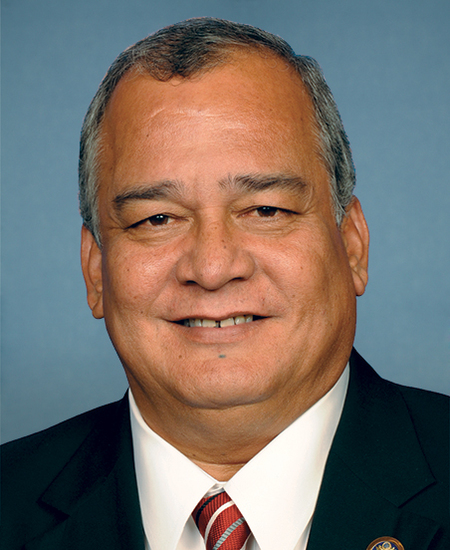
Rep. Gregorio Kilili Camacho Sablan
Sponsored bills
Northern Mariana Islands Medicaid Equivalence Act This bill requires the Medicaid funding cap for the Northern Mariana Islands to be the same as that for American Samoa in FY2024.
Maddy summaryThe PAST Act of 2023 amends the Horse Protection Act to ban specific devices used to cause pain (soring) in horses at shows, particularly affecting Tennessee Walking Horses, Racking Horses, and Spotted Saddle Horses. It defines prohibited "action devices" (like boots or chains causing friction) and requires licensed, conflict-free inspectors at events to enforce rules. The bill increases penalties for violations to up to $5,000 fines or 3 years in jail, and mandates longer disqualifications for repeat offenses (180 days → 1 year → 3 years). Horse show organizers, exhibitors, and participants must comply with these new inspection and penalty requirements.
Maddy summaryThe Firearm Safety Act of 2023 amends the Consumer Product Safety Act to remove firearms from an existing exclusion, reclassifying them as consumer products under federal law. This change would subject firearms to safety standards, testing, and oversight by the Consumer Product Safety Commission (CPSC), which currently does not regulate firearms under this framework. The bill specifically targets Section 3(a)(5) of the Consumer Product Safety Act, eliminating the exemption that previously kept firearms outside the definition of "consumer product." As a result, firearm manufacturers and sellers would now face CPSC requirements, such as safety testing, labeling, and reporting, similar to other consumer products.
Maddy summaryHRES 390 is a resolution recognizing May as Asian American, Native Hawaiian, and Pacific Islander (AANHPI) Heritage Month. It formally honors the historical contributions of AANHPI communities to the United States, highlighting their diverse cultural impact and achievements across U.S. history. The resolution emphasizes celebrating these contributions while acknowledging ongoing challenges, such as anti-Asian hate crimes, and references key milestones like the 125th anniversary of *United States v. Wong Kim Ark*. As a symbolic recognition resolution, it does not create new policies or affect specific groups through legislation.
Maddy summaryHR 3193, the Employment Services and Jobs Parity Act, amends the Wagner-Peyser Act to include the Commonwealth of the Northern Mariana Islands and American Samoa in federal employment service funding allocations, which previously only covered Guam. The bill sets funding for these territories based on the same percentage of total available funds that Guam received in fiscal year 1983, ensuring parity in their allocation. It also prevents states from receiving reduced funding due to this change and requires proportional reductions if total funds are insufficient. This adjustment directly affects residents of these territories by expanding access to federal job training and employment services.
Maddy summaryThe Transit to Trails Act establishes a federal grant program to fund transportation projects connecting critically underserved communities - defined as areas lacking adequate park access, low-income, communities of color, or environmental justice areas - to public lands and recreational spaces. Eligible entities, including states, local governments, tribal organizations, and park districts, can apply for grants to develop transportation connectors (like bus routes) and culturally appropriate education materials, with priority for projects using low-emission vehicles and offering discounted fares for low-income riders. Grants range from $25,000 to $500,000, with federal funding covering up to 80% of costs, and recipients must report on demographics served and project outcomes. The program is funded at $40 million annually in its fifth year, aiming to improve mobility to parks and recreation in communities historically excluded from such access.
Maddy summaryHR 2757, the Puerto Rico Status Act, establishes a process for Puerto Rico to determine its political status through a plebiscite on November 2, 2025, offering three options: independence, sovereignty in free association with the United States, or statehood. If no option receives a majority in the initial vote, a runoff plebiscite would be held on March 8, 2026. The bill outlines transition processes for each option, including constitutional conventions, implementation steps, and provisions for citizenship, immigration, and economic benefits. It mandates bilingual voter education materials and requires oversight by the Elections Commission and the Attorney General to ensure fair representation of all options. This legislation directly affects Puerto Rico's residents by providing a structured process to choose their permanent political relationship with the United States.
Maddy summaryHR 3073 creates a federal grant program to fund community-based mental wellness and resilience initiatives. It provides planning grants (up to $250,000) for organizations to form community networks and assess needs, followed by program grants (up to $500,000 annually for 4 years) to implement evidence-based programs. The bill requires grantees to use a public health approach, collect community input, and develop strategic plans addressing protective factors and risk factors for mental wellness. At least 20% of funds must support rural communities, and programs must involve diverse community groups like schools, faith organizations, health professionals, and local government. The bill authorizes $36 million over 2024-2028 to support these community-led efforts.
Maddy summaryThe Child Care for Working Families Act establishes a federal entitlement program providing subsidized child care for working families with children under age 6 who are not yet in kindergarten. It creates a sliding fee scale where families at or below 85% of State median income pay no copayment, while higher-income families pay up to 7% of their income based on income thresholds. The bill requires states to develop quality rating systems for child care providers and ensures providers receive sufficient funding to meet quality standards, including wages equivalent to elementary educators. It prioritizes access for underserved populations including children with disabilities, infants and toddlers, children experiencing homelessness, and families in low-income communities. The program is funded with $20 billion for fiscal year 2024 and subsequent years through 2029.