

Maddy summaryThe Keeping All Students Safe Act prohibits the use of "unlawful" seclusion and restraint in schools, including physical restraint that's life-threatening, contraindicated for a student's disability, or not properly trained for. It requires schools to use less restrictive interventions first, mandates training for school personnel in crisis intervention, and establishes reporting requirements for restraint incidents, including immediate parent notification and annual public reporting. The bill prohibits using physical restraint as a planned intervention in student education plans and requires states to submit compliance plans with data on restraint incidents disaggregated by race, disability status, and other factors. It applies to public schools and programs receiving federal funding, but does not affect private schools not receiving federal funds or home schools.
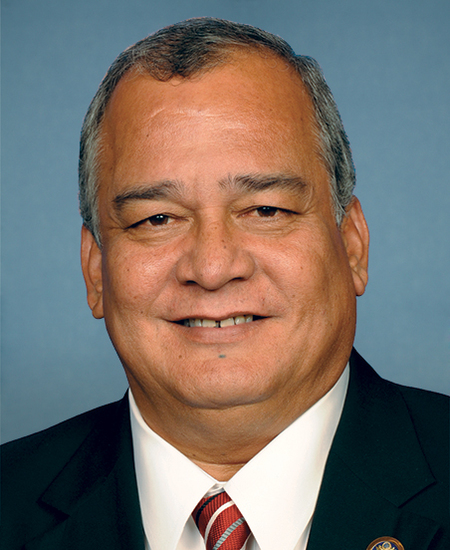
Rep. Gregorio Kilili Camacho Sablan
Sponsored bills
Maddy summaryThe Extinction Prevention Act of 2023 establishes four separate conservation funds to protect specific species: butterflies across North America, plants in the Pacific Islands, freshwater mussels in the United States, and desert fish in the Southwest. Each fund authorizes $5 million annually from 2024-2029 to provide competitive grants for habitat protection, research, and conservation programs. Projects must be submitted by eligible organizations (states, tribes, nonprofits) and include specific elements like stakeholder engagement and demonstration of conservation potential. The Secretary of the Interior will review proposals based on criteria including conservation priority, sustainability, and matching funds, with annual reports required to Congress on fund usage and species status.
Justice is Beneficial Limitation on Investments and Necessary Disclosure Act of 2023 or the Justice is BLIND Act of 2023 This bill requires a federal judge, as well as any spouse or dependent child of a federal judge, to place specified investments into a qualified blind trust (i.e., an arrangement in which certain financial holdings are placed in someone else's control to avoid a possible conflict of interest) until 180 days after the end of their tenure as a federal judge.
Maddy summaryHCONRES 44 is a non-binding congressional resolution urging the creation of a U.S. Commission on Truth, Racial Healing, and Transformation. It does not establish the commission itself but calls for its formation to acknowledge historical injustices against Black, Indigenous, and other people of color - including systemic discrimination in housing, Social Security, the GI Bill, and land policies - and to address ongoing racial inequities. The resolution emphasizes the need to dismantle the "belief in a hierarchy of human value" and promote racial healing as a national priority. It complements ongoing efforts like H.R. 40 (a bill to study reparations) but does not create new legal requirements or funding.
Maddy summaryHR 3445, the Equity and Inclusion Enforcement Act of 2023, strengthens civil rights enforcement in federally funded education programs. It allows individuals to sue for "disparate impact" discrimination (where policies unintentionally harm specific groups) under Title VI of the Civil Rights Act, similar to suing for intentional discrimination. The bill requires schools and programs receiving federal education funds to designate a compliance coordinator and notify students/employees of their contact information. It also creates a new Special Assistant for Equity and Inclusion within the Department of Education to coordinate enforcement efforts and inform the public about their rights under Title VI.
Maddy summaryThe Strength in Diversity Act of 2023 creates a federal grant program to help school districts address racial and socioeconomic isolation in public schools (K-12). Eligible school districts, states, or consortia with significant segregation gaps can apply for planning or implementation grants to develop strategies like equitable school assignments, transportation plans, or teacher recruitment programs. Grants require community engagement, data tracking on academic outcomes and diversity metrics, and plans to sustain efforts after funding ends. The program aims to increase student diversity and improve outcomes for students of color and low-income students in segregated schools.
Maddy summaryHRES 319 is a symbolic resolution passed by the U.S. House of Representatives on April 24, 2023, recognizing the federal government's duty to develop a Green New Deal. It states the House believes the government should create a comprehensive plan to address climate change and economic inequality through a 10-year national mobilization. The resolution outlines goals like achieving net-zero emissions by 2050, creating high-wage union jobs, upgrading infrastructure, and prioritizing frontline communities, but it does not establish binding policy or funding mechanisms. As a non-binding resolution, it serves as a statement of legislative intent rather than a law.
Maddy summaryHRES 289 is a resolution recognizing the week of April 11-17, 2023, as the sixth annual "Black Maternal Health Week" to raise awareness about maternal health disparities. It highlights that Black women in the U.S. face disproportionately high rates of pregnancy-related deaths (2.6 times more likely than White women) and complications, driven by systemic inequities. The resolution urges national attention on these issues and supports policy solutions like the Black Maternal Health Momnibus Act to address racial gaps in maternal care. As a non-binding recognition, it does not enact new laws but aims to amplify community-driven efforts to improve outcomes.
AANAPISI Opportunity Act This bill requires the Department of Agriculture (USDA) to establish a scholarship grant program for covered Asian American and Native American Pacific Islander-serving institutions (AANAPISIs) to provide scholarships in agriculture-related fields. Covered institutions include community colleges, colleges, or universities that (1) have a student body consisting of at least 10% Asian American or Native American Pacific Islander students; and (2) offer associate, bachelors, or other accredited degree programs in agriculture-related fields. USDA may only award the grants to AANAPISIs that have established a competitive scholarship awards process for individuals who intend to pursue a career in agriculture, including in the agricultural disciplines of business, engineering, technology, food science, forestry, home economics, nutrition, soil conservation, non-medical biological sciences, and computer science. This bill also allows USDA to provide competitive grants for up to five years for integrated agricultural research, education, and extension projects at covered AANAPISIs to address U.S. agriculture priorities. The project grants include a 50% matching funds requirement that USDA may waive if certain requirements are met.
Maddy summaryHRES 385 is a symbolic House resolution designating May 10, 2023, as "National Asian American, Native Hawaiian, and Pacific Islander Mental Health Day." It supports raising awareness about mental health disparities in the AANHPI community, where data shows lower treatment rates and higher suicide rates among youth. The resolution encourages federal, state, and local health agencies to improve mental health services for AANHPI communities but does not create new programs or funding. As a procedural resolution, it has no binding effect and serves only to recognize and highlight these issues.