

Maddy summaryHR 82, the Social Security Fairness Act of 2023, repeals two provisions that reduce Social Security benefits for certain government workers. It eliminates the Government Pension Offset (GPO), which cuts spousal or survivor benefits for people with pensions from jobs not covered by Social Security (like federal or state government roles), and the Windfall Elimination Provision (WEP), which lowers retirement benefits for those with similar pensions. The law takes effect for benefits paid after December 2023, requiring the Social Security Administration to adjust benefit calculations to remove these reductions. This change directly affects public-sector employees who previously had their Social Security benefits reduced due to their government pensions.
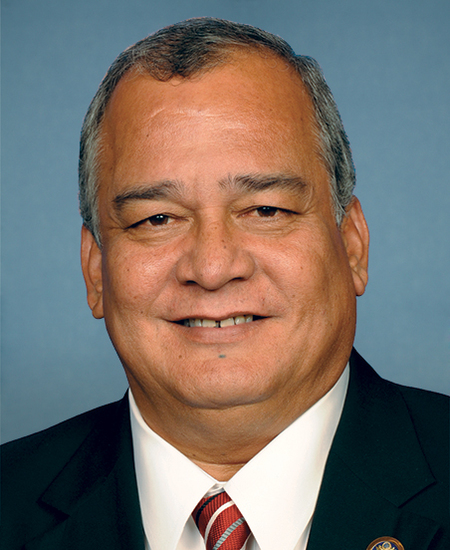
Rep. Gregorio Kilili Camacho Sablan
Sponsored bills
Maddy summary# Summary of the EXPLORE Act Legislative Text This is a comprehensive legislative text (likely the "EXPLORE Act" - Enhancing Recreation Opportunities for People of All Abilities, and Veterans) that establishes several key initiatives to improve outdoor recreation access across Federal lands. ## Key Focus Areas: ### 1. Accessibility for People with Disabilities (Title II - Access America) - Requires comprehensive assessments of outdoor recreation facilities on Federal lands within 5 years - Mandates development of 3 new accessible trails per region for each agency (Forest Service, National Park Service, BLM, USFWS) within 1 year - Requires development of 2 new accessible recreation opportunities per region within 1 year - Requires making accessibility information available on public websites within 7 years - Requires development of accessible features including trail bridges, parking, and restrooms ### 2. Military and Veterans Programs - Requires educational materials for military members/veterans on accessing Federal lands free of charge within 2 years - Establishes Military Veterans Outdoor Recreation Liaisons within relevant agencies within 1 year - Requires a National Strategy for Military and Veteran Recreation within 1 year - Creates a pilot program for veteran employment in conservation positions - Promotes partnerships with organizations providing outdoor recreation for veterans ### 3. Youth Access - Requires a strategy to increase youth recreation visits to Federal lands within 2 years - Extends the "Every Kid Outdoors" program until September 30, 2031 - Focuses on increasing opportunities for underserved youth ### 4. Recreation Permitting Modernization (Title III) - Defines special recreation permits and establishes fee structures - Creates categories for different types of recreation permits - Establishes a process for application and review of permits - Includes provisions for multijurisdictional trips across different Federal lands The legislation aims to improve access to outdoor recreation for people with disabilities, veterans, and youth while modernizing the permitting process for recreational activities on Federal lands. It requires specific timelines for implementation and includes detailed definitions and requirements for each component of the bill.
Maddy summaryHR 6062 repeals a provision requiring a two-thirds vote for American Samoans to approve constitutional amendments, restoring the ability for the territory's residents to vote on such changes using simple majority rule. This directly affects American Samoan citizens, who would now need only a majority vote (instead of a two-thirds vote) to approve constitutional amendments. The bill removes a restriction established by Public Law 98-213, aligning with historical authority under Executive Order 10264 (1951) that previously allowed constitutional amendments without congressional approval. The change aims to strengthen self-governance in American Samoa through democratic voting processes.
Maddy summaryThis bill requires the U.S. Secretary of the Interior to study whether Lahaina, Hawaii (specifically the census-designated place in Maui County) should become a National Heritage Area - a federal program recognizing places with significant cultural or historical resources. The study will assess if designating Lahaina as such is suitable and feasible, involving coordination with Maui County, Hawaii state officials, historic preservation groups, and tourism entities. It does not create the heritage area itself but evaluates the potential for future designation. The bill directly affects Lahaina residents, local historic preservation efforts, and tourism stakeholders in the area.
Maddy summaryThis bill, HR 1097 (Everett Alvarez, Jr. Congressional Gold Medal Act of 2023), authorizes the award of a Congressional Gold Medal to Everett Alvarez, Jr., in recognition of his service as a U.S. Navy pilot and Vietnam War prisoner of war. It directly honors Alvarez, who was the first U.S. pilot shot down in the Vietnam War, spent over 8.5 years in captivity, and later served in the Peace Corps and Veterans Administration. The bill’s key mechanism is directing the U.S. Mint to strike a gold medal bearing his name and image, with bronze duplicates available for sale to cover costs. It does not create new policies or affect any group beyond the honoree.
Maddy summaryThis bill approves new agreements that amend the Compact of Free Association between the United States and the Federated States of Micronesia, the Republic of the Marshall Islands, and the Republic of Palau. It incorporates related agreements including fiscal procedures and trust fund agreements that govern how U.S. funding is managed and distributed to these nations. The bill provides funding for 2024-2043 to support programs like healthcare, education, veterans' services, and economic development in the Freely Associated States. It establishes reporting requirements and oversight mechanisms for federal agencies implementing these agreements. The bill directly affects U.S. federal agencies, the Freely Associated States, and U.S. funding mechanisms for these Pacific Island nations.
Maddy summaryThis bill establishes the Northern Mariana Islands as a new Article III federal judicial district under Title 28, U.S. Code, with court proceedings held in Saipan. It converts the existing District Court for the Northern Mariana Islands (governed by a 1977 law) into a full Article III district court, transferring all facilities, property, and the current judge to this new status. The current judge is automatically deemed appointed to the new Article III position, serving during "good behavior" under federal law, and the 1977 law is repealed. The bill ensures no disruption to current judges' tenure, salary, or retirement rights upon enactment.
Maddy summaryHR 10128, the Court Improvement Equity Act, requires federal grants to be allocated directly to state supreme courts (highest courts) in jurisdictions that apply and do not operate an existing child welfare court program under part E of the Social Security Act. The bill mandates that these courts use the grant funds to assess and improve court processes specifically related to child safety, permanency, and well-being. It explicitly includes U.S. territories (Guam, American Samoa, and the Northern Mariana Islands) as eligible "States" for these grants. Grantees must provide expenditure information to the federal Secretary upon request.
Maddy summaryThe Supporting Territorial Safety Net Hospitals Act establishes specific Medicare payment rules for hospitals in U.S. territories (Northern Mariana Islands, American Samoa, Guam, and the Virgin Islands) that serve as safety net providers. It increases inpatient payments to 101% of reasonable costs (up from standard rates) and provides similar increased outpatient payments, with an option for hospitals to choose between payment structures. The bill also makes these hospitals eligible for the 340B drug pricing program, eliminates Medicare sequestration (automatic spending cuts) for them, and reverses previous cuts to bad debt reimbursement. These changes ensure territorial safety net hospitals receive comparable financial support to critical access hospitals under Medicare.
Maddy summaryHR 7442 directs the Government Accountability Office (GAO) to study whether Medicare could cover medical services provided in the Philippines for beneficiaries already enrolled in Medicare Part B or Part C. The study must analyze potential cost savings compared to U.S. care (2025-2034) and identify required legislative/administrative changes to expand coverage. This bill only authorizes a study and does not change current Medicare benefits or eligibility.