

Maddy summaryThis bill updates the Supplemental Security Income (SSI) program to better support low-income elderly, blind, and disabled individuals. It raises key financial thresholds: the resource limit for single individuals increases from $2,250 to $20,000 (adjusted annually for inflation), and the general income exclusion rises from $240 to $1,797 per month. The bill also removes a penalty that reduced benefits for married couples, excludes retirement accounts and tribal general welfare payments from resource calculations, and eliminates outdated requirements like dedicated accounts for past-due benefits. These changes directly affect SSI recipients by making it easier to qualify and maintain benefits without losing support due to minor income or resource fluctuations.
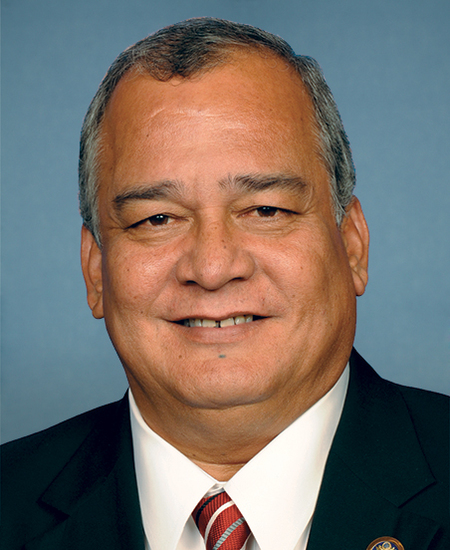
Rep. Gregorio Kilili Camacho Sablan
Sponsored bills
Maddy summaryThis bill extends federal welfare program eligibility to the Northern Mariana Islands (CNMI), granting its residents access to the same family assistance benefits previously available only to U.S. states. It authorizes an annual federal grant of $1.631 million to the CNMI for its family assistance program, requiring the territory to submit a 3-year plan outlining benefit delivery, avoiding duplicate aid, and promoting employment opportunities for recipients. The bill also adjusts matching grant formulas to include the CNMI ($2.131 million annually) and provides $5 million for initial child support program development. These changes directly affect CNMI residents and its government by integrating the territory into federal welfare administration under existing Social Security Act provisions.
Maddy summaryThe Preserving Access to Home Health Act of 2023 repeals a 2018 payment adjustment for Medicare home health agencies, restoring prior payment rates for 2024 and subsequent years. It requires the Medicare Payment Advisory Commission (MedPAC) to analyze how home health agencies' financial performance affects access to care, including reviewing spending and utilization data across Medicare, Medicaid, and other payers. Starting in 2025, the bill mandates home health agencies to report detailed data on visit volumes and payments by payer source (Medicare, Medicaid, private insurers) through updated cost reports. This data will help MedPAC assess payment policy impacts on access to home health services for Medicare beneficiaries.
Maddy summaryThe Lowering Drug Costs for American Families Act expands Medicare's drug price negotiation program from 20 to 50 drugs, allowing the government to negotiate lower prices for these medications. It requires private health insurance plans and group health coverage to apply these negotiated prices to their members' cost-sharing for covered drugs, with plans able to opt out while publicly disclosing their decision. The bill also extends these negotiated prices to drugs covered by commercial insurance markets, not just Medicare. This would directly affect Medicare beneficiaries and people with private health insurance who take the negotiated drugs.
Maddy summaryThe Physical Therapist Workforce and Patient Access Act of 2023 expands the National Health Service Corps to include physical therapists in its loan repayment program and creates designated "physical therapy health professional target areas" for their assignment in underserved communities. It also amends Medicare to cover physical therapy services provided by physical therapists at Rural Health Clinics and Federally Qualified Health Centers, effective January 1, 2025. This directly affects physical therapists by offering new career pathways in underserved areas and patients in those communities by increasing access to physical therapy services for conditions like pain management and rehabilitation. The bill does not alter existing eligibility requirements for physical therapists but formally integrates their services into key federal healthcare programs.
Maddy summaryThe Social Security 2100 Act would significantly enhance Social Security benefits for millions of Americans by increasing monthly payments for retirees, disabled workers, widows/widowers, and children. Key provisions include raising the minimum benefit for long-term low earners, improving cost-of-living adjustments using a more accurate index, eliminating the 5-month waiting period for disability benefits, and extending child benefits to age 26. The bill also changes how Social Security taxes are calculated by applying them to income above $400,000 and establishes a unified Social Security Trust Fund to manage program finances. Most provisions would apply to benefits payable from 2025 through 2034, affecting all current and future Social Security beneficiaries.
Maddy summaryThe BLUE Pacific Act establishes a comprehensive U.S. strategy to deepen engagement with Pacific Island nations through coordinated assistance across multiple policy areas. It authorizes $250 million annually for fiscal years 2023-2033 to support initiatives in climate resilience, economic development, security capacity building, public health, and democratic governance. The act requires the President to develop a Pacific Islands Partnership Strategy by 2027, with regular congressional reporting, and mandates consultation with Pacific Island nations and regional organizations. This legislation formalizes U.S. efforts to support Pacific Island countries in addressing shared challenges like climate change, economic development, and security while strengthening regional partnerships. The strategy will guide U.S. assistance across multiple agencies to support Pacific Island nations' priorities as outlined in regional frameworks like the 2050 Strategy for the Blue Pacific Continent.
Maddy summaryThe Comprehensive Cancer Survivorship Act (HR 4363) establishes new Medicare and Medicaid coverage for cancer care planning and coordination services, requiring personalized survivorship care plans for cancer survivors from diagnosis through the end of life. The bill creates a demonstration program to test different models of survivorship care, including navigation services to help survivors transition from cancer treatment to ongoing care, and mandates Medicaid coverage for cancer fertility services. It also establishes a comprehensive cancer survivorship program with resource centers for survivors and health care providers, and includes provisions to help cancer survivors overcome employment barriers and improve their quality of life through physical activity and mental health support. The legislation specifically addresses disparities in care for racial/ethnic minorities, lower socioeconomic groups, and rural populations who face unique challenges as cancer survivors.
Maddy summaryThis bill, the Public Servants Protection and Fairness Act of 2023, amends Social Security to better protect public servants who work in jobs not covered by Social Security (such as certain government positions). It creates a new formula for calculating retirement benefits that combines both covered and noncovered earnings, ensuring public servants receive the higher of two benefit calculations. The bill also provides an additional $150 monthly payment for certain public servants whose benefits were previously reduced by the windfall elimination provision. It improves Social Security account statements to clearly show noncovered earnings and requires a study of how state retirement plans handle these benefits. These changes will apply to benefits starting in 2025.
Maddy summaryThe FAMILY Act (HR 3481) would establish a national paid family and medical leave insurance program administered by the Social Security Administration. Eligible workers would receive wage replacement benefits (up to 85% of average earnings, with a maximum of $4,000 monthly) for up to 60 caregiving days per 12-month benefit period for qualifying reasons like caring for a sick family member, personal serious health conditions, or responding to domestic violence. The program would be funded through 0.2% payroll taxes from employees and employers (with self-employed individuals paying 0.4%), with benefits coordinated with existing state programs. The law includes protections against employer retaliation for taking leave and requires employers to maintain health coverage during leave periods.