

Maddy summaryThe Medicare for All Act would establish a single-payer national health insurance program providing comprehensive coverage to all U.S. residents without cost-sharing. It would replace current private insurance and government programs like Medicare and Medicaid with a unified system covering all medically necessary services including hospital care, prescription drugs, mental health services, reproductive care, long-term care, and preventive services. The bill prohibits private insurers from offering duplicate coverage and requires providers to participate without charging patients for covered services. Implementation would occur over a two-year transition period, with a "Medicare Transition Buy-In" option allowing people to enroll before full implementation.
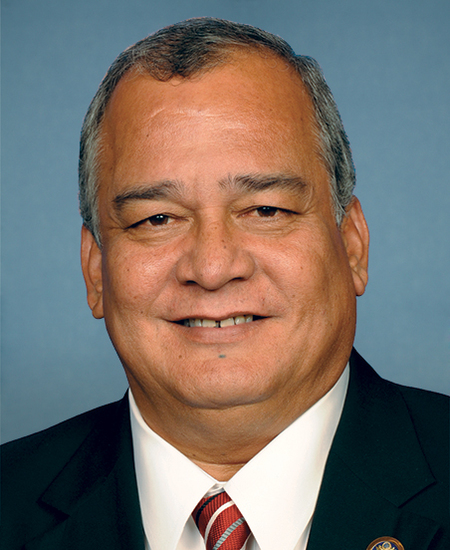
Rep. Gregorio Kilili Camacho Sablan
Sponsored bills
Maddy summary# Summary of Proposed Immigration Legislation This comprehensive immigration bill proposes sweeping reforms across multiple areas of U.S. immigration policy. The key provisions can be categorized as follows: ## Family Immigration Reforms - Expands eligibility for family-based visas - Creates new pathways for family reunification - Reforms the "child out" rule for H-4 visa holders who age out - Establishes new procedures for sponsors of unaccompanied children ## Employment-Based Immigration - Increases diversity visas from 55,000 to 80,000 - Creates new categories for doctoral STEM graduates - Eliminates per-country limits for employment-based visas - Addresses visa backlogs by creating new categories for beneficiaries with priority dates over 10 years old - Increases visa numbers for certain employment-based categories (e.g., 23.55% instead of 28.6% for certain categories) - Creates a Regional Economic Development Immigrant Visa Pilot Program (10,000 visas annually) ## Diversity and Integration Programs - Creates a United States Citizenship and Integration Foundation to promote citizenship preparation - Establishes pilot programs for immigrant integration at state and local levels - Creates English as a Gateway to Integration grant program ($100 million for 2024-2025) - Creates Workforce Development and Shared Prosperity grant program ($100 million for 2024-2025) - Requires in-state tuition rates for refugees, asylees, and certain special immigrants - Waives English requirements for seniors applying for naturalization ## Immigration Court Reforms - Increases immigration judge numbers by 55 annually through 2028 - Creates a right to counsel for vulnerable individuals (children, victims of abuse, etc.) - Establishes an Immigration Counsel Fund with a $25 surcharge on immigration fees - Requires all noncitizens to receive legal orientation programs - Modernizes court technology for improved efficiency - Creates procedures for ensuring court appearance compliance ## Refugee and Asylum Processing - Expands alternatives to detention for family units - Improves processing for asylum seekers - Creates programs to facilitate safe and efficient repatriation - Establishes reintegration support for repatriated individuals ## Naturalization and Citizenship - Creates citizenship pathways for U.S. high school graduates - Waives English requirements for seniors - Creates a National Citizenship Promotion Program - Establishes naturalization ceremonies at historic locations The bill aims to create a more efficient immigration system, address backlogs in immigration courts, promote immigrant integration, create clearer pathways to citizenship, and reform both family-based and employment-based immigration systems. It represents a comprehensive approach to modernizing U.S. immigration policy.
Maddy summaryThis bill establishes a new workplace violence prevention standard for healthcare and social service workers. It requires employers in covered facilities - including hospitals, nursing homes, mental health clinics, and social service settings - to develop and implement comprehensive prevention plans with specific requirements. These plans must include risk assessments, hazard prevention measures, employee training on violence prevention, and procedures for reporting and investigating violent incidents. The bill also amends Medicare regulations to require compliance with these standards for hospitals and skilled nursing facilities receiving Medicare funds.
Maddy summaryThis bill expands Medicare Part B coverage to include specific pharmacist services, directly affecting Medicare beneficiaries and pharmacists who provide these services. It adds new coverage for pharmacist evaluations and treatments related to certain illnesses (like COVID-19, flu, or strep throat) and public health emergencies, requiring payment at 80% of the lesser of actual charge or 85% of physician payment rates (100% during emergencies). The bill also prohibits balance billing for these services, ensuring beneficiaries pay only the standard Medicare copayment. These changes aim to improve access to pharmacist care during health crises while aligning payment with existing physician service frameworks.
Maddy summaryHR 1675, the Territory Health Revitalization Act, increases funding access for health programs in U.S. territories. It requires 5% of certain Social Security Act health grants to be reserved for territories (like Guam, Puerto Rico, and the Northern Mariana Islands), removes a restriction blocking the Northern Mariana Islands from qualifying, and guarantees at least two grants to territory-based organizations each year. The bill directly affects territorial health programs and local grantees by ensuring dedicated funding and eligibility. These changes take effect October 1, 2023, modifying existing federal grant allocation rules without creating new programs.
Maddy summaryThe Affordable Insulin Now Act (HR 1488) requires health insurance plans and issuers to cover specific insulin products with cost-sharing capped at $35 per 30-day supply or 25% of the negotiated price, whichever is lower, starting in 2024. It directly affects people with diabetes who rely on insulin by limiting out-of-pocket costs for covered products. The bill mandates coverage of all insulin types (rapid-acting, long-acting, etc.) and dosage forms (vials, pumps, etc.) as selected by the plan. This applies to both group and individual health insurance plans under the Public Health Service Act, Internal Revenue Code, and ERISA, with cost-sharing counting toward annual deductibles.
Maddy summaryThe Social Security Expansion Act would increase benefits for many Social Security recipients, extend eligibility for certain groups, and introduce new tax provisions. It raises the calculation method for benefits (increasing the first bend point from 90% to 95%), increases minimum benefits for low earners based on years worked (with higher minimums for those with more work history), and extends benefit eligibility for children who are full-time students until age 22. The bill also introduces a new tax on income between the Social Security wage base and $250,000, and increases the tax on investment income from 3.8% to 16.2%. These changes would primarily affect Social Security beneficiaries, high-income earners, and those with investment income, with the new tax revenues funding the Social Security Trust Fund.
Maddy summaryThe Territories Health Equity Act of 2023 improves healthcare access and funding for residents of U.S. territories by making several key changes to Medicare and Medicaid programs. It eliminates funding limitations for Medicaid in territories beginning in 2024, removes specific Medicare funding restrictions for Puerto Rico, and allows territories to receive payments for hospitals serving high numbers of low-income residents. The bill creates automatic eligibility for low-income territorial residents to receive Medicare premium and cost-sharing subsidies, eliminates late enrollment penalties for Part B Medicare in Puerto Rico, and requires transparency about Medicaid and CHIP programs in territories. These changes directly affect residents of Puerto Rico, the Virgin Islands, Guam, the Northern Mariana Islands, and American Samoa, as well as healthcare providers in these territories.
Maddy summaryThis bill amends Medicare rules to allow nurse practitioners and physician assistants to document medical necessity for diabetic shoes, a requirement currently limited to physicians. It directly affects Medicare beneficiaries with diabetes who need these shoes and expands the pool of providers (nurse practitioners and physician assistants) who can fulfill the documentation requirement. The key change inserts "nurse practitioner, or physician assistant" into Medicare's documentation standards for diabetic shoe coverage. This simplifies access for patients by enabling more healthcare providers to support coverage approval without requiring a physician's signature. The bill does not change coverage eligibility or costs, only the documentation process.
Maddy summaryThis bill, the Supplemental Security Income Equality Act (HR 256), would extend the federal Supplemental Security Income (SSI) program to residents of Puerto Rico, the U.S. Virgin Islands, Guam, and American Samoa. Currently, these territories are excluded from SSI, which provides monthly financial assistance to low-income elderly, disabled, and blind individuals. The bill amends the Social Security Act to include the territories in the definition of "state" for SSI eligibility, remove payment limits for territories, and ensure U.S. nationals are treated equally with citizens. It also grants the Social Security Commissioner authority to waive requirements to adapt the program to each territory’s needs. The changes would take effect one year after the bill is enacted.