

Learning Recovery Act of 2021 This bill establishes a program through which the Department of Education must award grants to state educational agencies and, through them, allocations to local educational agencies (LEAs) to provide students with additional learning time and related services. It also directs the Institute of Education Sciences (IES) to study and report on learning recovery. Specifically, LEAs must use funds to implement attendance-intervention strategies that reengage students and their families, support salaries and benefits for teachers and staff, and carry out school extension programs. School extension program refers to an evidence-based program (e.g., summer-school, extended-day, or extended-school-year program) at an elementary or secondary school that provides students with additional learning time. Further, LEAs may use funds for certain activities such as providing students with mental health services, reestablishing after-school programs, and supporting existing activities to combat learning loss due to the COVID-19 (i.e., coronavirus disease 2019) pandemic. The IES must, within 30 days, begin to study interventions and strategies to address learning recovery for all students, including students with disabilities, minority children, English learners, and low-income students. Further, the IES must disseminate findings to educational agencies.
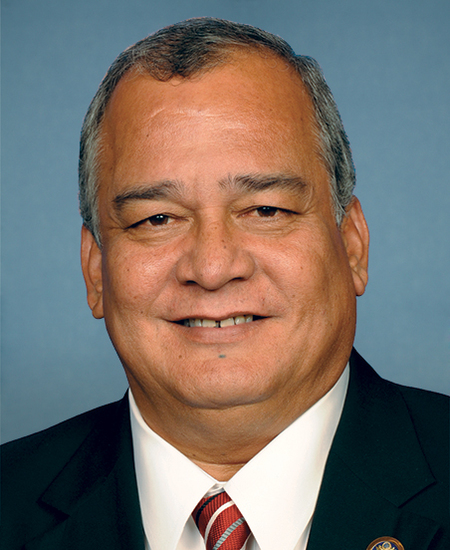
Rep. Gregorio Kilili Camacho Sablan
Sponsored bills
This resolution acknowledges that child poverty prevents children from reaching healthy development and an economically secure future. It also encourages all levels of government to enact and support anti-poverty policies and programs.
Save Education Jobs Act This bill establishes through FY2030 the Education Jobs Fund, from which the Department of Education (ED) must award grants to state educational agencies and, through them, subgrants to local educational agencies (LEAs) to retain and create education jobs. ED must also provide grants to outlying areas and the Bureau of Indian Education. Specifically, LEAs must use subgrants for compensation and benefits to retain existing employees, rehire former employees, and hire new employees. Further, subgrants may be used for certain activities such as training and professional development, providing salary increases to cover extended days or school years to make up for lost instructional time due to COVID-19 (i.e., coronavirus disease 2019), and developing teacher leadership roles in high-need schools. The bill prohibits the use of subgrants for certain activities, such as funding voucher programs, tax-credit scholarships, or education savings accounts.
Relaunching America's Workforce Act This bill establishes several grant programs to address employment, the workforce, and education access in response to the COVID-19 national emergency. The Department of Labor must provide grants in response to the COVID-19 national emergency to provide training and employment for dislocated, unemployed, and underemployed workers; support youth employment; establish workforce information systems improvements; provide reentry employment opportunities for justice-involved youth and young adults; and create or expand apprenticeship programs. Programs directed towards assisting Native Americans and migrant and seasonal farmworkers may be extended. The Department of Education must provide grants to expand the capacity of adult education providers to prioritize serving adults with low-literacy or numeracy levels negatively impacted by the COVID-19 national emergency, and to improve or expand career and technical education programs and programs of study to respond to state and local needs as a result of the COVID-19 national emergency.
Supplemental Security Income Equality Act This bill extends the Supplemental Security Income (SSI) program to Puerto Rico, the Virgin Islands, and Guam. This is a federal program designed to help aged, blind, and disabled individuals with limited income and resources meet basic needs. When Congress created the SSI program in 1972, it excluded these territories. The Social Security Administration may waive or modify statutory requirements relating to the provision of benefits as necessary to adapt the SSI program to each territory. This bill also eliminates a limit on payments from the Temporary Assistance for Needy Families (TANF) program and other Department of Health and Human Services programs to the territories.
Emergency Pension Plan Relief Act of 2021 This bill modifies the funding rules and provides financial assistance for certain pension plans that are underfunded or insolvent. First, the bill expands the authority of, and provides funding for, the Pension Benefit Guaranty Corporation (PBGC) to provide special partition assistance to a multiemployer pension plan that is insolvent or at risk of insolvency. The bill expands eligibility for partition assistance, provides funding for a plan to reach a projected funded ratio of 80% over a 30-year period, and does not require a plan to repay such assistance. The bill further permits a multiemployer pension plan to elect to retain its funding zone status from the previous year for either (1) the first plan year beginning during the period from March 1, 2020, through February 28, 2021; or (2) the next succeeding plan year, as designated by the plan sponsor. A plan may also extend by five years the funding improvement or rehabilitation period if the plan is designated as in endangered or critical status for a plan year beginning in 2020 or 2021. A plan in critical and declining status may not suspend payment of plan benefits. Additionally, the bill adjusts the minimum funding standards for a multiemployer pension plan to account for investment losses and other losses related to the COVID-19 (i.e., coronavirus disease 2019) pandemic and modifies the PBGC guarantee formula to increase the maximum potential benefits under a multiemployer pension plan. Finally, the bill makes changes with respect to single employer pension plans, including revising the amortization rules and extending and modifying the pension funding stabilization percentages.
Federal Adjustment of Income Rates Act or the FAIR Act This bill modifies pay rates for federal employees in 2022. Specifically, the bill increases rates under the statutory pay systems and for prevailing rate employees by 2.2%, and increases locality pay by 1%.
This resolution expresses support for the goals and ideals of Korean American Day and honors the 118th anniversary of the arrival of the first Korean immigrants to the United States.
This resolution calls upon Vice President Michael R. Pence (1) to immediately use his powers under section 4 of the Twenty-fifth Amendment to convene and mobilize the principal officers of the executive departments to declare that the President is unable to successfully discharge the duties and powers of his office, and (2) to transmit to the President pro tempore of the Senate and the Speaker of the House notice that he will be immediately assuming the powers and duties of the office as Acting President.
Guam Supplemental Security Income Equality Act This bill extends the Supplemental Security Income (SSI) program to Guam. This is a federal program designed to help aged, blind, and disabled individuals with limited income and resources meet basic needs. When Congress created the SSI program in 1972, it excluded Puerto Rico, the Virgin Islands, and Guam. The Social Security Administration may waive or modify statutory requirements relating to the provision of benefits as necessary to adapt the program to Guam.