

Maddy summaryThe Medical Debt Relief Act of 2023 would prevent credit bureaus from reporting medical debt on credit reports and stop creditors from using medical debt information when making credit decisions. It defines medical debt as any debt related to medical services, products, or devices, and requires the removal of existing medical debt entries from credit reports. Within one year of enactment, the Consumer Financial Protection Bureau must update regulations to prohibit creditors from considering medical debt in loan or credit applications. This directly affects consumers with medical debt (who may see improved credit scores) and creditors (who must adjust their credit evaluation practices).
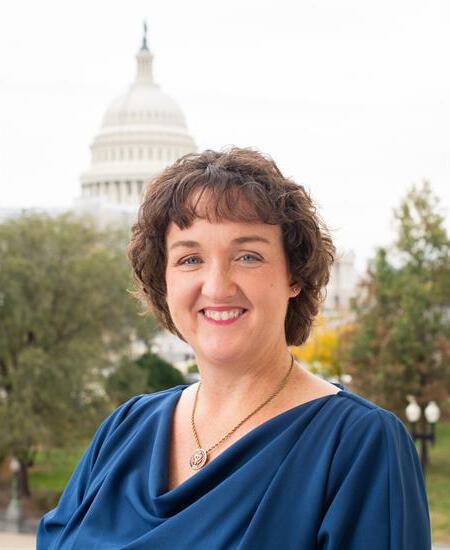
Rep. Katie Porter
Sponsored bills
Maddy summaryThis bill changes how federal agencies set education requirements for cybersecurity jobs. It restricts agencies from requiring specific degrees unless that education is legally required in the location where the work is performed, and limits education consideration to only what directly matches job competencies. The bill defines covered positions as those in the competitive service under the GS-2210 IT series or designated as "cybersecurity" under the NICE Framework. The Office of Personnel Management must publish annual data on educational attainment for these roles to increase transparency. It directly affects federal agencies hiring cybersecurity staff and aims to make hiring more flexible and competency-focused.
Maddy summaryHRES 753 is a non-binding resolution commemorating the fifth anniversary of Jamal Khashoggi's murder in 2018 and calling for accountability from the Saudi government. It urges Saudi Arabia to ensure accountability for those responsible for his killing, release wrongfully detained individuals (including human rights defenders), lift travel bans on dissidents, and respect freedoms of assembly, association, and press. The resolution acknowledges U.S. sanctions under the Global Magnitsky Act targeting 17 Saudi officials linked to Khashoggi's murder. As a symbolic congressional statement, it does not impose new legal obligations but expresses support for accountability and human rights.
Maddy summaryThis resolution commemorates October 2023 as Filipino American History Month, honoring the contributions and cultural heritage of Filipino Americans to the United States. It directly recognizes the Filipino American community - now the third-largest Asian American and Pacific Islander group - with a population of approximately 4.5 million - and highlights their historical roles, including WWII service and community leadership. The resolution has no legal effect or funding provisions; it is purely ceremonial, urging the public to observe the month through educational programs and activities. It follows prior congressional recognitions of Filipino American History Month since 2009.
Maddy summaryThis bill amends the Energy Policy Act of 2005 to require the federal program administering school bus funding to prioritize nationwide deployment of clean and zero-emission school buses, while ensuring awards are distributed broadly across different geographic areas. It directly affects school districts and state agencies receiving federal grants under this program by mandating that funding must support clean bus adoption across diverse regions, not just concentrated areas. The key provision shifts the program's focus toward equitable geographic distribution and maximizing nationwide adoption of zero-emission school buses. This change applies to the existing federal program, not new funding.
Maddy summaryThe CEDS Act requires state and local governments receiving federal economic development funds to include affordable, quality care services - such as child care, early education, disability care, and elder care - in their economic development plans. It directs the Commerce Secretary to issue implementation guidance within one year, explaining how to integrate these care services into existing development strategies. Existing approved plans will only need updates during scheduled reviews, not immediately upon the law's enactment. This change directly affects communities and organizations using federal grants under the Public Works and Economic Development Act of 1965.
Maddy summaryHRES 736 is a House resolution designating September 25-October 1, 2023, as "Asian American and Native American Pacific Islander-Serving Institutions Week" to recognize institutions that serve high proportions of Asian American, Native Hawaiian, and Pacific Islander students. These institutions - enrolling over 46% of such students despite representing only 6.5% of U.S. colleges - provide critical support for low-income, first-generation students through culturally relevant programs. The resolution encourages eligible institutions to seek funding and urges the public to observe the week with activities celebrating their educational contributions. It has no legal effect but serves as a symbolic acknowledgment of their role in higher education.
Maddy summaryThis bill replaces "Columbus Day" with "Indigenous Peoples’ Day" as the official federal holiday observed on the second Monday in October. It directly affects federal government operations and all federal documents, rules, or laws that previously referenced "Columbus Day" by automatically updating those references to "Indigenous Peoples’ Day" upon enactment. The key mechanism is a simple amendment to federal law (5 U.S.C. § 6103(a)) to change the holiday name and a provision ensuring all existing federal references to Columbus Day are legally treated as referring to Indigenous Peoples’ Day instead. This is a procedural change to federal holidays and references, not a new policy or program.
Maddy summaryHR 5784 would provide federal grants to public schools (including Bureau of Indian Education schools) to make them more environmentally sustainable and equitable. It prioritizes schools in the most vulnerable communities (based on CDC Social Vulnerability Index) for full funding to become "healthy zero-carbon schools" through energy-efficient retrofits and new construction, while offering reduced funding for less vulnerable schools. The grants require community engagement in planning, mandate hiring from local communities with specific diversity goals, fund social services and mental health support, and include strict energy efficiency standards for all projects. The bill also includes funding for educational equity planning and climate resiliency programs to help schools serve as community centers during disasters.
Maddy summaryHRES 733 is a non-binding resolution expressing concern about the rising number of book bans in U.S. schools and libraries. It cites data showing nearly 3,400 book removals affecting 1,557 titles from July 2022-June 2023, with disproportionate targeting of books featuring LGBTQ+ themes (36%) and racial justice content (37%). The resolution urges school districts to follow established best practices for handling book challenges and reaffirms the importance of protecting students' access to diverse materials. It does not create new laws but calls for local governments to support free expression as protected by the First Amendment.