

Maddy summaryThe D.C. Robert F. Kennedy Memorial Stadium Campus Revitalization Act transfers administrative control of the 174-acre Robert F. Kennedy Memorial Stadium Campus from the federal government to the District of Columbia. This allows the District to develop the campus for residential, commercial, and public purposes, including designating at least 30% as "Robert F. Kennedy Memorial Park" for recreation. The District must pay all transfer and development costs, maintain public access to the Anacostia River, and follow specific environmental and development requirements. The transfer is for a minimum of 99 years, with provisions for federal reversion if the District fails to meet requirements. The bill also repeals the 1957 Stadium Act and terminates a 1988 lease agreement.
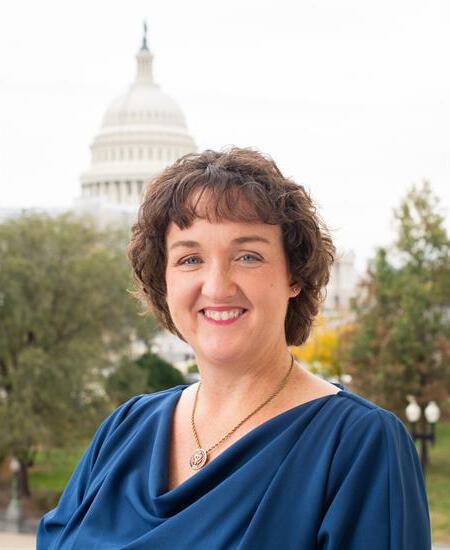
Rep. Katie Porter
Sponsored bills
Maddy summaryHR 82, the Social Security Fairness Act of 2023, repeals two provisions that reduce Social Security benefits for certain government workers. It eliminates the Government Pension Offset (GPO), which cuts spousal or survivor benefits for people with pensions from jobs not covered by Social Security (like federal or state government roles), and the Windfall Elimination Provision (WEP), which lowers retirement benefits for those with similar pensions. The law takes effect for benefits paid after December 2023, requiring the Social Security Administration to adjust benefit calculations to remove these reductions. This change directly affects public-sector employees who previously had their Social Security benefits reduced due to their government pensions.
Maddy summaryThis bill designates the U.S. Postal Service facility at 340 South Loudon Avenue in Baltimore, Maryland, as the "United States Representative Elijah E. Cummings Post Office Building." It updates all federal references in laws, documents, and records to reflect this new name. The bill honors former U.S. Representative Elijah E. Cummings (D-MD), who served from 2007 until his passing in 2019, and became law on January 4, 2025.
Maddy summaryThis bill formally names the Department of Veterans Affairs community-based outpatient clinic in Auburn, California, as the "Louis A. Conter VA Clinic." The legislation honors Lou Conter, a Navy veteran and the last surviving member of the USS Arizona crew at Pearl Harbor, for his decades of military service and post-retirement contributions to veterans' education.
Maddy summaryThis bill (HR 8641) renames a U.S. Postal Service facility at 401 Main Street in Brawley, California, as the "Walter Francis Ulloa Memorial Post Office Building." It directly affects the postal facility and all federal references to it, changing them to the new name. The bill contains no policy changes or funding provisions - it is solely a commemorative naming resolution honoring Walter Francis Ulloa. The designation became effective upon enactment on January 4, 2025.
Maddy summaryHR 8057 designates the U.S. Postal Service facility at 9317 Bolsa Avenue in Westminster, California, as the "Little Saigon Vietnam War Veterans Memorial Post Office." This bill changes the official name of the post office to honor Vietnam War veterans, specifically recognizing the local Little Saigon community's connection to veterans' service. All federal references to the facility, including laws, maps, and documents, will now use the new name. The bill does not create new funding, services, or policy changes - it solely provides a commemorative designation.
Maddy summaryThis bill designates the U.S. Postal Service facility at 201 East Battles Road in Santa Maria, California, as the "Larry Lavagnino Post Office Building." It updates all official references in federal laws, documents, and records to use this new name for the building. The change affects only the postal facility’s official designation and has no impact on postal operations or services. The bill was enacted on January 4, 2025, following approval by both chambers of Congress.
Maddy summary# Summary of the EXPLORE Act Legislative Text This is a comprehensive legislative text (likely the "EXPLORE Act" - Enhancing Recreation Opportunities for People of All Abilities, and Veterans) that establishes several key initiatives to improve outdoor recreation access across Federal lands. ## Key Focus Areas: ### 1. Accessibility for People with Disabilities (Title II - Access America) - Requires comprehensive assessments of outdoor recreation facilities on Federal lands within 5 years - Mandates development of 3 new accessible trails per region for each agency (Forest Service, National Park Service, BLM, USFWS) within 1 year - Requires development of 2 new accessible recreation opportunities per region within 1 year - Requires making accessibility information available on public websites within 7 years - Requires development of accessible features including trail bridges, parking, and restrooms ### 2. Military and Veterans Programs - Requires educational materials for military members/veterans on accessing Federal lands free of charge within 2 years - Establishes Military Veterans Outdoor Recreation Liaisons within relevant agencies within 1 year - Requires a National Strategy for Military and Veteran Recreation within 1 year - Creates a pilot program for veteran employment in conservation positions - Promotes partnerships with organizations providing outdoor recreation for veterans ### 3. Youth Access - Requires a strategy to increase youth recreation visits to Federal lands within 2 years - Extends the "Every Kid Outdoors" program until September 30, 2031 - Focuses on increasing opportunities for underserved youth ### 4. Recreation Permitting Modernization (Title III) - Defines special recreation permits and establishes fee structures - Creates categories for different types of recreation permits - Establishes a process for application and review of permits - Includes provisions for multijurisdictional trips across different Federal lands The legislation aims to improve access to outdoor recreation for people with disabilities, veterans, and youth while modernizing the permitting process for recreational activities on Federal lands. It requires specific timelines for implementation and includes detailed definitions and requirements for each component of the bill.
Maddy summaryThe Government Service Delivery Improvement Act (HR 5887) requires federal agencies to enhance public-facing services like benefits, permits, and digital interactions. It creates a new Federal Government Service Delivery Lead at OMB to set standards for ease, accessibility, efficiency, and transparency in service delivery, while mandating each agency appoint a senior official to implement these standards. Agencies must collect data on service quality, align with existing digital service laws (like the 21st Century Integrated Digital Experience Act), and report progress using existing funding - no new money is authorized. The law directly affects all federal agencies, especially high-impact programs (e.g., Social Security, tax services), by requiring concrete improvements to public interactions with government.
Maddy summaryThis bill extends funding for the Gabriella Miller Kids First Pediatric Research Program at the National Institutes of Health (NIH) through 2028, replacing the previous 2014-2023 authorization. It directs NIH to administer pediatric research funds through its Division of Program Coordination (instead of the "Common Fund") and requires NIH to coordinate pediatric cancer and disease research while prioritizing projects that avoid duplicating existing NIH work. The bill also mandates a report to Congress within five years detailing funded pediatric research projects and their advancements. This directly affects NIH's pediatric research funding structure and oversight, focusing on cancer and other childhood diseases.